Why synthetic emerald-green pigments degrade over time


Perhaps most relevant to this article is a 2020 study in which scientists analyzed the Munch phenomenon. The crywhich showed alarming signs of deterioration. They concluded that the damage was not the result of exposure to light, but of humidity, specifically from the breathing of museum visitors, perhaps when they leaned in to take a closer look at the master’s brushstrokes.
Let there be light (X-rays)
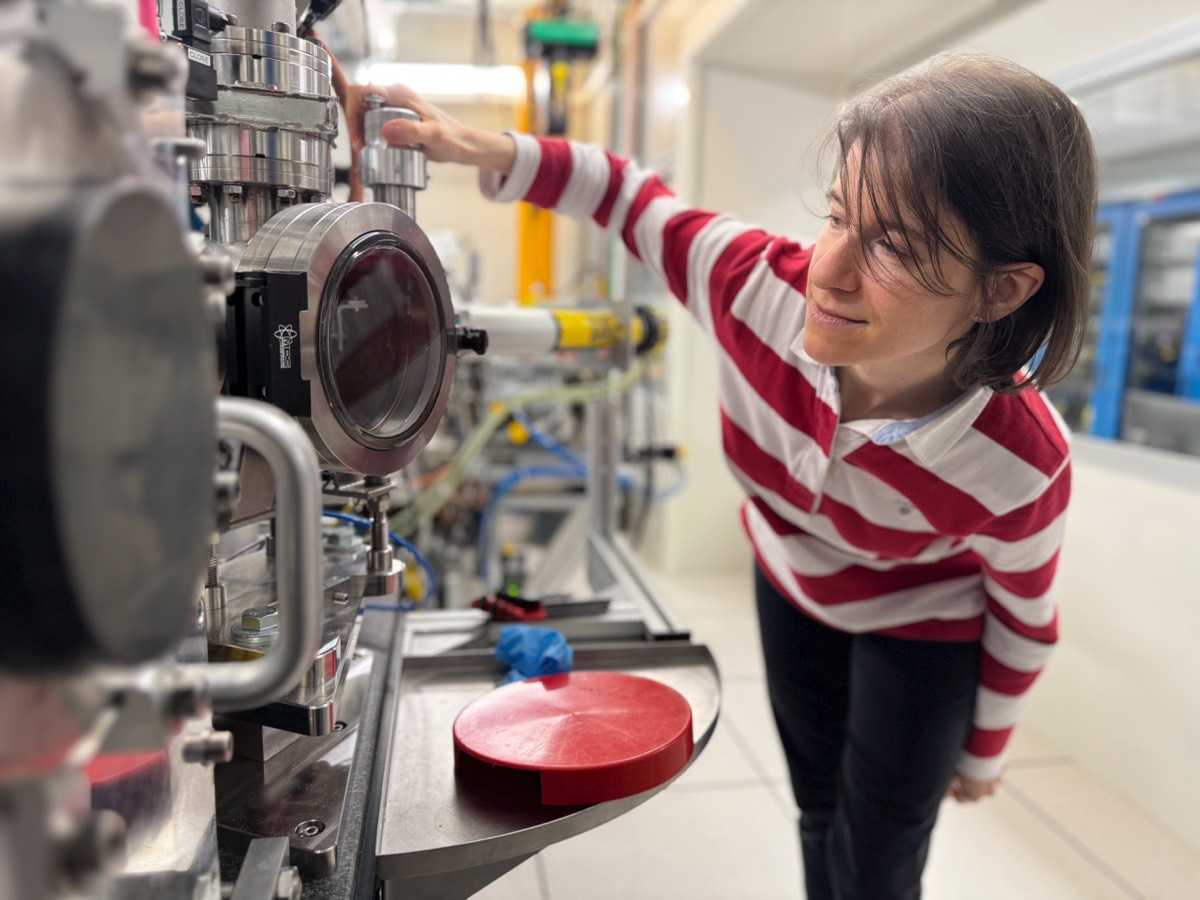
Co-author Letizia Monico during experiments at the European Synchrotron.
ESRF
Co-author Letizia Monico during experiments at the European Synchrotron.
ESRF
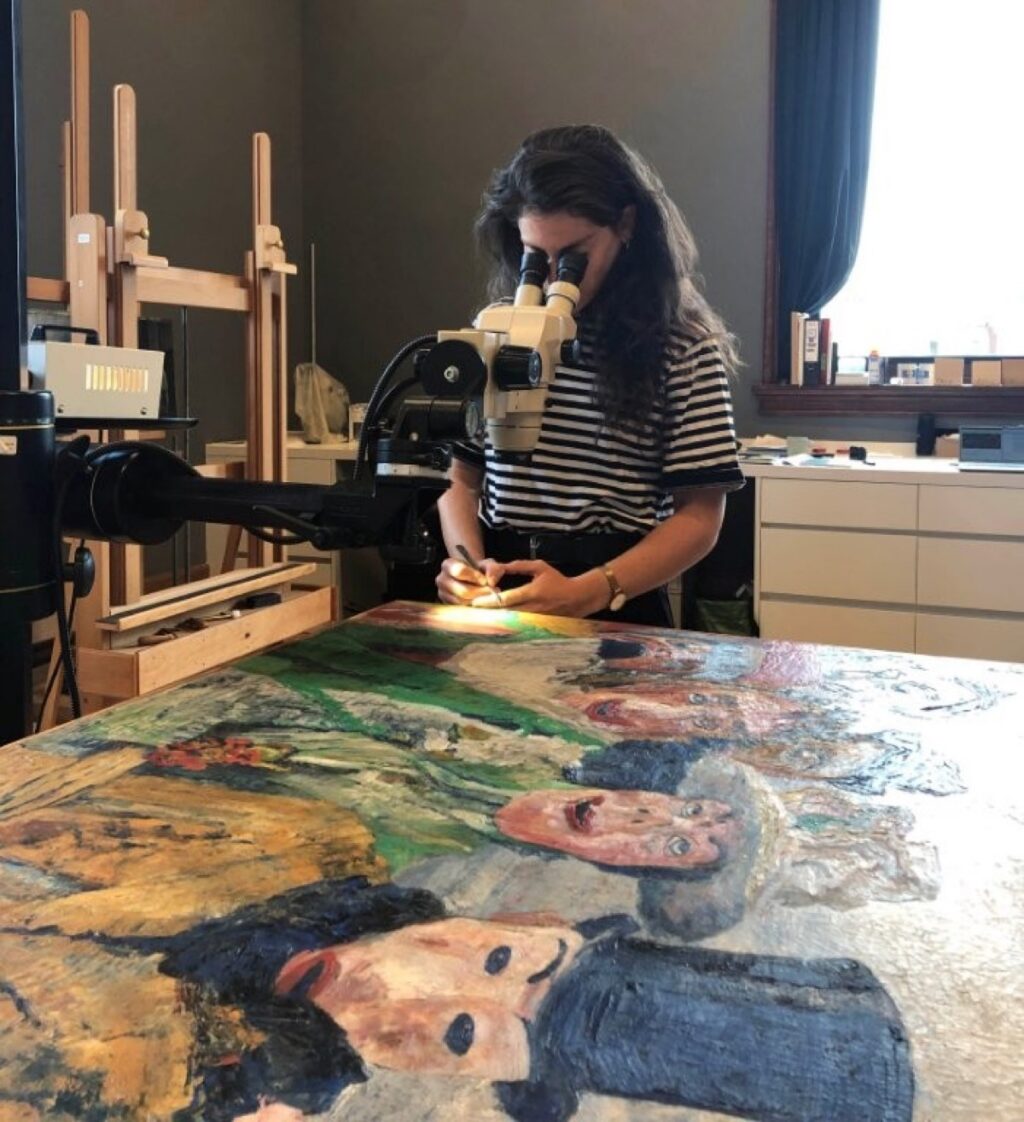
Co-author Annelies Rios Casier (University of Antwerp) conducts microsampling in a green space in The plot.
Lies Vanbiervliet
Co-author Annelies Rios Casier (University of Antwerp) conducts microsampling in a green space in The plot.
Lies Vanbiervliet
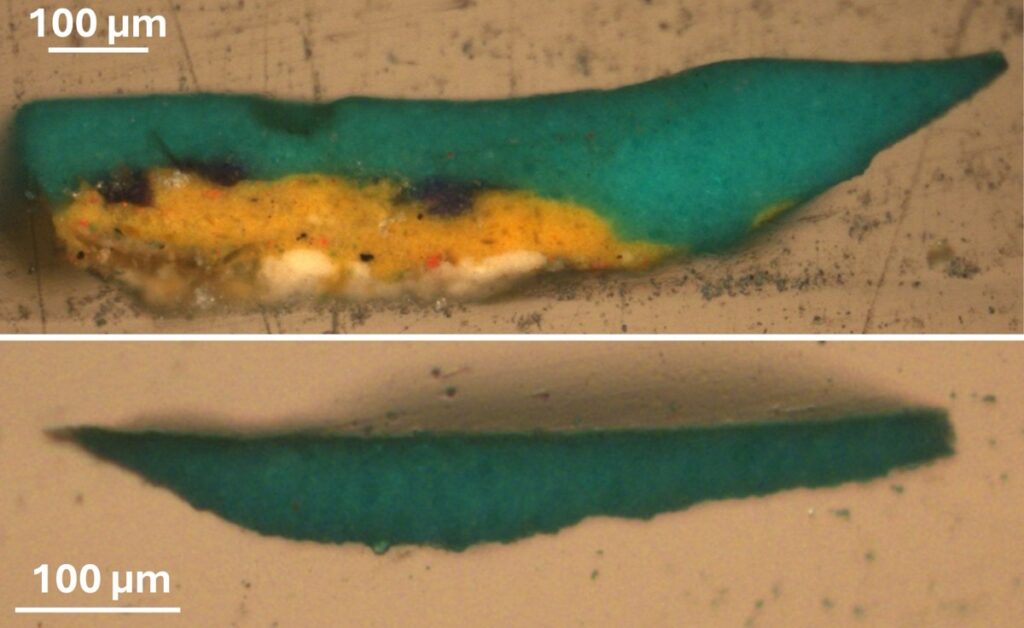
Photomicrographs of paint fragments taken from two altered emerald green areas of The plotanalyzed using vibrational spectroscopy techniques and advanced synchrotron techniques.
Miliani et al., 2025
Photomicrographs of paint fragments taken from two altered emerald green areas of The plotanalyzed using vibrational spectroscopy techniques and advanced synchrotron techniques.
Miliani et al., 2025
Co-author Annelies Rios Casier (University of Antwerp) conducts microsampling in a green space in The plot.
Lies Vanbiervliet
Photomicrographs of paint fragments taken from two altered emerald green areas of The plotanalyzed using vibrational spectroscopy techniques and advanced synchrotron techniques.
Miliani et al., 2025
Emerald green pigments are particularly prone to degradation, so this is the pigment that the authors of this latest article decided to analyze. “It was already known that emerald green degrades over time, but we wanted to understand exactly the role of light and humidity in this degradation,” said co-author Letizia Monico of the University of Perugia in Italy.
The first step was to collect microsamples of emerald green paint using a scalpel and stereomicroscope from a work of art from that period. In this case, The plot (1890) by James Ensor, currently housed at the Royal Museum of Fine Arts, Antwerp, Belgium. The team analyzed the untreated samples using Fourier transform infrared imaging, then embedded the samples in polyester resin for X-ray analysis using synchrotron radiation. They performed separate analyzes on commercial and historical samples of emerald green pigment powders and paint tubes, including one from a collection of paint tubes used by Munch in a museum.
Next, the authors created their own paint mockups by mixing commercial emerald green pigment powders and their laboratory-made powders with linseed oil, then applied the preparations to polycarbonate substrates. They also pressed paint from the Munch paint tube onto a substrate. Once the mock-ups were dry, thin samples were cut from each mock-up and also analyzed by synchrotron radiation. Next, the models were subjected to two aging protocols intended to determine the effects of UV light (to simulate indoor lighting) and humidity on the pigments.
The results: In the models, light and humidity trigger different degradation pathways in emerald green paints. Moisture causes arsenolite to form, making paint brittle and prone to peeling. Light fades the color by causing the trivalent arsenic already present in the pigment to oxidize into pentavalent compounds, forming a thin white layer on the surface. These results are consistent with the analyzed samples taken from The plotconfirming that the degradation is due to photo-oxidation. It turns out that light is the biggest threat to this particular painting, and perhaps other masterpieces from the same period.
Science Advances, 2025. DOI: 10.1126/sciadv.ady1807 (About DOIs).


