This Huge Ocean Beast Shifts Sharks’ Evolutionary Timeline



Explore
IIf you crossed the ancient Tethys Ocean about 115 million years ago and encountered gigantic lamniform sharks, you would definitely need a bigger boat.
Lamniformes, an order of sharks that includes the great white of Jaws infamy, evolved about 135 million years ago and may have started as small creatures living in shallow water, measuring about 3 feet long. But over time, they evolved into massive, fearsome fish that ruled the world’s oceans, for example the extinct megalodon which could have exceeded 50 feet in length.
Previous evidence suggested that lamniforms grew to reach the top of the marine food chain around 100 million years ago. Today, fossilized vertebrae discovered in Australia push that timeline back to around 15 million years. These vertebrae appear to have belonged to a type of lamniform called a cardabiodontid, a large, mega-predatory shark that swam among enormous marine reptile neighbors such as plesiosaurs and ichthyosaurs while dinosaurs roamed land.
ADVERTISEMENT
Nautilus members enjoy an ad-free experience. Log in or register now.
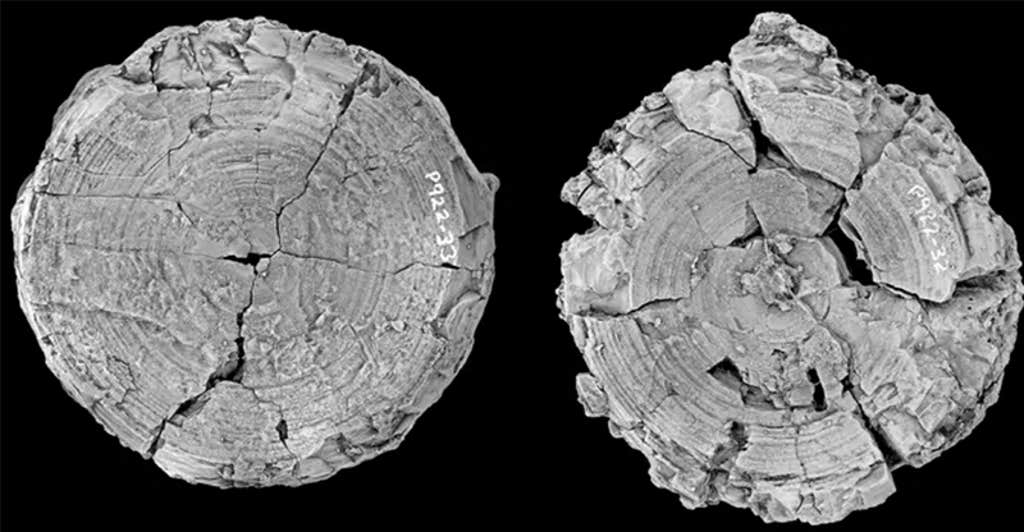
This ancient ocean beast weighed more than 3 tons and measured between 20 and 26 feet long, scientists reported in Communication biology. Based on statistical analysis of data from nearly 2,000 modern sharks, the authors suggest that this ancient shark increased in size relatively early in its evolutionary history, about 20 million years after the emergence of lamniforms.
“This discovery changes the timeline of when sharks started getting really big,” study author Mikael Siversson, a paleontologist at the Western Australian Museum, said in a statement. “It turns out they evolved to giant size much earlier than we initially thought and were already large predators in shallow seas.”
ADVERTISEMENT
Nautilus members enjoy an ad-free experience. Log in or register now.
Read more: »You’re going to need more light»
The cardabiodontid vertebrae were discovered at an excavation site called the Darwin Formation in northern Australia, which was once part of a shallow plateau bordering the Tethys Ocean, located between modern-day Australia and Europe. The same site also revealed ancient marine reptiles, ray-finned fish and other types of sharks.
Shark fossils were a rare find: their skeletons are made of rubbery cartilage and don’t tend to stick around, so the best-known shark remains are teeth. But these vertebrae were partially mineralized, which kept them relatively well preserved over the millennia.
ADVERTISEMENT
Nautilus members enjoy an ad-free experience. Log in or register now.
Overall, recent cardabiodontid discoveries reveal “a lot about how ancient food webs worked,” Siversson said, and show “how important Australia’s fossil sites are for understanding prehistoric life.”
Enjoy Nautilus? Subscribe for free to our newsletter.
Main image: Polyanna von Knorring, Swedish Museum of Natural History
ADVERTISEMENT
Nautilus members enjoy an ad-free experience. Log in or register now.


