People Want Climate Action. This Data Shows It.


July 3, 2025
It is an extraordinary popular mandate that extends through partisan divisions and national borders.
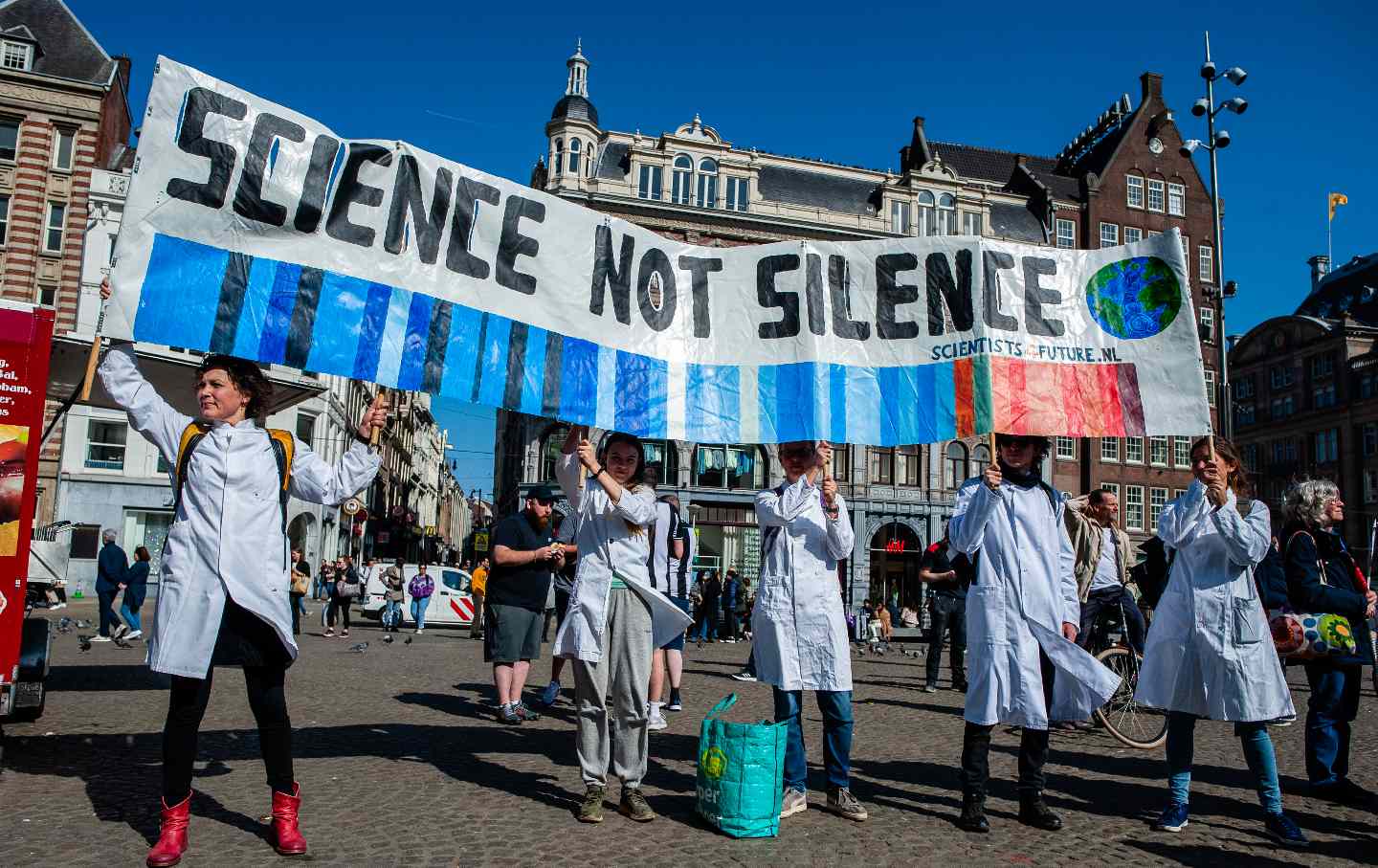
Climate demonstrators in Amsterdam demand better climate policy on March 25, 2022.
(Romy Arroyo Fernandez / Getty)
When The guardianAgence France-Press, and dozens of more from the main press organizations in the world began to report the story of 89% in April, it is because the new science with a reading committee said a potentially revolutionary fact: eighty to 89 percent of the world of the world think that their governments should “do more” to fight climate change. At a time when many elections are decided by a tiny margin and a result of 60% is systematically qualified as “landslide”, this count of 80 to 89% represents an extraordinary popular mandate which extends through partisan divisions and national borders. And this goes against most of the media accounts on climate change, it is that this is a deeply polarized, uniformly divided problem.
More evidence of this popular mandate continues to emerge. This week, the European Commission published the latest issue of the Eurobarometer, which questioned the beliefs of the residents of the European Union since the EU Foundation in 1993. In the 27 EU member states, 85% of people said that climate change is “a serious problem” and resolve it “should be a priority”. Two out of three people (67%) said their national government “did not do it enough”. The survey also contradicted the idea that, despite such declared support, the climate is not a priority for voters. The inhabitants of most EU countries have classified climate change among the three main problems that humanity is faced – tied with “the economic situation” and drags only “armed conflict” and “poverty”.
Earlier in June, even more evidence comes from the Dynata company, which studied markets for customers in the private and public sector. Commissioned by non -profit organizations Oxfam International and Greenpeace International, the survey has collected opinions from 13 countries through the world’s largest economies and the world South. Dynama also found that eight out of 10 people are disappointed with their government’s response to climate change. The specific wording of Dynata’s questions has put an additional touch to this popular dissatisfaction: three people out of four (77%) said they would be “more willing to support a political candidate who favors the taxation of super rich and polluting companies such as petroleum, gas and coal companies”.
If climate change can, wrongly, seem to be a polarized problem, it is because it East In the United States, somewhat polarizing, which exerts a disproportionate influence on global climate discourse. A survey of 23 countries representing 70% of the world’s population and conducted by potential non -profit energy in collaboration with the Yale program on communication on climate change revealed that 71% of people agreed with the declaration “I support the immediate action of the government to combat climate change”. This percentage drops to 61% in the United States, which “four times the polarization of the average country”.
While the next phase of covering the 89% climate of Now project in the coming weeks, these results invite journalists everywhere to recognize the overwhelming majority of people who want action, even as COP30’s political leaders and in the approach of this opportunity, here is a final point of data from the Eurobarometer survey: “A little more than half (52%) traditional of their country provides clear information on climate change and its causes and impacts. ” New data tell us that it is time to change.

.jpeg?w=390&resize=390,220&ssl=1 "The 37 Best Movies on HBO Max Right Now (July 2025)")