NORAD’s Santa tracker tradition continues 70-year military mission


NEWYou can now listen to Fox News articles!
At the heart of a command center that monitors everything from Russian bombers to North Korean missile launches, a handful of military personnel are preparing for a very different kind of flight — led by a cheerful man in a red suit.
Every December, the North American Aerospace Defense Command – or NORAD – transforms part of its high-tech operations floor into a holiday command post dedicated to tracking down Santa. The same radar systems that protect North American airspace will soon be tuned to track a sled traveling at high speed from the North Pole.
Santa’s mission, now approaching his 70th year, began by accident. In 1955, a Colorado Springs newspaper printed a telephone number taken from a Sears advertisement inviting children to “call Santa.” The number, misprinted with a digit, called the operational line of what was then Continental Air Defense Command. When Col. Harry Shoup, the officer on duty that evening, noticed that children were calling to speak to St. Nick, he played along and a military tradition was born.
RUSSIAN PLANES FLY INTO ALASKA AIR DEFENSE IDENTIFICATION ZONE, US SAYS
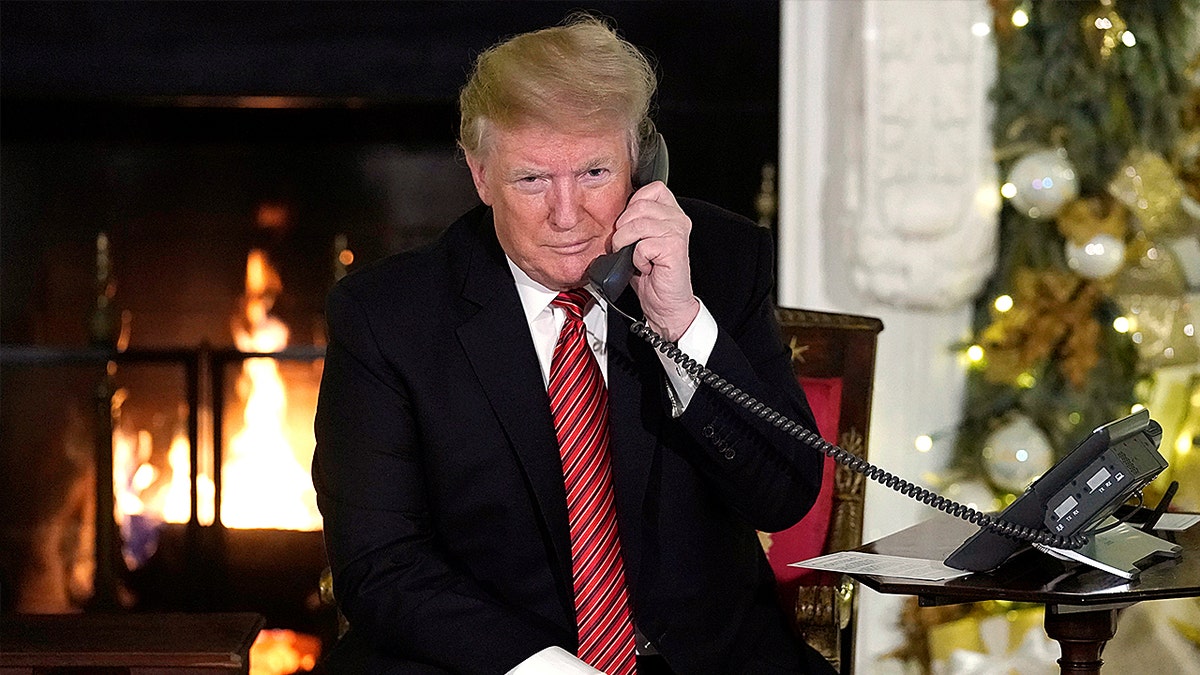
U.S. President Donald Trump participates in NORAD Santa Tracker phone calls from the White House in 2018. (Jonathan Ernst/Reuters)
Today, the Santa Tracker is a global phenomenon attracting millions of online visitors and calls from children in more than 200 countries. But behind the festive lights and holiday cheer, NORAD’s true mission continues uninterrupted: scanning the skies and seas 24 hours a day for potential threats to the United States and Canada.
The North American Aerospace Defense Command doesn’t need special equipment to find Santa: it uses the same technology that guards the continent every day.
Tracking begins with the North Warning System, a network of radar stations stretching across Alaska and northern Canada. These sensors detect anything that enters the northern approaches to the United States and Canada, including, once a year, a fast sled leaving the Arctic.
From there, NORAD’s Space Infrared System satellites pick up the heat signature — wryly described each year as Rudolph’s nose — and transmit that data to the operations center at Peterson Space Base in Colorado Springs.
The same systems that track ballistic missile launches and foreign aircraft power the Santa card that millions of families follow every Christmas Eve. The NORADSanta.org website and app attract millions of visits worldwide, using partnerships with private sector technology companies to manage the data load.
For the soldiers and civilians who work at the NORAD operations center, the holiday season looks different than most. The order never stops; watch officers, radar technicians and support staff work during Christmas Eve and Christmas Day, just like any other time of year.
While much of the attention is focused on tracking Santa, the real work continues in the background: analyzing radar feeds, monitoring satellite data, and staying ready to respond to any threats that might appear. Most of the approximately 1,500 people assigned to NORAD and U.S. Northern Command at Peterson Space Base and nearby Cheyenne Mountain take at least part of their shift off during the holidays, trading their hours so others can spend time with family.
SOME DRONES OVER US BASES CAN CARRY OUT SURVEILLANCE: NORTHCOM GENERAL

U.S. President Joe Biden and First Lady Jill Biden participate in the NORAD Santa Tracker phone calls from the South Court Auditorium of the White House in Washington, U.S., December 24, 2021. (Elizabeth Frantz/Reuters)
Operation Santa Claus nevertheless brings a change of pace. Hundreds of volunteers – many of whom are military spouses, retirees and members of the local community – come to the command center each year to answer calls and messages from children around the world. Phone lines open on Christmas Eve and volunteers work in shifts to answer thousands of questions about Santa’s location.
The room looks a little different that evening: Screens light up with maps of the sleigh’s route, phones ring constantly, and there are cookies and coffee between workstations. For a few hours, a command designed for high-stakes alert and response turns into a small slice of a normal vacation, even as the mission continues.
This same ordering routine was recently dramatized in the new Netflix film “A House of Dynamite“. In the film, a single unidentified missile triggers a cascade of decisions in the command center, underscoring how fragile the system can appear when seconds count.
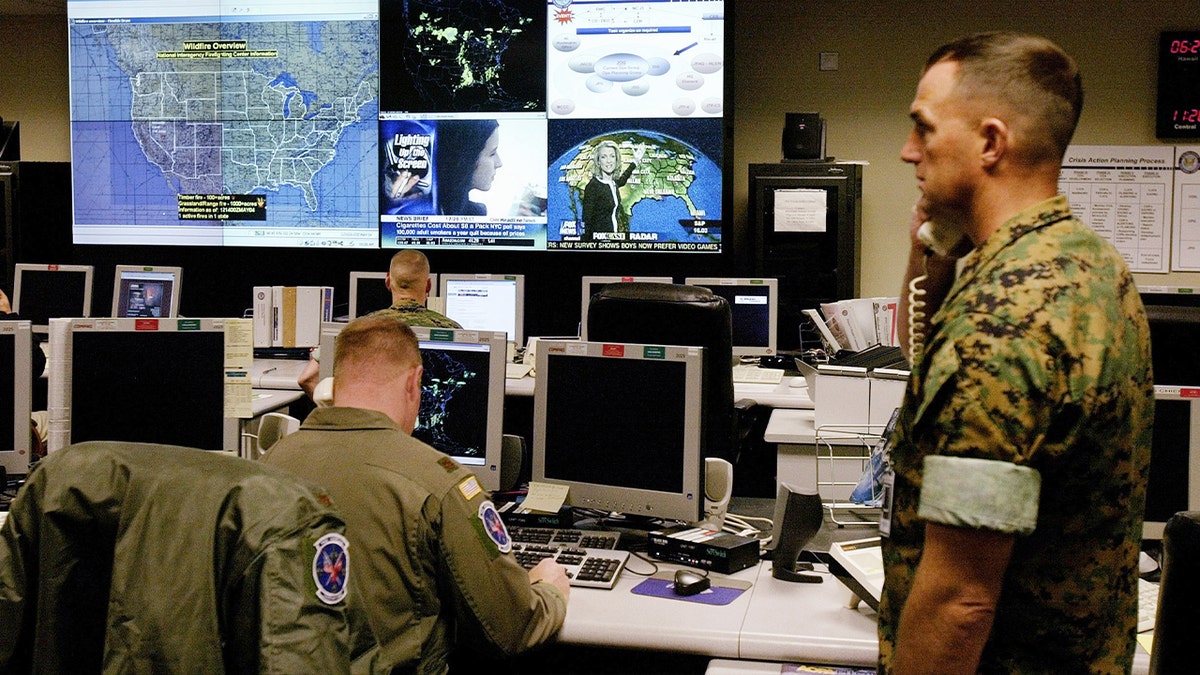
U.S. civilian and military officers monitor television and computer screens at Northcom’s Domestic Wing Center headquarters May 12, 2004 in Colorado Springs, Colorado. (Robert Nickelsberg/Getty Images)
CLICK HERE TO DOWNLOAD THE FOX NEWS APP
The Missile Defense Agency, however, pushed back on the film’s depiction of a failed interceptor test. An internal memo reported a scene claiming there was a 50 percent chance of interception, saying that in reality, U.S. missile defense systems “have had a 100 percent accuracy rate in testing for over a decade.”
So yes, NORAD is following the holiday cheer – and ensuring the foundations of American preparedness remain intact. Upstairs where the phones are answered and the consoles stay on, the message is simpler: someone still has the watch.


