Scientists Release Data Backing Hepatitis B Vaccines for Newborns Ahead of Crucial Vaccine Panel Vote


December 2, 2025
2 min reading
 Add us on GoogleAdd SciAm
Scientists release data supporting hepatitis B vaccines for newborns ahead of crucial vaccine panel vote
The review was conducted and published by the Vaccine Integrity Project, which is dedicated to strengthening vaccines in the United States.
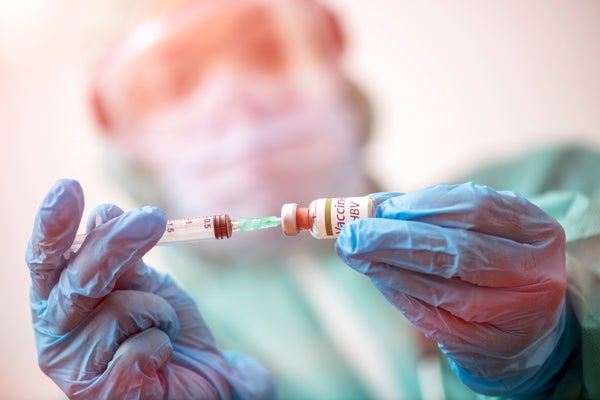
A group of vaccine scientists released a report Tuesday that strongly supports giving the hepatitis B vaccine to newborns. The analysis, which included data from more than 400 studies and other reports, found that the vaccine reduced infections in children by more than 95 percent.
“The totality of evidence – epidemiological, clinical and operational – supports maintaining universal hepatitis B vaccination within 24 hours of birth for all medically stable infants,” the authors concluded in a public commentary on the report.
Hepatitis B is a liver disease caused by the hepatitis virus and spread through bodily fluids. Chronic infections can cause liver cancer and the infection can be fatal.
On supporting science journalism
If you enjoy this article, please consider supporting our award-winning journalism by subscription. By purchasing a subscription, you are helping to ensure the future of impactful stories about the discoveries and ideas shaping our world today.
The release comes days before a vote on whether to change hepatitis B injection guidelines for newborns, scheduled for later this week by the U.S. Centers for Disease Control and Prevention’s vaccine advisory committee. The Advisory Committee on Immunization Practices has informed CDC policy for years; Earlier this year, the 17-person committee was fired and restocked with Secretary of Health and vaccine skeptic Robert F. Kennedy, Jr.’s hand-picked advisors, many of whom have also expressed doubts about the well-established vaccines.
The vaccine expert panel is widely expected to vote to shift the timing of vaccine administration from birth to later in childhood, but experts have said the delay would put children at risk. A pre-print modeling study published on medRxiv and published on November 25 found that if the vaccine was delayed just two months, some 1,400 babies would become chronically infected with hepatitis B.
“Delaying the first dose would reduce protection for infants and increase the risk of preventable diseases. [hep B] infections, undermining decades of progress in hepatitis B prevention and the United States’ efforts to eliminate viral hepatitis as a public health threat,” the report’s authors wrote in their public comment.
It’s time to defend science
If you enjoyed this article, I would like to ask for your support. Scientific American has been defending science and industry for 180 years, and we are currently experiencing perhaps the most critical moment in these two centuries of history.
I was a Scientific American subscriber since the age of 12, and it helped shape the way I see the world. SciAm always educates and delights me, and inspires a sense of respect for our vast and magnificent universe. I hope this is the case for you too.
If you subscribe to Scientific Americanyou help ensure our coverage centers on meaningful research and discoveries; that we have the resources to account for decisions that threaten laboratories across the United States; and that we support budding and working scientists at a time when the value of science itself too often goes unrecognized.
In exchange, you receive essential information, captivating podcasts, brilliant infographics, newsletters not to be missed, unmissable videos, stimulating games and the best writings and reports from the scientific world. You can even offer a subscription to someone.
There has never been a more important time for us to stand up and show why science matters. I hope you will support us in this mission.