Nvidia, other tech giants grilled over money for Trump’s ballroom


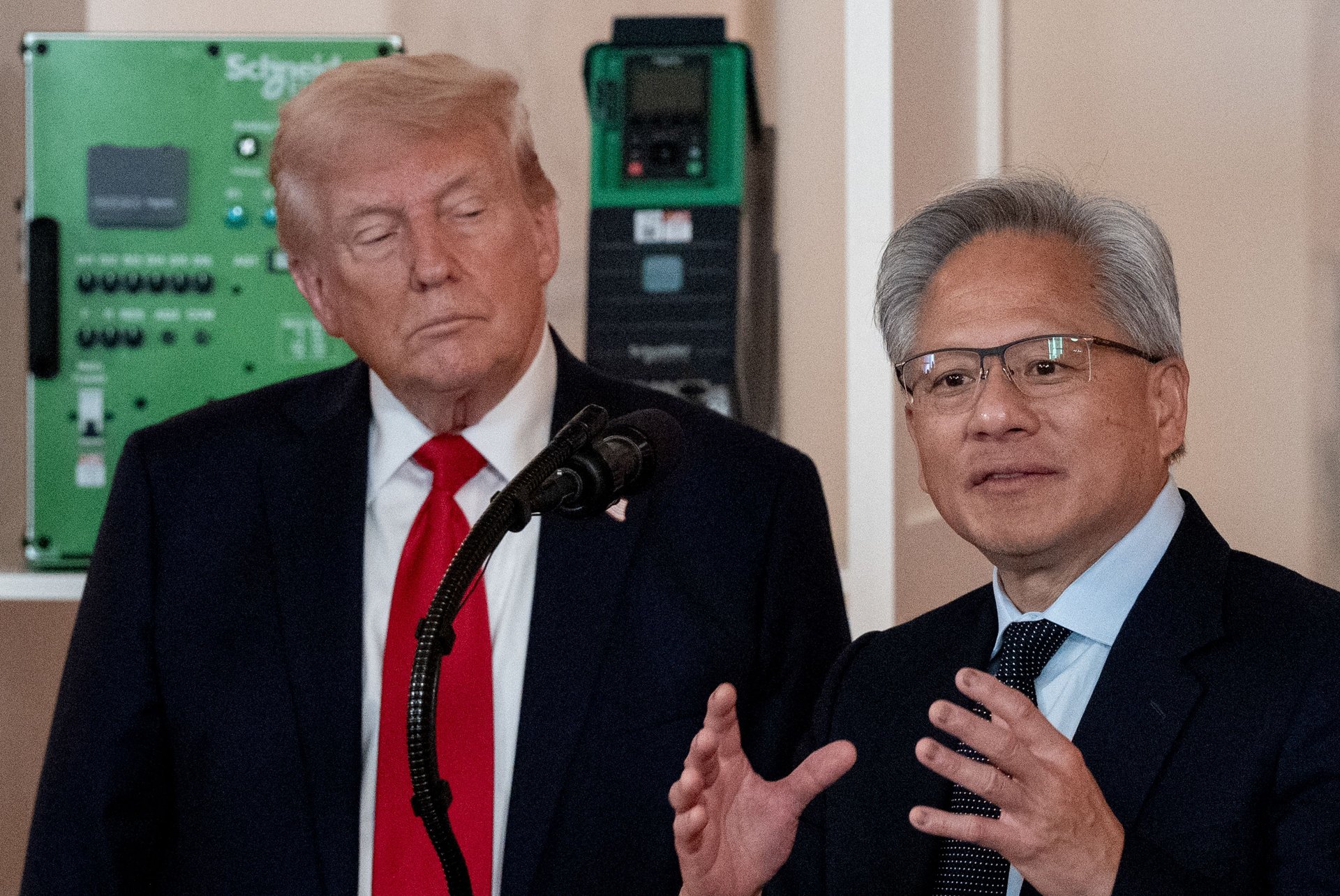
U.S. President Donald Trump, left, and Jensen Huang, co-founder and CEO of Nvidia Corp., at the White House in Washington, DC, U.S., Wednesday, April 30, 2025 (Ken Cedeno/UPI/Bloomberg via Getty Images).
A group of Democrats in Congress are demanding answers from five powerful tech companies that made large donations to President Donald Trump’s ballroom.
Sen. Elizabeth Warren and Rep. Dave Min led lawmakers Thursday in sending letters to the chief executives of Nvidia, Meta, Apple, Microsoft and Amazon, demanding more details about their political donations. They argue that these donations could pave the way for favorable treatment from the U.S. government – and violate the law.
“These interests create the potential for a quid pro quo exchange of a contribution to the ballroom for regulatory or other favors from the federal government,” Warren and Min said in the letter signed by nine other Democratic lawmakers. “If your donation was made with the intent to influence government decision-making, it may violate federal anti-corruption law. »
The letters ask about the timing of donations, the extent of the companies’ business interests with the U.S. government, whether their contributions were discussed with Trump aides and whether they will receive tax benefits as a result.
Spokespeople for Nvidia, Meta, Apple and Amazon did not immediately respond to Quartz’s requests for comment. Microsoft declined to comment on the letter.
An Nvidia spokesperson told the Wall Street Journal: “As an American company, our support in the United States is paramount and independent of any commercial interests. »
Trump demolished the East Wing to build a new ballroom, part of a massive overhaul of the White House complex. He said the ballroom would be funded by private donations, even though critics such as Warren say that allows for open corruption.
Many companies facing the fence have business interests before the federal government. For example, Amazon is trying to fend off an ongoing Federal Trade Commission monopoly lawsuit, alleging it stifles competition. In September, it settled another case alleging it tricked customers into signing up for Amazon Prime.
📬 Sign up for the daily briefing


