Why did this ancient bird die with tiny rocks in its throat?


Fossils can reveal what type of animal died millions of years ago, but they rarely describe exactly how they perished. Even rarer are examples that clearly show the exact cause of an animal’s death. In fact, a 120 million-year-old bird specimen kept at the Shandong Tianyu Nature Museum in China may be the only fossilized remains of its kind.
“There are thousands of bird fossils at the Shandong Tianyu Museum, but on my last trip to visit their collections, this one really struck me,” Jingmai O’Connor, assistant curator of fossil reptiles at the Field Museum in Chicago, said in a statement. “I immediately knew it was a new species.”
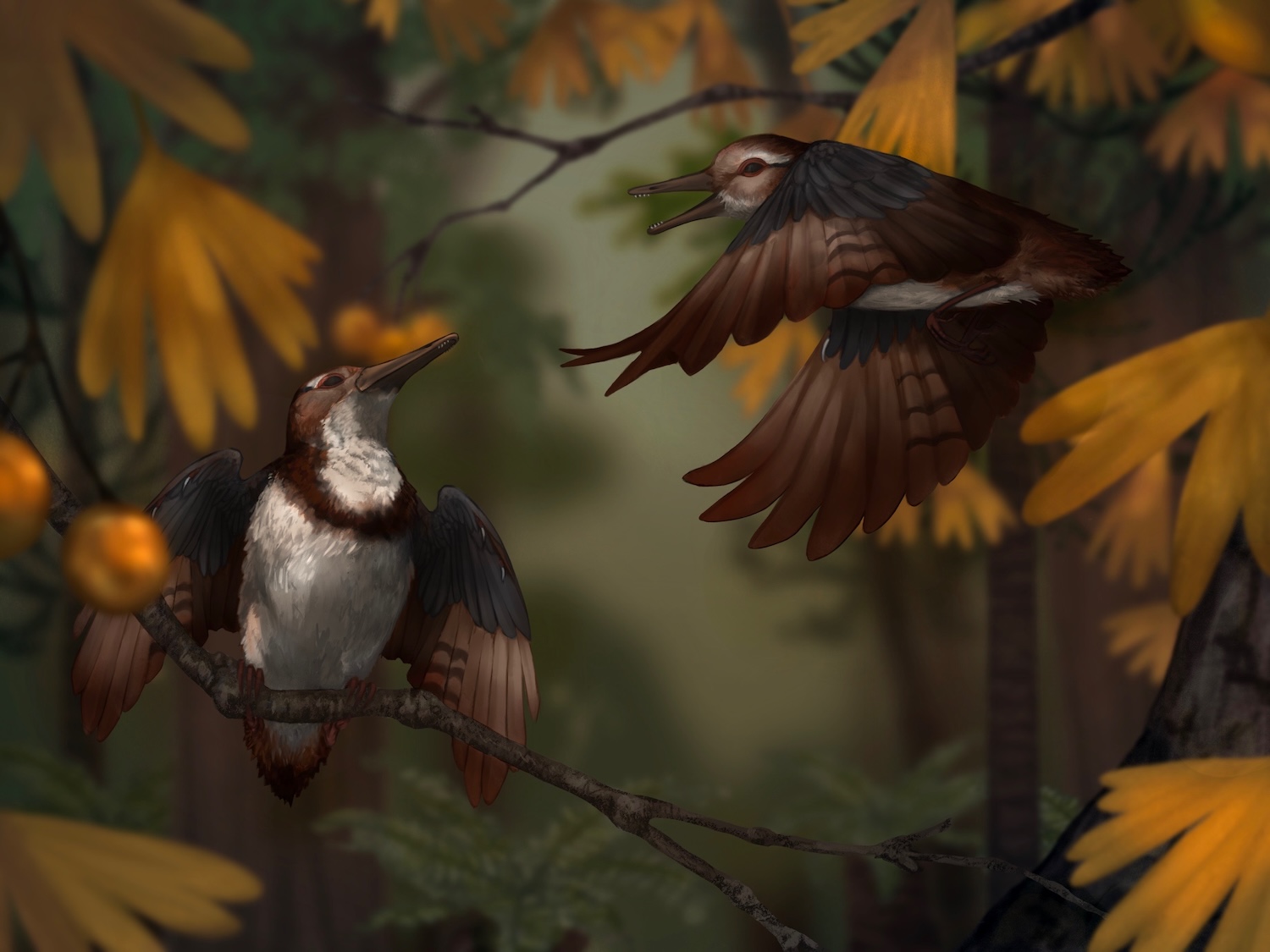
Although its physiology and large teeth resemble those of a larger bird known as a Longipteryxthe mysterious avian was about as big as a modern-day sparrow. And then there was also the surprising discovery made by analyzing the fossils under a microscope, as O’Connor describes in a study published December 5 in the journal Electronic Paleontology.
“I noticed there was this really strange mass of stones in his esophagus, right up against his neck bones,” O’Connor said. “It’s really weird, because among all the fossils I know of, no one has ever found a mass of stones in an animal’s throat.”
That this ancient bird swallowed stones was not surprising in itself. Several species throughout the evolutionary timeline are known gastroliths, meaning they intentionally or accidentally consume small rocks while they eat. Chickens store tiny stones in their gizzards that help grind up the food they ingest. Biologists have also documented similar behavior in crocodiles, ostriches and even sea lions.
But was the mysterious bird a previously unknown gastrolith? To understand this, O’Connor and his colleagues examined their work using CT scans of bird fossils that were definitely dependent on gizzard stones.
“We had quantified the average volume of the stones, the number of stones that these other fossil birds had in their gizzards, the size of the mass of stones in the gizzard relative to the total size of the bird,” O’Connor said.
After examining a wide range of bird fossils, paleontologists surprisingly discovered that more than 800 small stones were found in the specimen’s throat. were not gizzard stones. Some weren’t even stones at all.
“They looked more like tiny balls of clay,” O’Connor said. “With this data, we can very clearly say that these stones were not swallowed to help the bird crush its food.”
Once one question was answered, another immediately arose: If the bird didn’t eat them as gizzard stones, then why did it ingest them? Fortunately, O’Connor’s team already has a solid theory.
“When birds are sick, they start doing weird things,” she said.
They now believe the sick animal began eating stones and then attempted to regurgitate them into one large mass. Unfortunately, the mass was simply too big at the time, causing it to get stuck in the bird’s esophagus.
“Even though we don’t know why this bird ate all these stones, I’m almost certain that the regurgitation of this mass caused it to choke, and that’s what killed this little bird,” O’Connor said.
After theorizing about the cause of the fossilized bird’s death, paleontologists decided on the name of the new species: Chromeornis funkyi. It might not roll off the tongue, but Chromeornis is still an ode to one of O’Connor’s favorite bands, the techno-funk duo Chromeo.
“We’ve been doing this for 20 years, but this is the first time someone has called us a dinosaur,” Chromeo said in a statement. “All joking aside, this is an incredible honor to add to a career full of surprises. We’re happy to bring some fossil funk to the great science of paleontology.”

PopSci Outdoor Gift Guide 2025


