EU hits Elon Musk’s X with $140 million fine over business practices : NPR


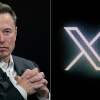
The fines related to violations including what the EU calls misleading use of the blue check mark on user profiles.
Nicolas Tucat/AFP via Getty Images
hide caption
toggle caption
Nicolas Tucat/AFP via Getty Images
The European Union has announced a $140 million fine against X, Elon Musk’s social network, formerly known as Twitter, for several breaches of the rules governing large digital platforms. A European Commission spokesperson said the fine imposed on X’s holding company was due to the misleading use by the platform of a blue check mark to identify verified users, a poorly functioning advertising repository, and the inability to provide effective data access to researchers.
Europe’s preference was not to fine X, said spokesperson Thomas Régnier, contrasting with the Chinese platform TikTok. Regnier announced Friday that TikTok had separately offered concessions that would allow it to avoid such sanctions.
“If you engage constructively with the Commission, we resolve the cases,” Régnier told a news conference in Brussels. “If you don’t do it, we take action.”
The possibility that began his investigation.
“There are rumors that the European Commission will fine hundreds of millions of dollars for not carrying out censorship,” Vice President Vance said. wrote on Thursday
In July 2024, in a set of preliminary findingsThe European Commission has formally accused X – which serves more than 100 million users in the EU – of several violations. These include its failure to comply with transparency obligations, obstructing researchers’ access to data, and deceiving users by converting the blue verification badge into a paid subscription feature.
Musk has a long time declared its intention to legally challenge possible EU sanctions, rather than making concessions to resolve the investigation.
Nonetheless, the company could have faced much higher financial penalties as European authorities allowed, under new legislation — known as Digital Services Act — to fine violators equivalent to 6% of their global annual turnover, which in this case could have included several of Musk’s other companies, including SpaceX.
This great announcement follows months of accusations from activists and trade experts, Brussels authorities are deliberately relaxing enforcement measures to appease Trump. Musk was a prominent supporter of Trump’s campaign and spent several months last spring as an administrative adviser and public face of the Department of Government Efficiency initiative.
The willingness to take on Musk’s business empire could pose a crucial test of the EU’s resolve, especially in light of President Trump’s previous threats of tariffs over the bloc’s fines on U.S. tech giants.
The confrontation highlights a growing divide over the concept of digital sovereignty, which has turned longtime allies into competitors as Europe strives to establish itself as the global authority on digital regulation, and the Trump administration pushes back against perceived restrictions on U.S. companies’ profits and free speech.
Thus, experts warn, this direct punitive action against Musk’s companies carries a risk of American retaliation, even if the EU remains heavily dependent on American technology in many sectors.

The United States is already exploiting some of these free speech concerns to justify deny US visas to certain people.
The Trump administration has also consistently argued that the EU unfairly targets U.S. technology companies by imposing heavy financial sanctions and burdensome regulations, equating these measures to tariffs that justify trade retaliation. Last week, US Commerce Secretary Howard Lutnick said the EU needed to review its digital regulations to reach a deal to reduce tariffs on steel and aluminum.
The Commission once again denied on Friday any link between trade negotiations with the United States and the implementation of its technological rules, any targeting of American companies or any form of attack on freedom of expression.
“Our digital legislation has nothing to do with censorship,” said Commission spokesperson Regnier. “We are adopting the final decision, without targeting anyone, without targeting any company, without targeting any jurisdiction based on color or country of origin.”
Despite pressure from the Trump administration, the EU has proceeded with the application of its digital antitrust rules, recently imposed fines $584 million on Apple Inc. and $233 million on Meta Platforms Inc.
It also imposed substantial sanctions on other companies, including fines totaling more than $8 billion against Alphabet Inc.’s Google over several years, and a separate directive for Apple will reimburse 13 billion euros in tax arrears to Ireland for providing unfair state aid.
Others potentially more serious concerns about X’s management of illegal contentelection-related disinformation and use of community notes have not yet reached the preliminary stage of a separate investigation by the European Commission.


