Interstellar comet 3I/ATLAS’ journey through our solar system, in photos


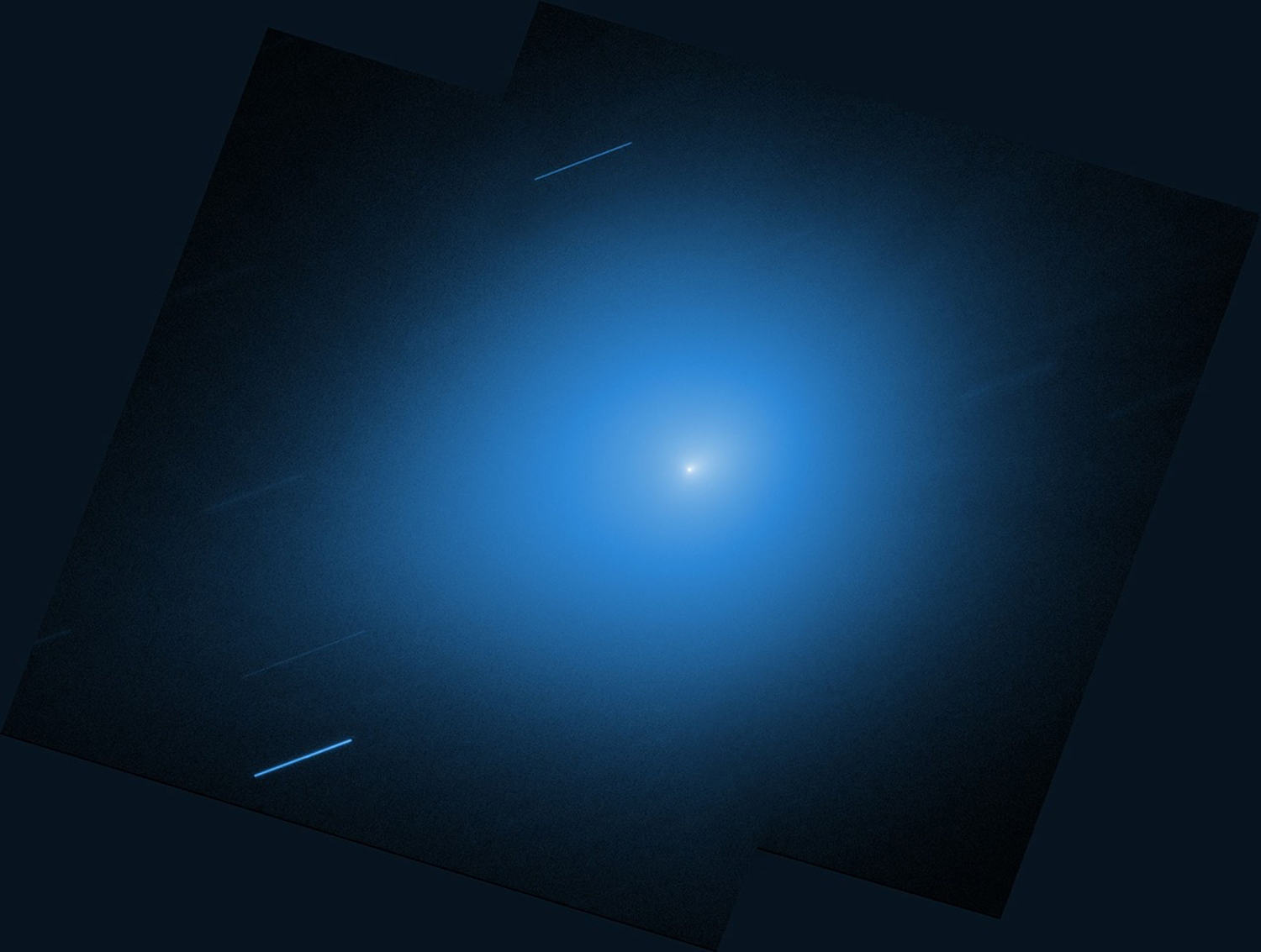
Late last month, NASA’s Hubble Space Telescope tracked 3I/ATLAS when it was about 178 million miles from Earth. Hubble’s instruments recorded the moving comet as a point of light while stars in the background appeared as streaks of light. NASA released the images Thursday and said it plans to collect more data on 3I/ATLAS in the coming months as the comet leaves the solar system.
The European Space Agency released new photos of 3I/ATLAS the same day, strengthening our understanding of the appearance, composition and behavior of the interstellar object. The agency’s Jupiter Icy Moons Explorer, or Juice — a spacecraft en route to Jupiter to study the planet and three of its large moons — collected the data shortly before the comet’s closest approach on Nov. 4, when it flew about 41 million miles away.
Juice’s photos showed the bright halo of the comet’s coma and revealed the possibility that it had two tails. The first, the comet’s “plasma tail,” is made of ionized or electrically charged gas and can be seen extending toward the top of the frame. The second, the comet’s “dust tail,” is composed of gas, dust, and other tiny solid particles; it extends to the bottom left of the frame.
The European Space Agency hopes to retrieve additional data from Juice’s science instruments in February.



:max_bytes(150000):strip_icc()/Health-GettyImages-BodyweightExercisesOnTheGo-87392e9c8ff9449596ff54212d214aba.jpg?w=390&resize=390,220&ssl=1 "8 Simple Bodyweight Exercises to Keep You Active While Traveling")
