Asteroid Bennu Samples Carry Mysterious Space Gum, Sugars, and a Ton of Stardust


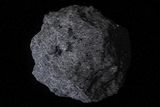
The asteroid Bennu is full of surprises that keep coming, each helping scientists find answers to the origins of life. Latest inspections of Bennu’s samples reveal that the asteroid almost appears to have housed an old candy store, carrying sticky space gum, sugars and an absurd amount of dust.
Three studies have shed light on the complexity of Bennu’s surface, providing insight into Bennu’s origin and how it provided the first ingredients for life. By studying the clues hidden within Bennu, scientists could begin to understand what was happening in the early days of the solar system, and even what allowed life to appear on Earth.
Learn more: Asteroid mining gives companies hope in rare metals search
Start life with sugars
In a study published in Natural geosciencesResearchers have discovered compounds in Bennu samples that could hint at the molecular workings of early life forms. Two sugars were discovered: the five-carbon ribose sugar and the six-carbon sugar glucose, the latter of which has never before been observed in an extraterrestrial sample.
Although these sugars indicate no evidence of life, they now join several other building blocks of life – like amino acids, nucleic bases, and carboxylic acids – that have already been discovered in Bennu samples. Thanks to sugars and other building blocks, researchers are now closer to understanding how RNA may have played a role in the origins of life.
While ribose helps form the backbone of RNA, the backbone of DNA relies instead on the sugar deoxyribose, which gives DNA increased stability compared to RNA.
However, researchers did not find deoxyribose in Bennu’s samples. This may indicate that ribose was more abundant than deoxyribose in the early solar system; this also supports the theory that early life forms used RNA as the primary molecule to store information and maintain itself through chemical reactions.
The weirdness of Bennu’s Space Gum
Bennu’s surface also had another sweet surprise in store for researchers: a study published in Natural astronomy revealed the presence of an ancient gum-like substance on the Bennu samples, a material that has never been observed before.
The mystery gum, made of polymer-like materials rich in nitrogen and oxygen, appears to have evolved over time to become water-resistant. It survived all the changes the asteroid underwent, even when Bennu’s parent body was warmed enough to become host to a watery environment.
“With this strange substance, we are most likely looking at one of the earliest material alterations that occurred in this rock,” Sandford said. “On this primitive asteroid that formed in the early days of the solar system, we observe events close to the beginning of the beginning,” study author Scott Sanford, an astrophysicist at NASA Ames Research Center, said in a statement.
To better understand the material and its strange consistency, researchers took tiny carbon-rich grains from Bennu samples and shaved them with a beam of charged particles so that they were a thousand times thinner than a human hair.
The translucent material, like used gum or soft plastic, was flexible, but it was also strangely brittle due to exposure to radiation in space. Researchers say it has parallels to polyurethane, a plastic material, but contains a more complex mix of elements.
Filled with Supernova dust
The latest study, also published in Natural astronomyexamined grains from before the solar system, existing in two different rock types from the Bennu samples. These presolar stardust grains are usually found in trace amounts in meteorites and originate from supernovae and novae.
Researchers found that Bennu samples contained six times more supernova dust than any previously studied space material. This may indicate that Bennu’s parent body formed in a region filled with dust from dying stars.
The study also showed that although Bennu has undergone many changes due to fluids, its samples still contain pockets of material that are not as radically altered, which will continue to be a crucial target for researchers.
Learn more: Fine dust from Mars may pose a health risk to astronauts
Article sources
Our writers at Discovermagazine.com use peer-reviewed studies and high-quality sources for our articles, and our editors review them for scientific accuracy and editorial standards. See the sources used below for this article:


