
’Tis the season for conifers—whether they are being decorated for a little Christmas cheer or merely serving as a vibrant, verdant contrast to their denuded deciduous peers.
What you might not appreciate is that conifers, which grow and thrive all year alongside other evergreens, have played some surprising roles in U.S. history. Take the eastern white pine. It decorated the first coins minted in the British colonies. Spruce lumberjacks in the early 20th century, meanwhile, helped enshrine some key labor rights, including an eight-hour workday and overtime pay.
These tales and more are highlighted by Trent Preszler, an environmental economist at Cornell University, in his new book Evergreen: The Trees That Shaped America.
On supporting science journalism
If you’re enjoying this article, consider supporting our award-winning journalism by subscribing. By purchasing a subscription you are helping to ensure the future of impactful stories about the discoveries and ideas shaping our world today.
Scientific American sat down with Preszler to learn more about the book and the stories it tells.
[An edited transcript of the interview follows.]
How did this book come about?
I was out shopping for a Christmas tree at this tree farm on Long Island, and they had these rows of artificially spray-painted, fluorescent neon Christmas trees like Dr. Seuss—pink and purple and green and yellow—and they were selling like hotcakes. And I just thought, “What, is the basic evergreen not enough for us? Did we have to make it into this gaudy, commercial product?”
As I dug deeper, it became clear that I could probably come to an understanding of the biography of America as seen through a singular lens of Christmas trees.
What tree came before conifers? What was that ancestral tree like, and why is it still important today?
The Archaeopteris goes back 367 million years, and it was really the precursor to our modern trees. It was the first tree found in the fossil record that had the vascular structure that we now recognize in trees with a stiff central trunk. It almost looked like a top-heavy Christmas tree with these fernlike fronds on the top.
They just dominated the surface of the Earth—and eventually they led to the evolution of what we now know as evergreens. That lineage is part of what gives evergreens this resilience. They evolved in really tough climates, thriving in places where almost nothing else will grow.
But all those Archaeopteris trees died and fell into anaerobic swamps and, over millions of years, were compressed into what we now know as coal. We’re powering our economy and American society on essentially dead prehistoric Christmas trees.
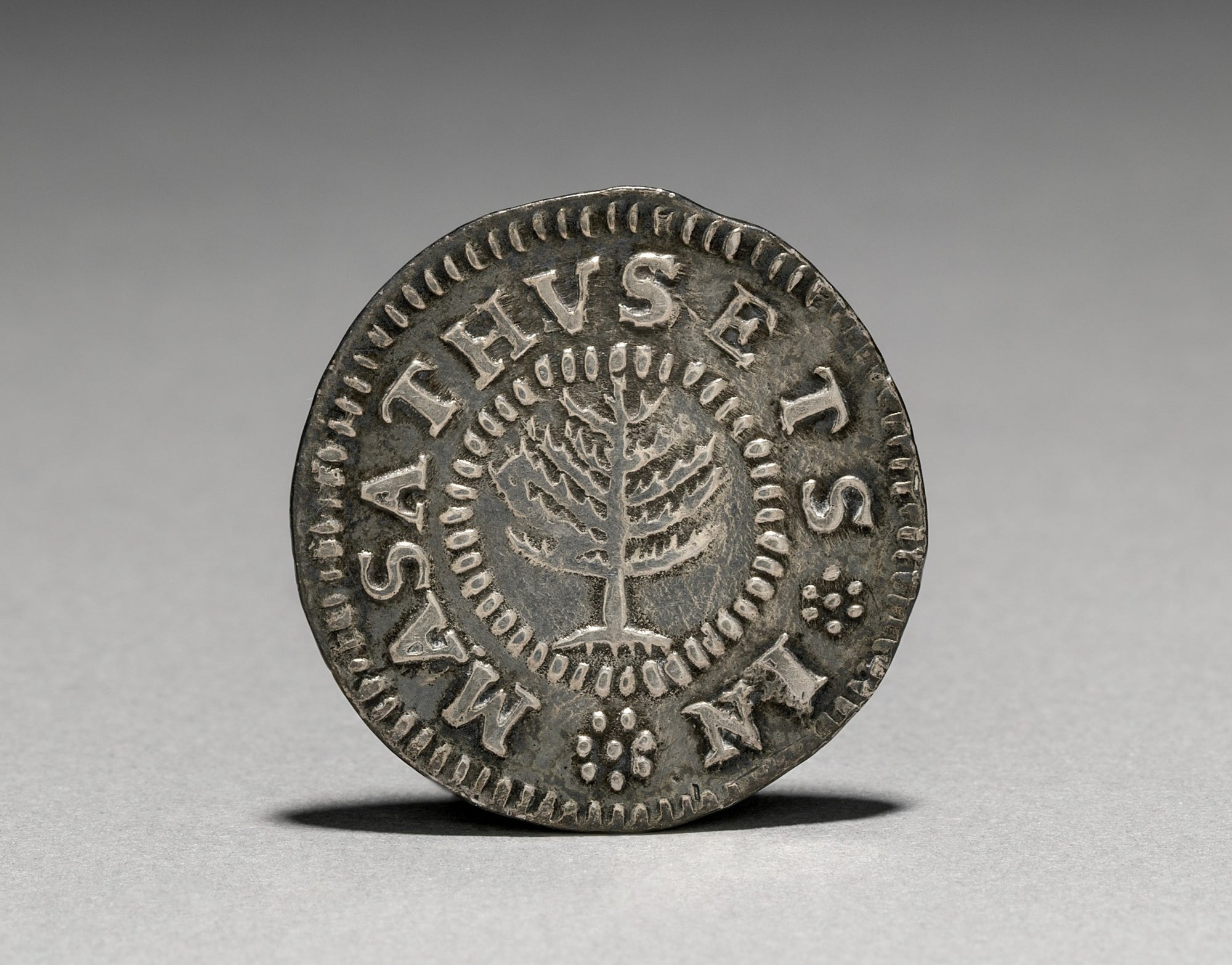
The Pine Tree Shilling was minted in Massachusetts in 1652.
Heritage Arts/Heritage Images via Getty Images
Let’s flash forward a little. How did conifers shape U.S. history? Can you share some of your favorite stories?
One favorite story is the Pine Tree Riot. Great Britain first came to America because it ran out of trees. The British needed big, thick, strong pines to make the masts for the Royal Navy, and they couldn’t get those from forests in Europe, so they sent Pilgrims to America basically to chop down trees to send back to Britain. The common mythology is that the Pilgrims were religious separatists, but they were really lumber merchants sent here to find timber for the Crown. But the colonists rebelled, and they lashed a king’s forest surveyor in a tavern in Weare, N.H. That became known as the Pine Tree Riot, which inspired the Boston Tea Party a year later.
Flash forward to World War I, and the Allies desperately needed a pliable, tough, stringy wood to build airplanes. Fighter planes were just in their very early stages, and the fuselages were made of wood. So the military mobilized a huge labor force of hundreds of thousands of military men who convened converged on the Oregon and Washington State coast to harvest Sitka spruce, which they called airplane spruce. And it turned the tide of the war, really.
It just touches so many parts of our history—good and bad and extraordinary and wonderful and often shocking.
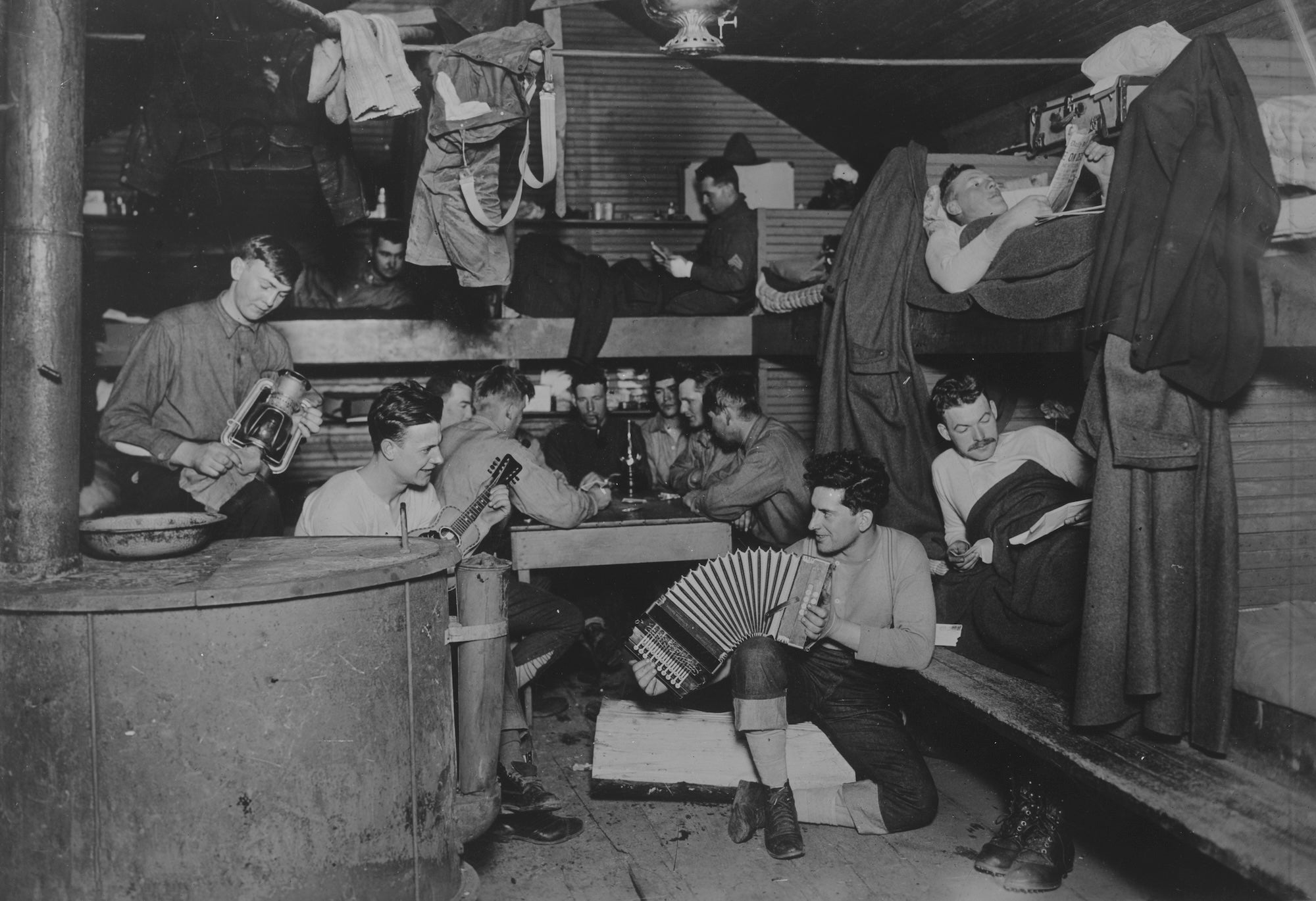
A scene from a military logging camp in Washington State during World War I.
Heritage Art/Heritage Images via Getty Images
Tell us a little about the research that went into this book. How did you track down these conifer stories?
It was a two-year journey. I traveled across the country, to about 20 states, visiting lumber mills and forests and historical archives and Indigenous reservations. It was almost like every time I found a story and pursued that thread, there were more waiting for me. I learned so much writing this book, and it was a joy.
Do you have a favorite conifer?
I love the Douglas-fir. It’s kind of quixotic and mysterious—it’s not really a fir, but botanists don’t know quite how to classify it. It grows these ramrod-straight trunks with very hard timber. It’s great for construction, and that’s also what led to its demise. It was so valuable for the construction trade, and especially during the housing boom post–World War II, when suburbia was basically invented on Long Island. Douglas-fir was the most readily available evergreen softwood timber at that time, and it became the primary wood of the building trades.
It also makes a really beautiful Christmas tree. If you harvest a young one, under 10 years old, it’s still bushy and looks fluffy. If you let that grow 50 to 100 years, it’s just an absolute gargantuan mammoth of a tree that has no branches on the first 80 feet of the trunk. It transforms itself from youth to adulthood.
It’s my favorite because it straddles this line: it’s a deeply commercial and economically vital material product for America’s economy, and it also captivates us and holds our imagination around Christmastime.
As for Christmas trees, specifically, what’s something you wish more people knew about them?
I just think the most wholesome and pure thing we can do around Christmas is to get a real tree.
Over the past maybe 20 years, the plastics industry has done a great job of branding natural, real, live Christmas trees as somehow being bad for the environment. But real Christmas trees do many things. They give a local farmer a job. They often occupy sites that are marginal, quite rocky soil that’s not good for growing other crops that may otherwise be turned into strip malls, so they’re protecting America’s landscape. They’re natural, they’re completely biodegradable, and they return to the earth. And Christmas tree farms themselves provide a habitat for all kinds of wildlife, birds, other types of grasses and wildflowers.
What’s a fun science fact about conifers you would share at a party?
What makes their wood so good for construction is that they have a different cellular structure than hardwood trees. Maple or oak, if you look at them under a microscope, their wood has millions of little cells that are kind of circular and mushed up into kind of a randomized mosaic. But evergreen conifers’ wood looks like LEGO bricks with these little, tiny rectangles lined up all right next to each other in this perfect latticework. It’s beautiful to me—their toughness as a lumber is actually based right there in the cellular level. I think that’s fascinating.


