Republicans divided on Trump’s policy toward Afghan immigrants : NPR

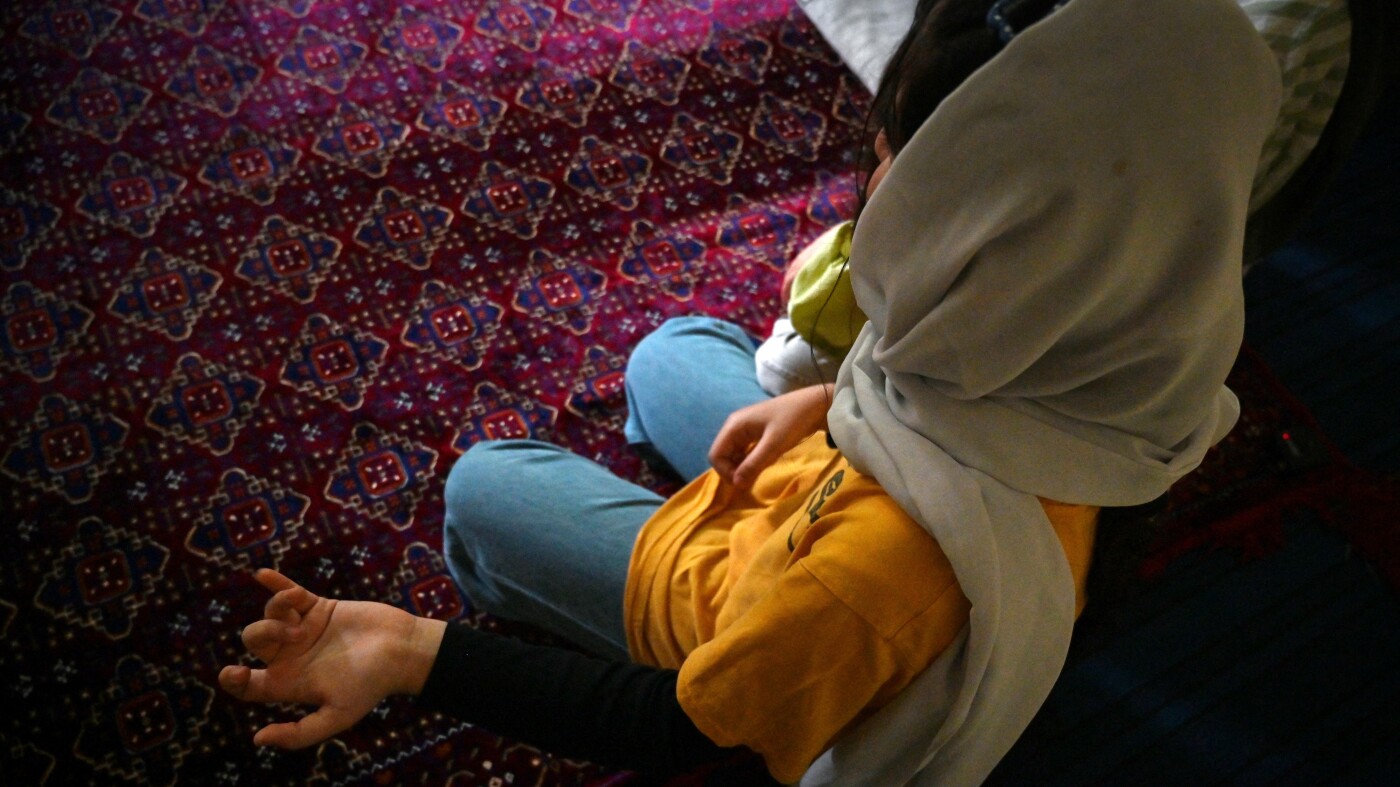

Laylama, an Afghan refugee, is pictured during an interview with AFP in September 2025 in Islamabad, where she was living after President Trump suspended the admission of refugees to the United States.
Farooq Naeem/AFP via Getty Images
hide caption
toggle caption
Farooq Naeem/AFP via Getty Images
Some congressional Republicans are splitting from the Trump administration over its crackdown on legal immigration from Afghanistan, particularly migrants who contributed to U.S. war efforts there.
Over the past year, the United States has suspended its visa and other programs for Afghan nationals, among others. Those already in the country have also had their temporary residence permits revoked.
Further immigration restrictions followed after an Afghan national was charged in connection with the fatal shooting of a National Guard member in Washington, D.C., last month.
Republican Sen. Thom Tillis, D-N.C., warned of a “knee-jerk reaction” that could prevent a number of Afghans with valid records for temporary or permanent immigration status from coming to the United States.

“One thing we’ve forgotten is how important this is to our special operators,” Tillis said, referring to examples from his own constituents who care deeply about Afghans abroad. “It puts them in a more dangerous situation if we lose sight of that.”
Sen. Susan Collins, Republican of Maine, also expressed concern about the impact of the cuts on Afghans.
“There are Afghan citizens who have served as guards, drivers, interpreters, cooks for our troops,” Collins said. “I’ve talked to veterans who were very concerned about the safety of the Afghans who helped us. So I think the answer lies in more intensive and careful scrutiny than has happened under the Biden administration.”
The GOP divisions come as President Trump spent most of his 2024 presidential campaign vowing to launch the largest deportation effort in American history.
Some Republicans also opposed changes to visa programs for migrant workers and favored more permanent status for recipients of the Deferred Action for Childhood Arrivals program.
Afghan soldiers who have aided U.S. troops have in the past enjoyed bipartisan support for their immigration cases.
Meanwhile, Trump has promoted the idea that only certain people are welcome in the United States.
“I also announced a permanent pause on third world migration, including from hellhole countries like Afghanistan, Haiti, Somalia and many other countries,” Trump said last week at an event in Pennsylvania.

Policy changes throughout the year
On his first day in office, Trump suspended the refugee resettlement program, blocking thousands of people already allowed to come to the United States.
That included Afghans who helped U.S. troops, immigration advocates said. Afghanistan was a top country sending refugees to the United States in fiscal year 2024, according to Department of Homeland Security data; of just over 100,000 refugees admitted that year, 14,680 came from Afghanistan.

Some Republicans initially expressed concern about the impact of the pause on those who have aided the U.S. armed forces.
The refugee program has since been significantly scaled back, and the target population for new arrivals is now white South Africans, according to the administration.
In June, Trump added Afghanistan to a list of 19 countries for which travel to the United States would be restricted.
And after the attack on National Guard members in Washington around Thanksgiving, the Trump administration suspended processing of asylum cases, green cards and other immigration services for people from countries listed in the June travel ban. It also suspended the processing of all visas specifically for Afghans.
Trump argued that those coming from Afghanistan had not been properly vetted under the Biden administration.
Rahmanullah Lakanwal, the man charged in the shootings, was admitted to the United States in 2021 under the Biden administration’s Operation Allies Welcome program. He was then granted asylum earlier this year under the Trump administration.
“This animal would never have been here without Joe Biden’s dangerous policies that allowed countless unchecked criminals to invade our country and harm the American people,” White House spokeswoman Abigail Jackson said in response to a request for comment on Republican divisions.
It is not clear what might have been discovered through additional screening before Lakanwal arrived in the United States.
Homeland Security Secretary Kristi Noem said the suspect may have become radicalized after arriving in the United States. At the same time, advocates have long criticized agencies such as the CIA and DHS for failing to provide resources, including mental health, to Afghan soldiers transitioning to life in America after experiencing harrowing violence.
Questions about the role of Congress
Immigrant advocacy groups accuse lawmakers of ceding power to the president on immigration policy.
“Instead of asserting its constitutional role, Congress has allowed itself to be marginalized, failing to provide meaningful oversight,” said Shawn VanDiver, founder of the organization AfghanEvac, which defends the interests of Afghans who worked with American troops, during a press conference. “Failing to modernize the asylum, refugee or [special immigrant visa] systems. The void they have left is filled with alarmism and not facts; politics, not politics. »
This year, Congress has passed very few immigration-related bills, focusing primarily on funding the Department of Homeland Security’s enforcement efforts. Many other legislative efforts to ease or reform immigration processes have stalled.

But some Republicans are happy to leave immigration in the hands of the administration.
“This is primarily an executive branch issue,” Sen. James Lankford, Republican of Oklahoma, who serves on the Homeland Security Committee, said of the process of vetting Afghans and other immigrants.
“It’s not our staff that actually does the verification. The verification process does exist. It’s just the execution of it at this point.”
Republican leaders also appear aligned with the Trump administration on the issue.
House Republicans removed a bipartisan provision from the National Defense Authorization Act that would have reestablished an office at the State Department tasked with relocating Afghan refugees. The bill passed the House last week and is expected to be voted on in the Senate this week.

“Republican leaders have undone months of bipartisan work,” Rep. Sydney Kamlager-Dove, Democrat of California, who introduced the provision, said in a statement. “It is truly shameful that my Republican colleagues, some of whom served in Afghanistan and especially understand the debt we owe to our allies, have once again put blind loyalty to Trump ahead of American principles and obligations.”
Sen. Bill Cassidy, R-La., told NPR that one solution to the Afghan vetting issue would be to pass the “Keeping Promises to Afghan Allies Act,” which allows Afghans to apply for legal permanent residency, after additional vetting, and is supported by senators from both parties. The bill was introduced in August, but was not voted on in committee.
“I would like to see the bill I sponsored, which would have increased scrutiny of anyone applying here, go into effect before we make another decision,” Cassidy said.
Yet enthusiasm for tackling anything related to immigration during this Congress is low.
John Cornyn, R-Texas, has in the past supported measures for special immigration visas for Afghan military interpreters and translators. But he told NPR that now wasn’t the right time to restart this conversation, without elaborating on his reasons.
“It’s premature to talk about it,” Cornyn said.


