A history of mistletoe: The parasitic ‘dung on a twig’


It’s hard to imagine a holiday season without Bing Crosby’s Christmas standard I’ll be home for Christmas. Originally written from the perspective of a soldier stationed overseas during World War II, his desire to return to the simple comforts of home and reconnect with loved ones at Christmas is almost palpable: “Please have snow, mistletoe and presents by the tree…»
The mistletoe looks inexplicably familiar. Every December, the lingering strands that spent the offseason hidden in our subconscious are suddenly all around us. Mistletoe is a long-lost knowledge that we instantly recognize and embrace, but whose history we have lost.
“When I talk to people about parasitic plants, I know mistletoe is one they will immediately recognize even if they don’t really know it’s a parasite,” says Jim Westwood, a plant biologist at Virginia Tech. Popular science.
A Brief History of Mistletoe
Author Washington Irving, best known for The Legend of Sleepy Hollow And Rip Van Winkle is often credited with helping to popularize the evergreen parasitic shrub in the United States. He wrote about the plant in an 1820 collection of short stories, but mistletoe’s roots run much deeper elsewhere in the world.
Dating back to ancient Greece and Rome, leafy mistletoe has long excited the imagination. Mistletoe was the centerpiece of Celtic rituals and Norse myths, where it bestowed life and fertility and served as an aphrodisiac, parsley plant, antidote to poisons, and a means of safe passage to and from Hades. According to The Living Lore, since the plant can thrive in the tall branches of its soilless host, “many cultures considered mistletoe a sacred plant, existing in the liminal spaces between life and death, earth and sky, and the human and the divine.”
In Old Norse mythology, Baldr, the son of the god Odin and the goddess Frigg, was killed with a spear of mistletoe. Some interpretations suggest that “kissing under the mistletoe symbolizes forgiveness, echoing Frigg’s grief and eventual reconciliation with the plant.”
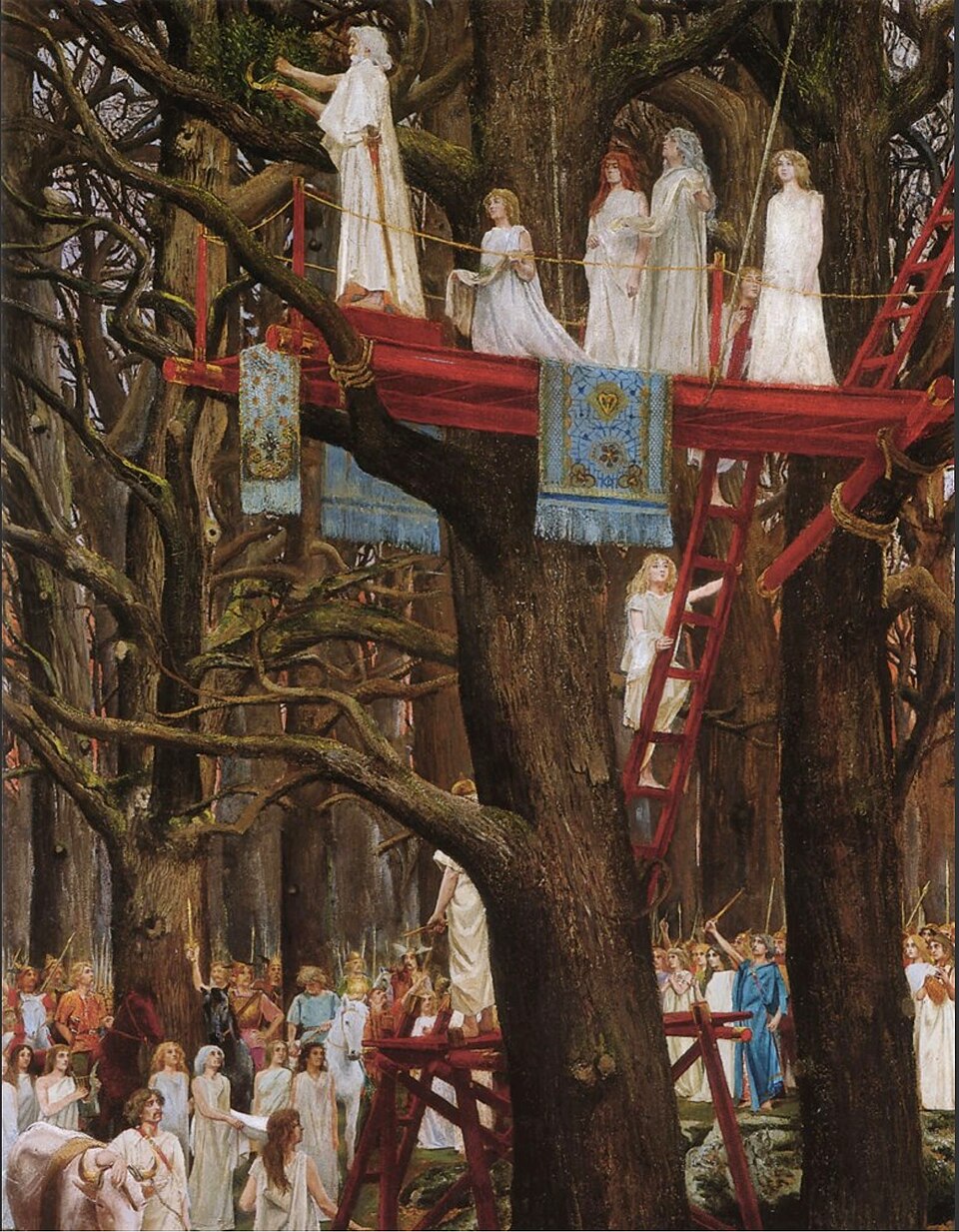
Many early doctors and scientists considered mistletoe a panacea for the world’s woes. It was used to treat various diseases and conditions, including epilepsy, infertility and ulcers.
At Pliny Natural historythe writer and doctor describes the Celtic ritual of oak and mistletoe. High priests dressed in white mistletoe harvested with golden sickles from the branches of sacred oaks to make an elixir capable of counteracting any poison and making any sterile animal fertile.
“It’s easy to imagine how obsessed people become with mistletoe plants,” says Westwood. “It stays green all winter growing in its host tree. It almost seems to have supernatural powers.”
Supernatural or not, mistletoe was so popular throughout the 19th and the beginning of the 20sth century, that its seasonal availability was monitored and reported by numerous newspapers. There was little wild mistletoe to be gathered from trees in or around a typical town, so it was often imported from the south where it was a welcome intruder due to its predictable seasonal distribution.
“That’s a pretty interesting thing about mistletoe,” says Carolee Bull, a plant pathologist at Penn State and president of the American Phytopathological Society. Popular science “People wanted to manage it because it’s parasitic, but they also wanted it as a product to sell.”
Related Vacation Stories
Mistletoe, the plant parasite
Common or leafy mistletoe (Visque species in Europe and Phoradendron species in the United States) are evergreen parasitic shrubs. They have small leathery green leaves and white, translucent or red berries depending on the species. Without a perennial woody host plant to support it, mistletoe would quickly die.
However, not all parasitic plants are equal. Leafy mistletoe trees are considered hemiparasites. “It primarily consumes water and nutrients from the tree it grows on, but it can produce some of its own food because its leaves still contain chlorophyll,” says Westwood. “Because they are green, you won’t necessarily recognize them as pests.”
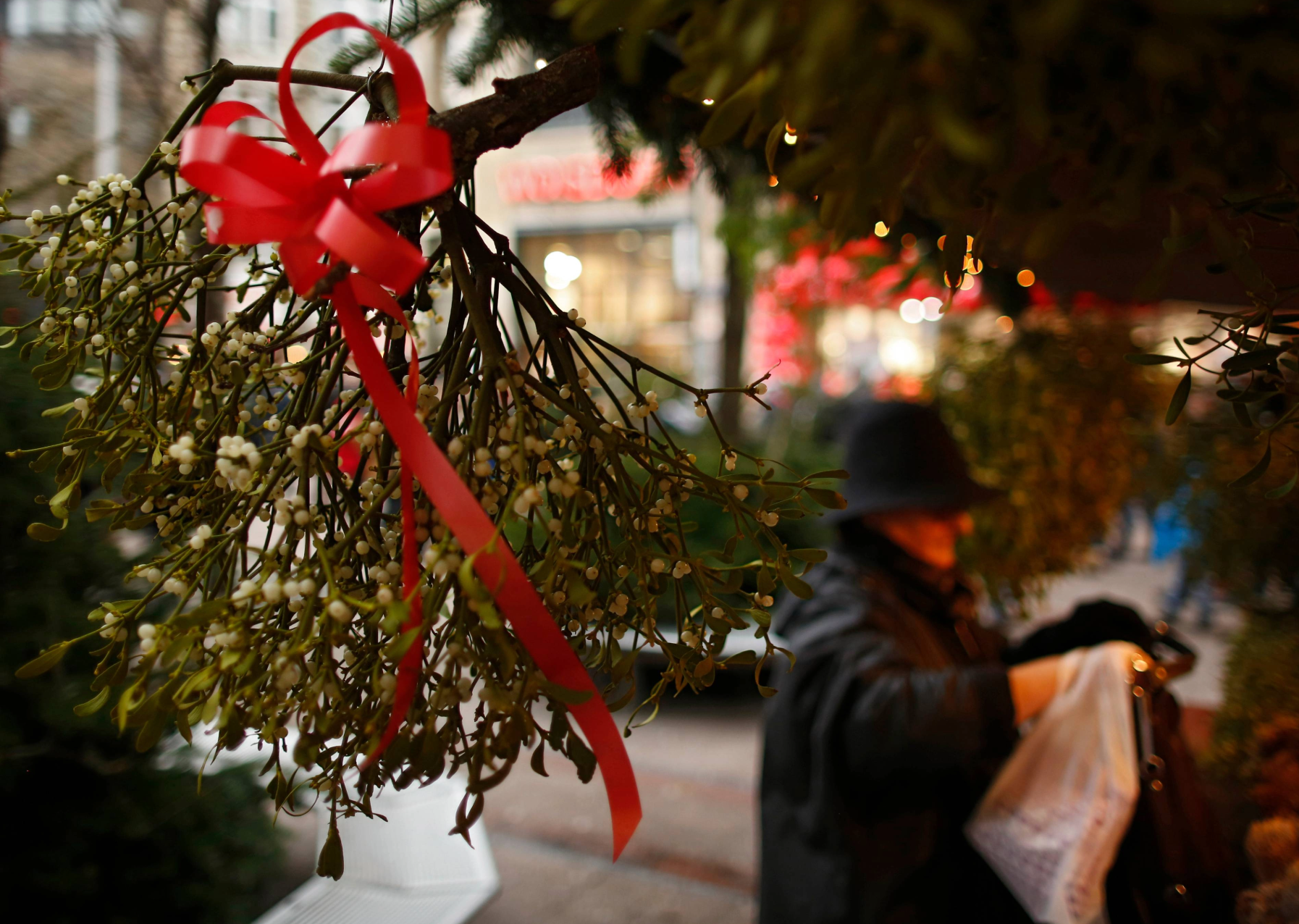
Mistletoe plants are also poisonous. They contain one or more peptide toxins, particularly concentrated in the leaves and stems, capable of causing heart and gastrointestinal problems in various animals, including humans. They have also been reported to cause dermatitis. European Visque the species are considered more toxic due to the presence of viscumin, a toxin similar to ricin from the castor bean that is not present in their American habitat. Phoradendron counterparts. Despite their deadly reputation, most reported accidental ingestions (e.g. a few leaves or berries), with the exception of excessive, concentrated use of herbs, such as infusing mistletoe into tea, have not been fatal.
In the 13th century, the German Dominican friar and scientist Albertus Magnus, was among the first to recognize and officially document European leafy mistletoe (Album Viscum) as a plant parasite. Magnus even went so far as to recommend pruning infected branches as a form of control, helping to lay the foundation for the field of plant pathology.
“A lot of the work we do as plant pathologists is microscopic,” says Bull. “We often use techniques that can tell us whether an organism is present or not. And mistletoe is one of the few organisms where we don’t need to do that for. It’s a really charismatic plant pathogen.”
Parasitism may seem like an odd lifestyle for a plant, but around 4,000 plants (about 1% of all known plants) live as parasites. Some, like mistletoe, depend partly on their host, while others (called holoparasites) depend on their hosts for everything.
“It’s a good way of life to steal your food rather than prepare it yourself,” says Westwood.
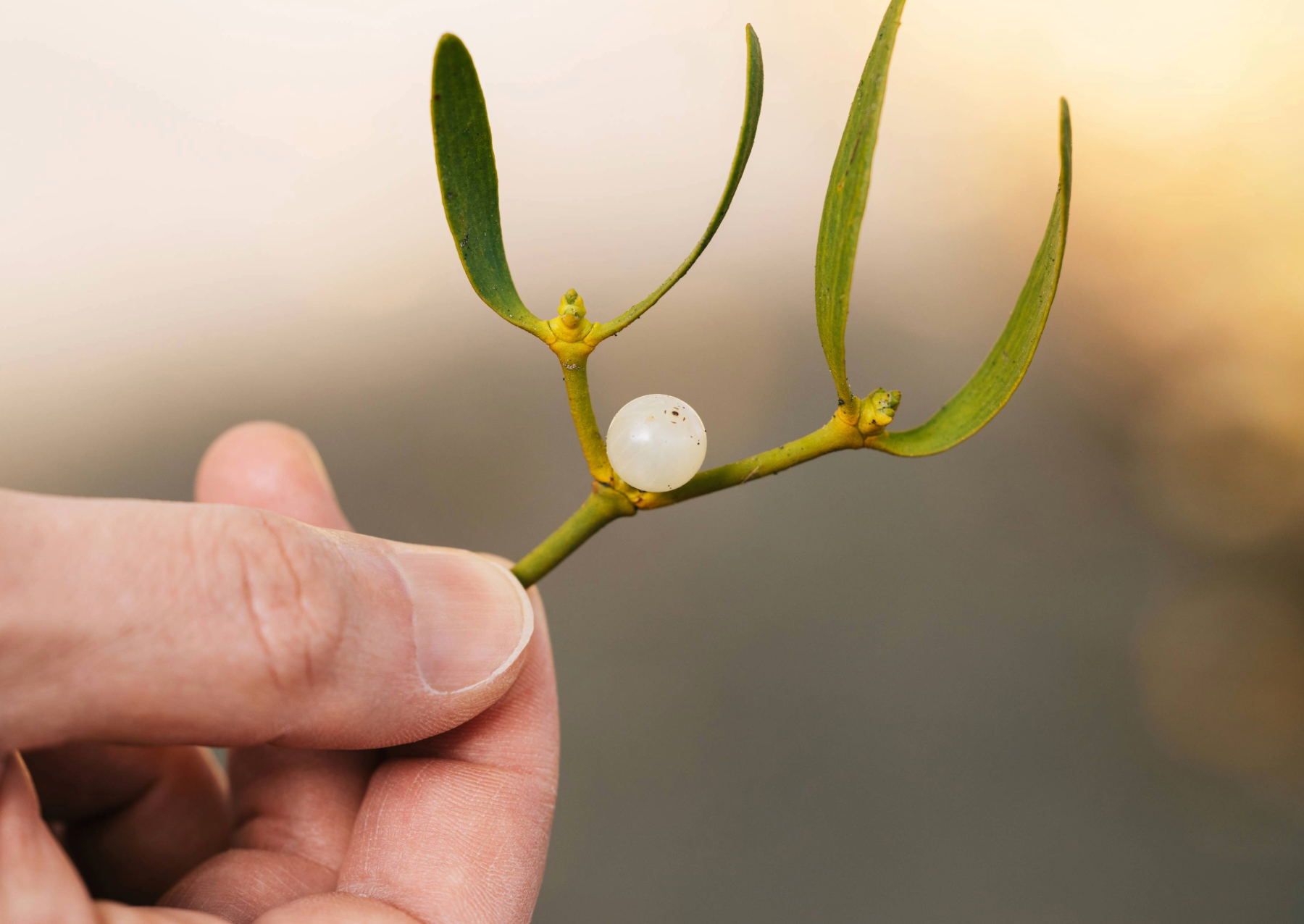
Parasitic Conifers and Where to Find Them
Outside of your local holiday market, finding real leafy mistletoe is easier than you think.
“It’s the perfect plant for roadside botany,” says Bull, referring to the practice of identifying plants without leaving your car. Their prominent position high in the branches of their host trees after leaf fall makes them almost impossible to ignore.
In the United States alone, more than a dozen species of Phorodendron are found in more than 35 states and live in abundance throughout the Southeast, Southwest, and Pacific Northwest. Even if you find yourself geographically far from places where leafy mistletoe thrives, you can still find another, less visible type of mistletoe called dwarf mistletoe (Arceuthobium species), which parasitizes the branches of conifers.
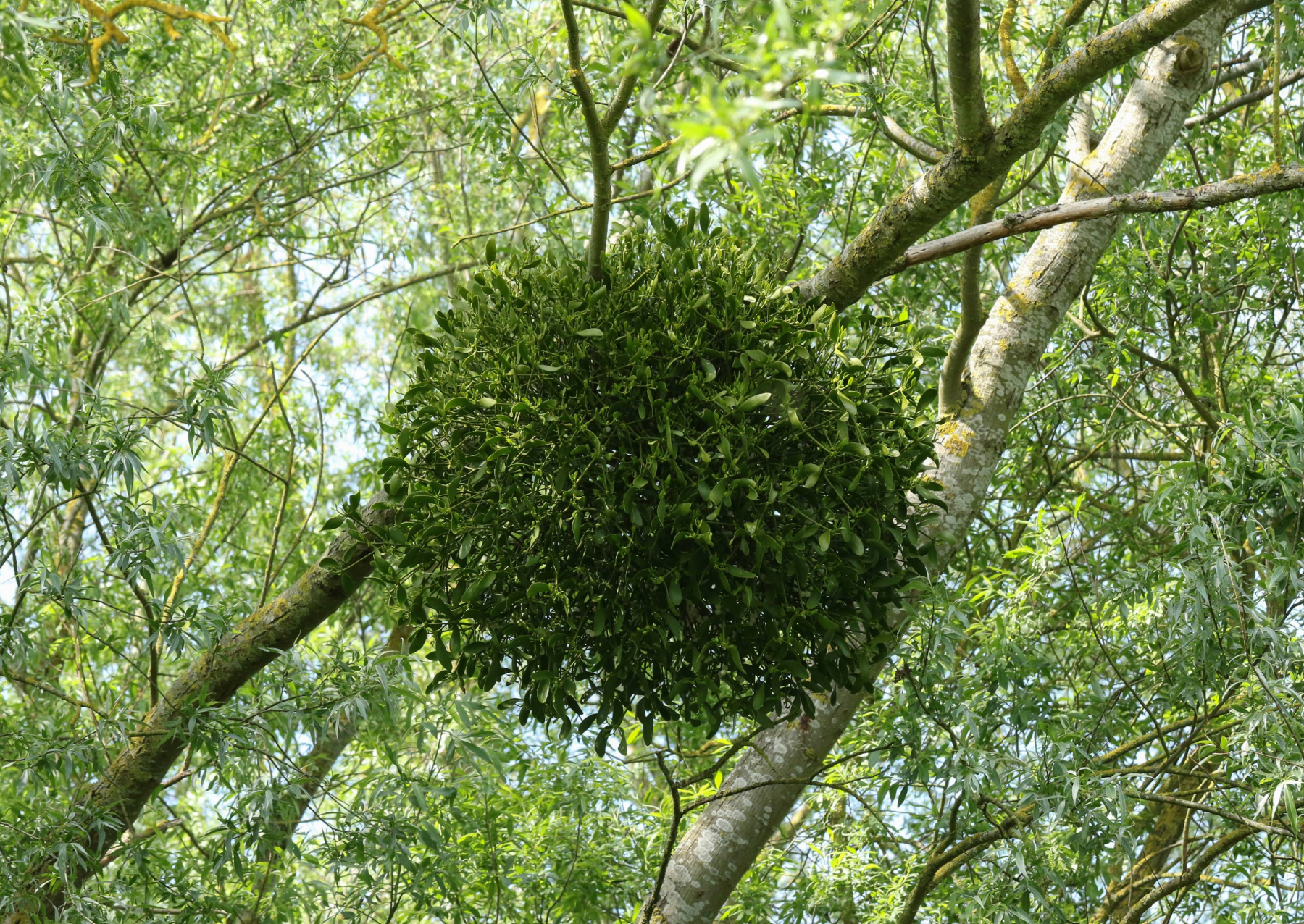
There are even “hot spots” for leafy mistletoe, as its sticky berries are spread primarily by birds that eat them. Obviously, the health risks associated with ingesting mistletoe do not apply to birds. In fact, the word mistletoe literally translates to “droppings on a twig,” a specific reference to how it spreads. Birds eat mistletoe berries in winter, spreading the seeds in their fruit-rich droppings. Their seeds stick to random tree branches due to a sticky slime on the seed coat that even survives its journey through a bird’s digestive system. It will stay there until the following spring when it will germinate and enter its host to begin its life as a parasite.
So next time you’re driving and the Jackson 5 I saw mom kiss Santa or that of Justin Bieber Mistletoe starts playing, remember that mistletoe is not just a generic evergreen or Victorian era kissing contraption. This is an ecologically important parasitic plant, with roots both ancient and contemporary, that is here to stay.
In The story of everythingPopular Science uncovers the hidden histories and surprising origins of the things we use (or eat) every day.

PopSci Outdoor Gift Guide 2025


