The Best Space Photos of 2025 Reveal the Most Jaw-Dropping Views of the Cosmos


December 22, 2025
4 min reading
 Add us on GoogleAdd SciAm
Discover the 10 most breathtaking space images of 2025
From an interstellar comet to breathtaking auroras and brand-new rockets to iconic space telescopes, here are some of our favorite images of the cosmos in 2025.
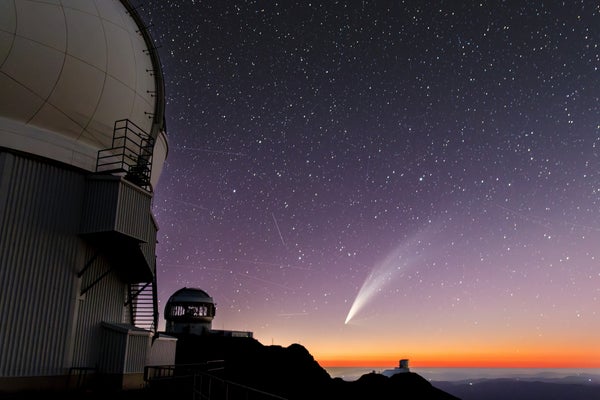
Comet C/2024 G3 (ATLAS) seen from Cerro Pachón, a mountain in the Chilean Andes used as an astronomical outpost, in January 2025.
With 2025 fast approaching, let’s look back at some of the year’s highlights in space, from astronomy to spaceflight.
An unprecedented observatory
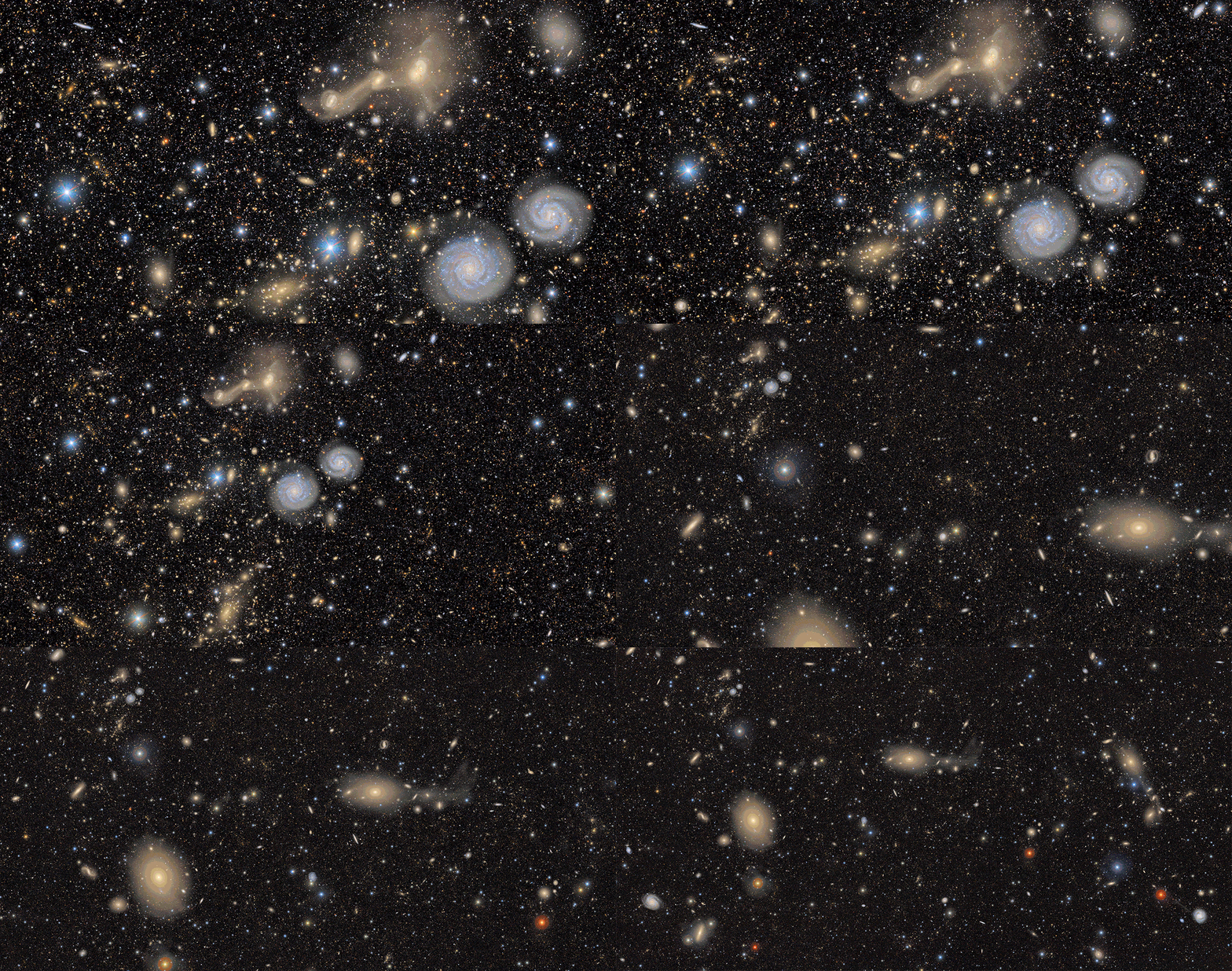
NSF-DOE Vera C. Rubin Observatory
On supporting science journalism
If you enjoy this article, please consider supporting our award-winning journalism by subscription. By purchasing a subscription, you are helping to ensure the future of impactful stories about the discoveries and ideas shaping our world today.
Astronomers entered a stunning new era this year with first light from the Vera C. Rubin Observatory in Chile. The observatory was designed to scan the sky in incredible detail. The first major task of his scientific career will be to lead a 10-year Legacy Survey of Space and Time (LSST) project, creating an incredibly detailed film of the cosmos around us that researchers hope can help them understand the solar system, the Milky Way, and the mysterious dark matter and dark energy of the universe.
At a first-light event in June, scientists revealed the product of just 10 hours of observations: images that seem to zoom in forever, a treasure trove of galaxies, and colorful clouds of gas and dust splattered across the sky.
Star Shells
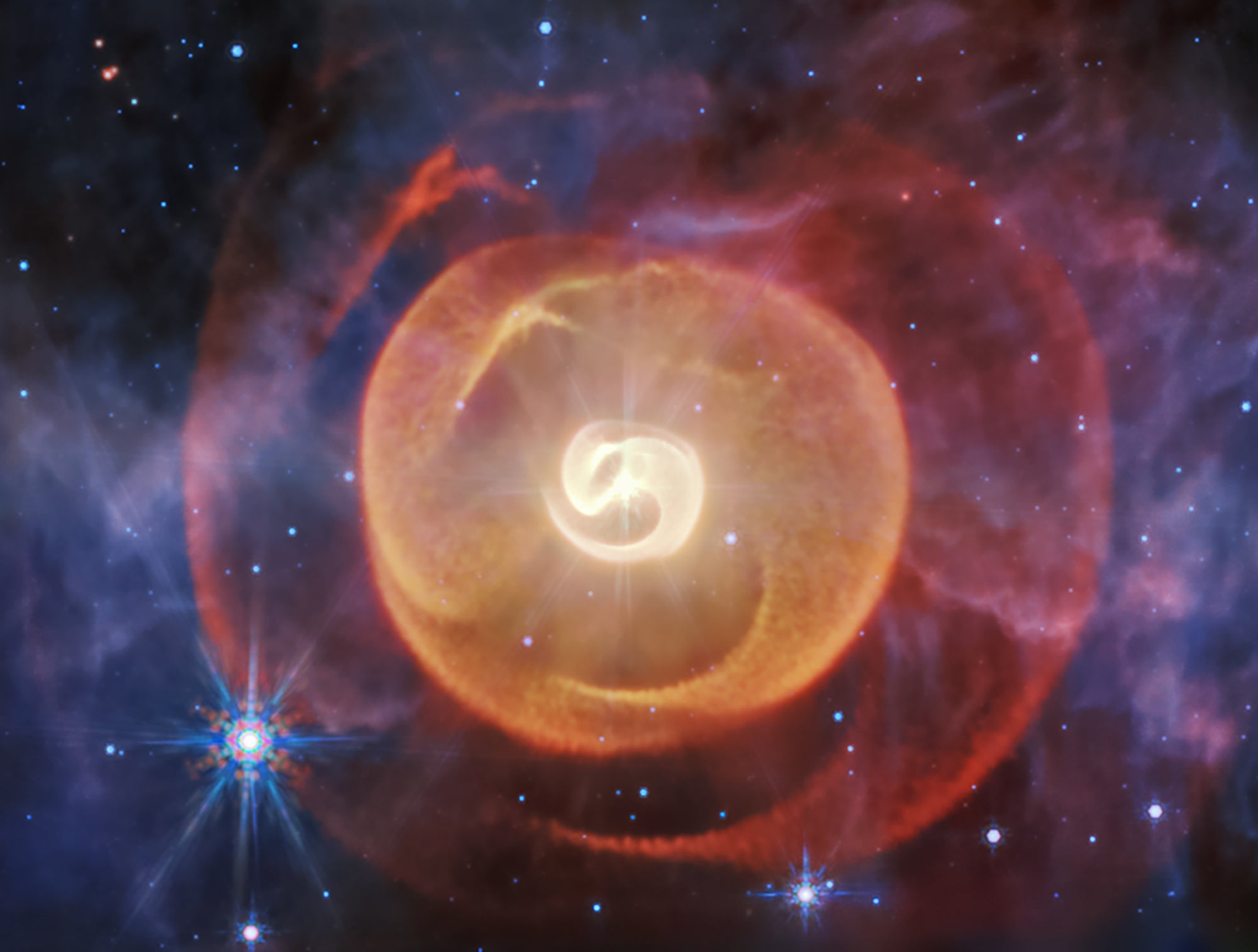
NASA/ESA/CSA/STScI (picture); Yinuo Han/California Institute of Technology/Ryan White/Macquarie University (science); Alyssa Pagan/STScI (image processing)
This stunning image comes from NASA’s James Webb Space Telescope and shows delicately interlocking spirals of material thrown over some 700 years by a celestial system called Apep. Apep includes two so-called Wolf-Rayet stars, which are bright, massive stars that eject enormous amounts of material for a few million years before collapsing into a black hole or neutron star, depending on their size. Apep also includes a third star, a massive supergiant.
A new rocket takes flight

Carrying NASA’s sister ESCAPADE (Escape and Plasma Acceleration and Dynamics Explorers) spacecraft, Blue Origin’s New Glenn rocket launched on November 13, 2025 from Launch Complex 36 at the Cape Canaveral Space Station in Florida.
In January, Blue Origin’s newest reusable heavy-duty vehicle, New Glenn, made its maiden flight, marking the company’s first trip to orbit amid regular short suborbital escapades. On this first flight, the rocket’s booster missed its key objective: landing on a barge in the Atlantic Ocean for later reuse. But in November, New Glenn also pulled off this maneuver.
Auroras paint the sky

An aurora observed over Monroe, Wisconsin, on November 11, 2025.
Ross Harried/NurPhoto via Getty Images
The sun has officially exited its period of maximum solar activity, but that doesn’t mean it’s calm. In November, a wave of solar explosions stunned skywatchers as far south as Mexico and Florida with breathtaking auroras.
It’s still possible that the sun will produce more fireworks as its magnetic activity calms down as it approaches solar minimum in 2030 or 2031. But November’s celestial show could be the last good show before the sun’s next period of high activity.
A cosmic chameleon
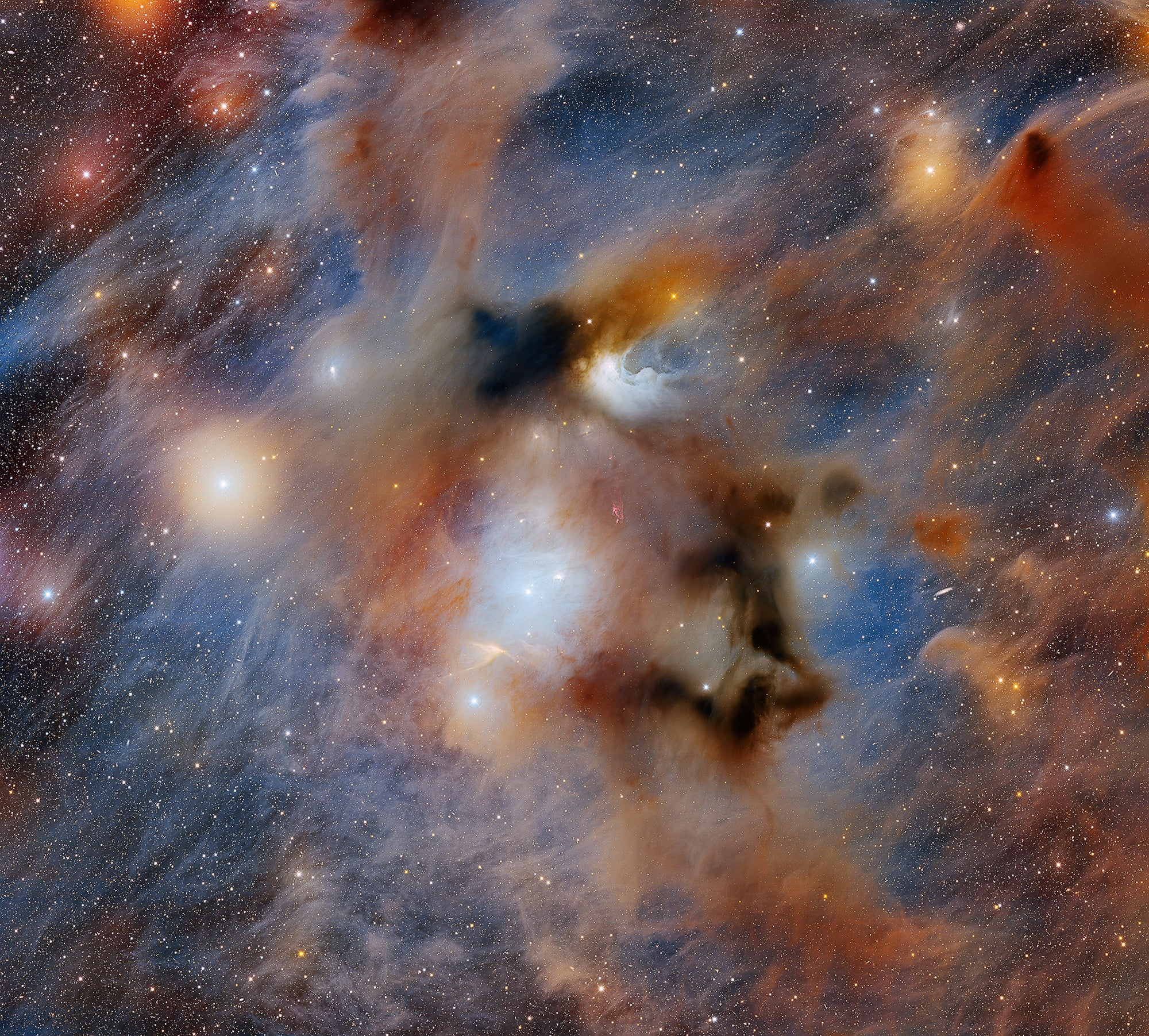
CTIO/NOIRLab/DOE/NSF/AURA (picture); Rector TA/University of Alaska Anchorage/NSF NOIRLab/Mr. Zamani/D. by Martin/NSF NOIRLab (image processing) (CC PAR 4.0)
The dark molecular cloud Chamaeleon I is the closest star-forming region to Earth and is part of the larger Chamaeleon complex. The image of the dark cloud comes from the Dark Energy Camera, a powerful survey instrument mounted on the Cerro Tololo Inter-American Observatory in Chile.
Solar systems for babies
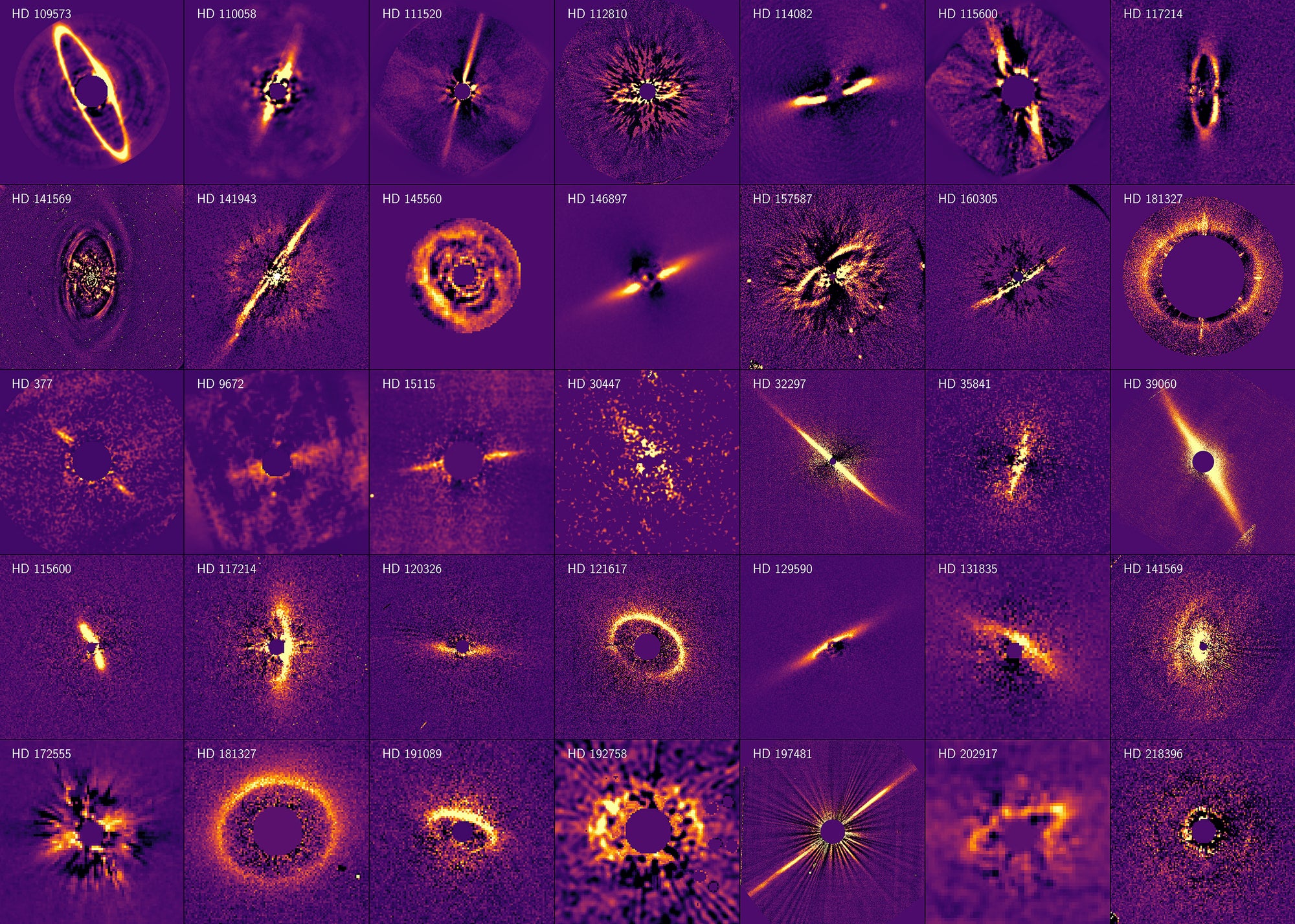
N. Engler et al./SPHERE/ESO Consortium
While we Earthlings enjoyed our annual whirlwind through the solar system, scientists shared baby photographs from a whole menagerie of other star systems, thanks to the European Southern Observatory’s Very Large Telescope. The results look surprisingly familiar: Many of the debris disks the researchers have imaged show structures that mimic those in our own solar system, like a belt of giant planets lined inside by asteroids and outside by comets.
Hello, Earth!
NASA/Goddard/University of Arizona/Lockheed Martin
Images of Earth from space provide a dramatic source of perspective on everyday life. Take, for example, this video of Earth captured by NASA’s Origins, Spectral Interpretation, Resource Identification and Security – Apophis Explorer (OSIRIS-APEX) spacecraft.
The spacecraft took the photo on September 23 while 2,136 miles from Earth using its StowCam imager, which played a crucial role in the mission’s initial task of collecting space rock samples from the near-Earth asteroid Bennu. The spacecraft now faces its second dramatic act: In 2029, it will fly by another near-Earth asteroid, Apophis, two months after that asteroid will approach so close to Earth that it will be visible to some two billion people. Needless to say, we’ll want all of the spacecraft’s instruments to be in tip-top shape when that time comes.
Ripples in a celestial pond
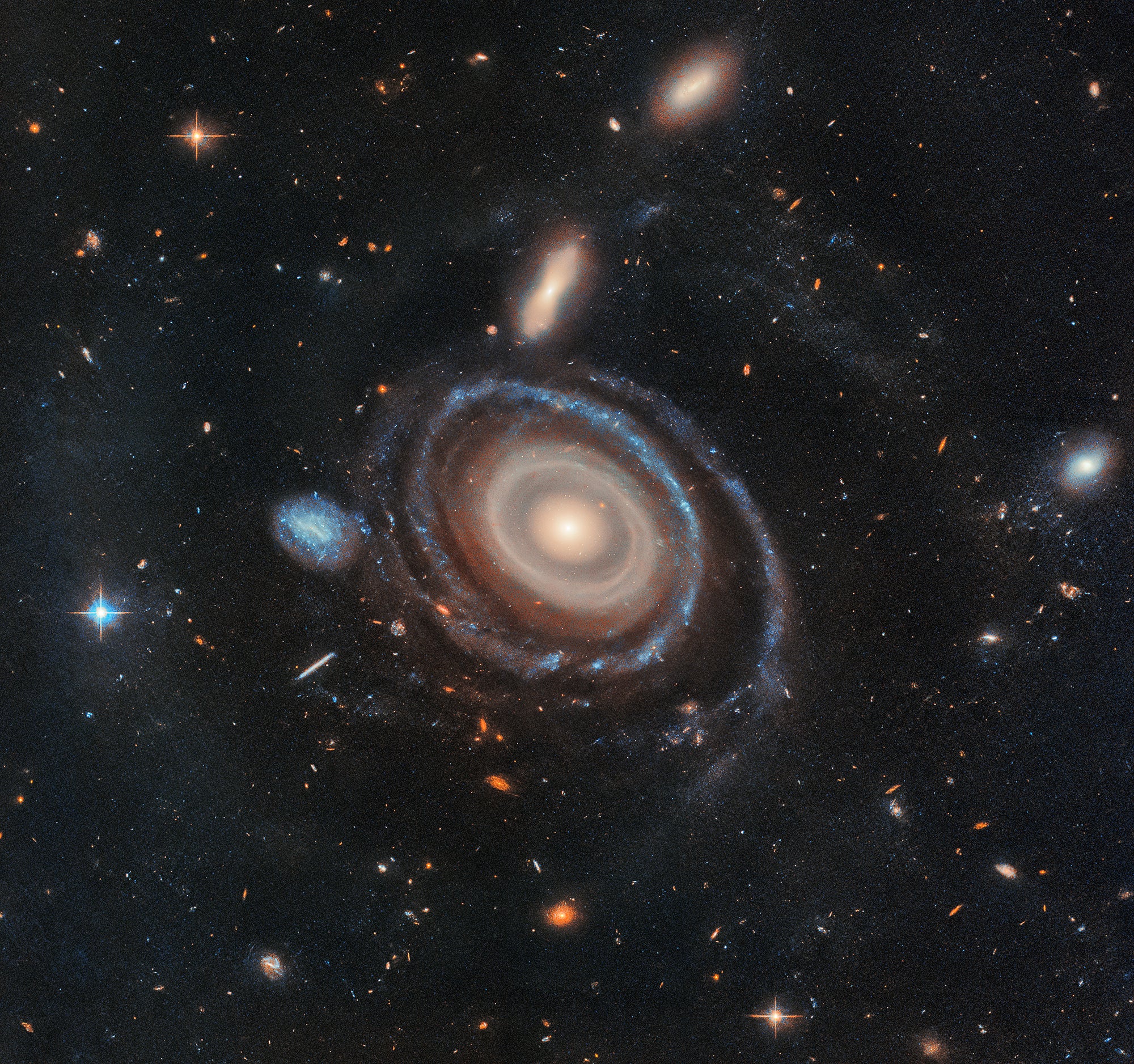
NASA/ESA/Imad Pasha/Yale University/Pieter van Dokkum/Yale University
The iconic Hubble Space Telescope celebrated its 35th anniversary this year and the beloved observatory is still in operation. Consider this image of the galaxy LEDA 1313424, which researchers have dubbed the “Bullseye” and which is about two and a half times the size of the Milky Way, the galaxy we live in.
The stunning image shows the eight interlocking rings that inspired Bullseye’s nickname. (Additional observations by a telescope in Hawaii also detected a ninth ring.) The rings are ripples created when a small blue dwarf galaxy, visible to the left of LEDA 1313424 in the Hubble image, passed through Bullseye’s core about 50 million years ago.
Interstellar Visitor

NASA/ESA/D. Jewitt/University of California, Los Angeles (picture); J. DePasquale/STScI (image processing)
One of the highlights of 2025 was the long-awaited discovery of the third known interstellar object, now known as Comet 3I/ATLAS. The comet appeared in early July, passing through our solar system at such a fast speed that it must have come from another star, astronomers quickly determined. Within weeks, the Hubble Space Telescope had spotted the otherworldly object and photographed the bright coma surrounding the comet’s body.
Since then, countless other spaceships have jumped into action. Perhaps the most breathtaking observations were collected by missions stationed on Mars, which the comet flew past in early October. Comet 3I/ATLAS is now leaving our celestial neighborhood. But astronomers are still working to catch more glimpses of the elusive object – they expect more science to come during this year’s visit in 2026.
Earth orbiters

Astronauts living and working aboard the International Space Station captured this image from another Earth orbiter, the Moon, earlier this year, as the lab flew over Bolivia and Brazil as it took in one of the 16 sunsets the outpost enjoys each day. The Moon’s seemingly crushed appearance is an illusion caused by the refraction of light from our natural satellite by Earth’s atmosphere.
It’s time to defend science
If you enjoyed this article, I would like to ask for your support. Scientific American has been defending science and industry for 180 years, and we are currently experiencing perhaps the most critical moment in these two centuries of history.
I was a Scientific American subscriber since the age of 12, and it helped shape the way I see the world. SciAm always educates and delights me, and inspires a sense of respect for our vast and magnificent universe. I hope this is the case for you too.
If you subscribe to Scientific Americanyou help ensure our coverage centers on meaningful research and discoveries; that we have the resources to account for decisions that threaten laboratories across the United States; and that we support budding and working scientists at a time when the value of science itself too often goes unrecognized.
In exchange, you receive essential information, captivating podcasts, brilliant infographics, newsletters not to be missed, unmissable videos, stimulating games and the best writings and reports from the scientific world. You can even offer a subscription to someone.
There has never been a more important time for us to stand up and show why science matters. I hope you will support us in this mission.


