Supreme Court Justice Alito dissents on Trump National Guard block


NEWYou can now listen to Fox News articles!
Justice Samuel Alito criticized the Supreme Court majority Tuesday in a sharp dissent after the high court ruled 6-3 to temporarily block President Donald Trump from deploying the National Guard to Chicago.
Alito said the high court majority made “reckless” and “reckless” decisions in reaching its decision. The majority also didn’t give Trump enough respect after the president found that agitators were preventing immigration agents and other federal personnel from doing their jobs in Chicago and that the National Guard had to step in to help.
“Whatever one may think of the current administration’s enforcement of immigration laws or the manner in which ICE has conducted its operations, the protection of federal agents from potentially deadly attacks should not be thwarted,” Alito wrote.
WHERE TRUMP’S COURT FIGHT FOR DC NATIONAL GUARD IS HELD FOLLOWING SHOOTING
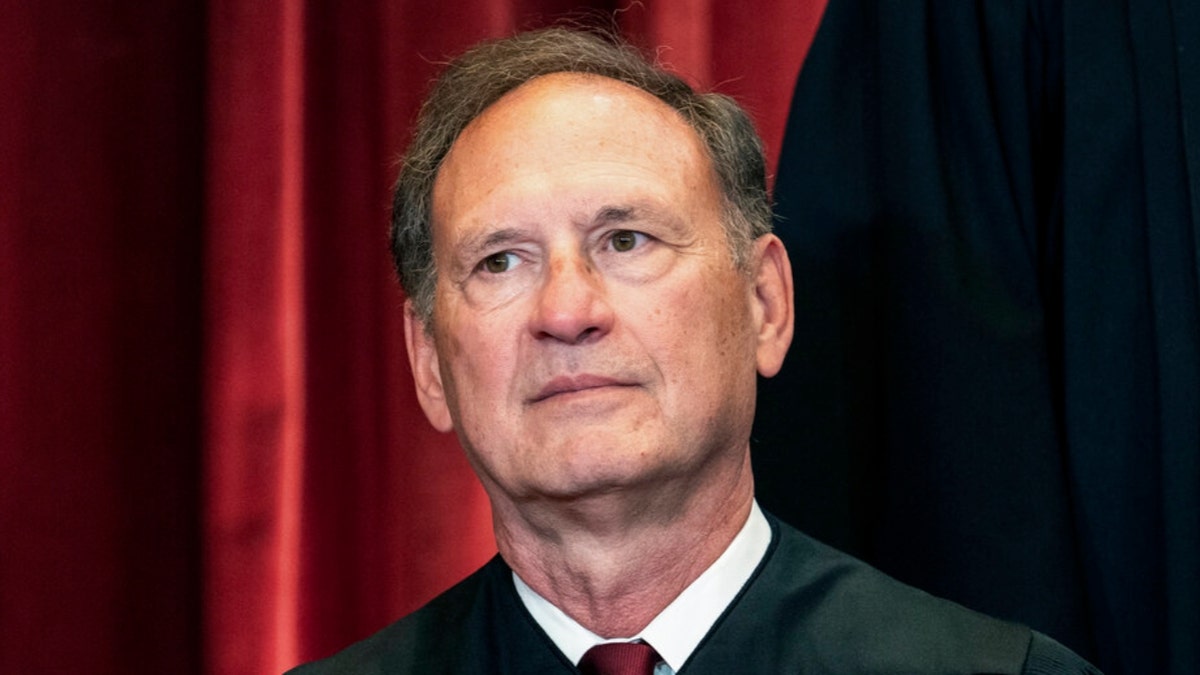
Supreme Court Justice Samuel Alito (Erin Schaff/The New York Times via AP, Pool, File)
The lawsuit stems from Trump invoking a rarely used federal law to federalize about 300 National Guard members and deploy them to protect federal personnel and buildings.
The Trump administration argued that protesters obstructed, assaulted and threatened ICE agents, and that the National Guard was needed because Illinois’ resistant Democratic leaders and local law enforcement were not adequately addressing the problem, the administration said.
Illinois sued, and lower courts blocked the National Guard deployment, finding that Trump had failed to meet the law’s criteria that the president could use reserved forces only when he was “unable, together with the regular forces, to execute the laws of the United States.” The Supreme Court’s decision upheld that conclusion as the case moves through the courts.
The Supreme Court majority said in an unsigned order that “regular forces” meant the U.S. military, not ICE or other civilian law enforcement agents. The majority said that since Trump had not identified any justification for using the regular military for domestic purposes in Chicago, there was no way to exhaust that option before resorting to the National Guard.
JUDGE BLOCKS TRUMP’S NATIONAL GUARD DEPLOYMENT TO LOS ANGELES
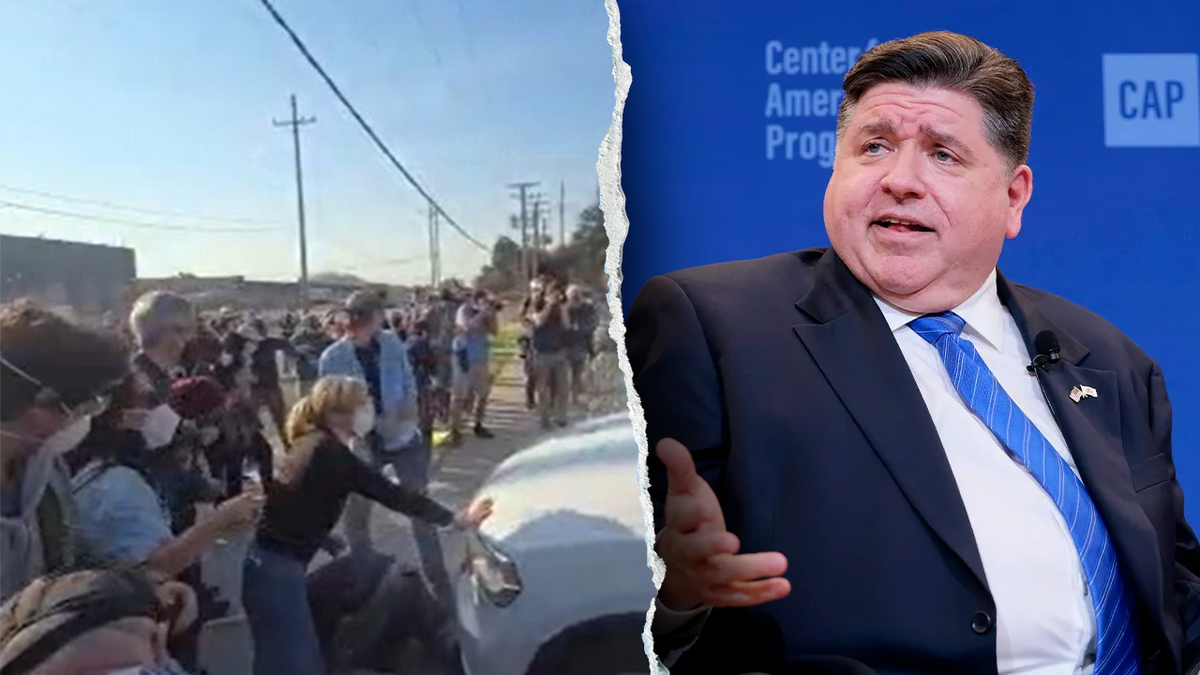
The Department of Homeland Security criticized Illinois Democratic Gov. JB Pritzker, right, for not being proactive in his response to a chaotic anti-ICE protest in Broadview, Illinois. (Anna Moneymaker/Getty Images and Jon Stegenga via Storyful)
Alito, who was joined by Justice Clarence Thomas, dissented, saying the majority had raised and prematurely accepted an “eleventh-hour argument” about the meaning of “regular forces.” Justice Neil Gorsuch issued a separate dissent.
The majority also took issue with the law’s language regarding law enforcement, saying that if National Guard soldiers were simply protecting federal officers, that would not amount to law enforcement.
And, if the National Guard were to carry out laws, it could violate the Posse Comitatus Act, which says the military generally cannot act as a national police force unless Congress authorizes it, the majority said.
Alito, appointed by President George W. Bush, said he found it “strange” that the majority considered the Posse Comitatus Act to be so relevant, saying the president could use the military for “a range of national objectives.” The Constitution authorizes the president to use the military to respond to war, insurrection or “any other serious emergency,” Alito wrote.
The conservative Justice also warned of the broader implications of the majority’s decision, as Trump has attempted to deploy the National Guard to other cities as part of a crackdown on immigration enforcement and street crime. The president also faced legal difficulties in California and Portland, Oregon, but the Chicago case was the furthest along in the legal system.
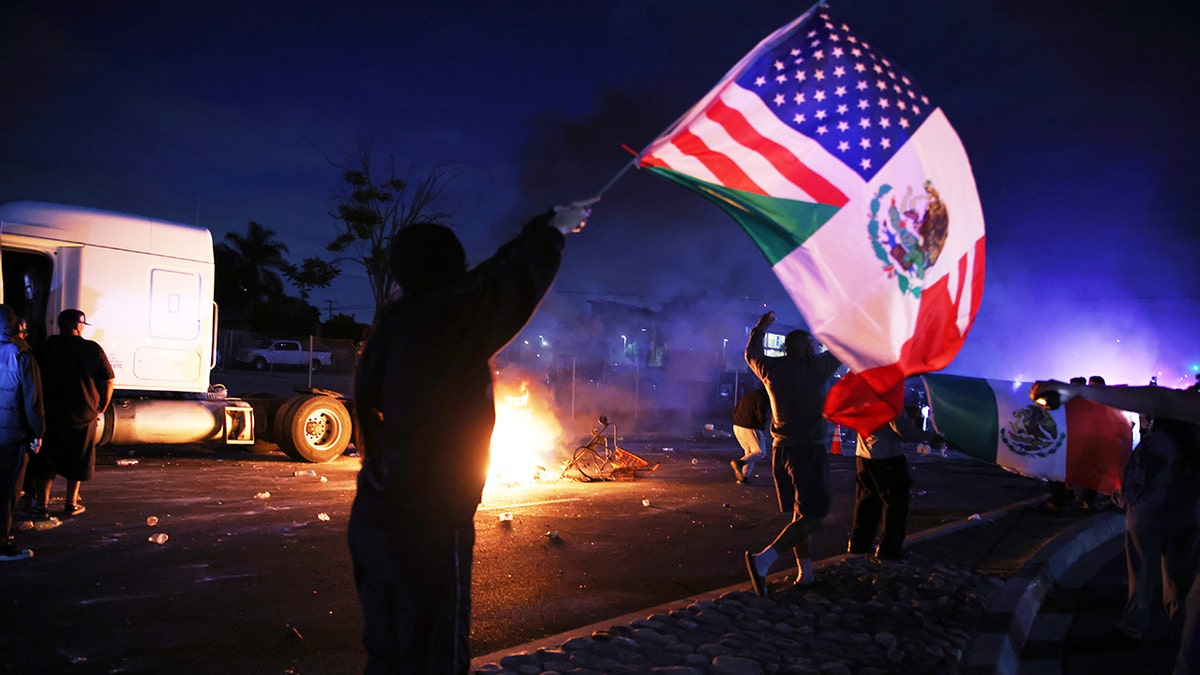
A protester waves an American and Mexican flag during a demonstration in Compton, California, June 7, 2025, after federal immigration authorities conducted operations. (Ethan Swope/Associated Press)
Requiring Trump to exhaust the use of other military forces before resorting to the National Guard would lead to “farcical results,” Alito said.
“Under the Court’s interpretation, members of the National Guard could arrest and process aliens subject to deportation, but they would not have legal authority to perform purely protective functions,” Alito wrote. “Our country has always been wary of using soldiers as national police, but has been comfortable with using them for purely protective purposes.”
CLICK HERE TO GET THE FOX NEWS APP
Illinois had argued that the ICE protests were mostly peaceful and that local law enforcement had the unrest under control. The state would suffer irreversible harm if the courts did not prevent Trump from using the National Guard, state prosecutors argued.
“The planned deployment would undermine Illinois’ sovereign interests in regulating and monitoring its own law enforcement activities,” the lawyers wrote, adding that “Illinois’ sovereign right to commit its law enforcement resources wherever it sees fit is the type of ‘intangible, unquantifiable interest’ that courts recognize as irreparable.”


