
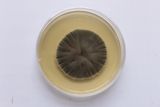
The Chernobyl disaster unleashed over one hundred radioactive elements into the atmosphere, devastating the area and prompting a mass evacuation.
But one species is not just surviving, it is thriving in northern Ukraine’s abandoned power plants – Cladosporium sphaerospermum, a particularly hardy strain of dark-colored mold, is gorging on the radiation in and around Chernobyl’s nuclear reactors.
This, say scientists, could prove particularly helpful to astronauts seeking to shield from cosmic radiation and produce energy in space.
Read More: Dogs In Chornobyl are Mysteriously Turning Blue, But Radiation Is Not to Blame
Radiation-Eating Fungi
According to a study in Mycological Research, scientists first discovered C. sphaerospermum at Ukraine’s abandoned nuclear facilities in the late 1990s, along with 36 other fungal species. The scientists found the mold clinging to the walls in the inner parts of Unit Four, the reactor at the epicenter of the 1986 explosion, and the area with the highest radiation levels.
A study published in Current Opinion in Microbiology revealed that the mold behaved unusually: it was not merely persisting despite the radiation; it was attracted to the area because of the radiation.
Laboratory experiments published in a 2003 study in the Journal of Environmental Radioactivity and a 2004 study in Mycological Research show that several fungal species found in Chernobyl can decompose radioactive graphite (also known as “hot particles”) by moving toward the radiation source before engulfing and dissolving the particle. In simple terms, they eat it up.
The key may lie in the mold’s dark color — specifically, melanin, the pigment responsible for its inky hue. Researchers have shown that ionizing radiation boosts the growth of melanized cells. The results of a study published in PlosOne, for example, found that highly pigmented fungi (C. neoformans and W. dermatitidis) grew “significantly” after exposure to ionizing radiation, some 500 times higher than background levels.
Researchers have compared this process — known as radiosynthesis — to photosynthesis, only instead of chlorophyll converting light into energy, melanin converts ionizing radiation into energy.
From Chernobyl To Space
The Chernobyl exclusion zone may seem far removed from deep space, but the two share at least one thing in common: harmful levels of radiation. It has been estimated that one year on Mars would expose an astronaut to 400 mSv of radiation — that is over 60 times the amount (2.4 mSv to 6.2 mSv) the average amount a person receives here on Earth, according to a study in Frontiers in Microbiology.
The ability of melanin-rich fungi to survive highly radioactive environments has led to calls for the exploration of melanin as a form of radioprotection, or shield, according to a study in Environmental Microbiology. It has also been put forward as a potential method of energy production following successful experiments involving the growth of C. sphaerospermum on the International Space Station (ISS) — according to the researchers involved, it may have experienced “faster-than-normal” growth in space.
Life In The Exclusion Zone
Meanwhile, far from being a dead zone, the Chernobyl exclusion zone is teeming with life. This is less likely to be due to increases in radiation than to decreases in people, who, other than a few who have returned, remain largely absent from the area.
Studies, such as one in Current Biology, have shown that, in the decade immediately after the accident, the numbers of wild boar, elk, and roe deer surged. Meanwhile, other animals have successfully adapted to environmental changes — take, for example, eastern tree frogs, which have turned black, and packs of feral dogs descended from pets, which now run wild.
Read More: Have Chernobyl Mutations Rewired Evolution?
Article Sources
Our writers at Discovermagazine.com use peer-reviewed studies and high-quality sources for our articles, and our editors review for scientific accuracy and editorial standards. Review the sources used below for this article:


:max_bytes(150000):strip_icc()/Health-sugar-cravings-6141bf51dba942c6bb0bba7f4963511c.png?w=390&resize=390,220&ssl=1 "8 Foods That Satisfy Sugar Cravings Better Than Candy")


