Unusual Snowfall Shuts Down One of Earth’s Most Advanced Telescopes in the Atacama Desert


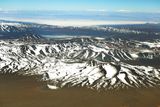
The arid Atacama Desert in northern Chile is one of the driest places on Earth, with some areas receiving as little as 0.5 millimeters of rain per year. This extremely dry weather has made the Atacama a prime site for stargazing, and the desert is home to some of the most powerful telescopes we have. But a recent freak snowstorm dusted the desert with flakes and shut down one of these telescopes.
Learn more: Galaxies of dancing mice and bunny-eared jellyfish — 6 strange shapes in our universe
Why the Atacama Desert is the driest place on earth
Protected from humidity by its position near the equator, its proximity to cold ocean currents from the neighboring Pacific, and the influence of the nearby Andes mountains, the Atacama has been dry for millions of years.
The desert covers approximately 40,000 square miles. A desert region, the Altiplano Plateau, sits about 13,123 feet (4,000 meters) above sea level and is one of the sunniest places on Earth, according to a study by Bulletin of the American Meteorological Society.
Snow in the Atacama Desert
On the even higher Chajnantor plateau, in a desert area with an alien landscape, is a group of space telescopes, including the Atacama Large Millimeter/submillimeter Array (ALMA) observatory. ALMA is made up of 66 parabolic antennas that capture rare energy signals from the farthest corners of space. The lack of atmospheric interference in the Atacama makes it easier for ALMA to pick up these signals.
In late June and early July 2025, ALMA was caught in a very unusual snowstorm, forcing it into emergency “survival” mode. The ALMA research team repositioned their plates, tilting them to avoid snow accumulation. This temporarily interrupted telescope observations. The storm was localized, so the Southern Astrophysical Research (SOAR) telescope and the Vera C. Rubin Observatory, both located in the Atacama but only a few hundred miles southwest of ALMA, were not affected.
The intense solar radiation that bathes the Atacama quickly removes the snow, and the last dust is practically gone within a month. It is likely that some of this snow did not melt but was converted directly to gas through a process called sublimation. This process is driven by the intensity of local sunlight and the aridity of the atmosphere, according to NASA’s Earth Observatory.
A wetter future in the Atacama?
The Atacama’s incredibly dry climate may be subtly changing. The region recorded no rain between October 1903 and January 1918, but snow fell in 2011, 2013 and 2021. The desert may appear lifeless, but microbes and hardy plants lurk beneath the soil. Unusual rains in the desert, which occurred last year, can cause intense blooming of intense colors on the dry, cracked surface of the desert, with desert flowers emerging months earlier.
Climate change in the region has also had negative impacts. In March 2015, heavy rains in a region where such weather conditions are almost foreign caused a series of deadly floods. In the coastal town of Chañaral, which borders the desert, the Salado River has reached a maximum depth of about 14.76 feet (4.5 meters). The floods caused extensive damage to homes, roads and bridges, and 31 people died.
These recent cases of climate change in the region could be further examples of how the anthropogenic climate crisis is altering the planet. Soon, snow in the desert may become a more common challenge for ALMA.
Learn more: NASA’s colorful cosmic map could shed light on the first moments after the Big Bang
Article sources
Our Discovermagazine.com editors use peer-reviewed research and high-quality sources for our articles, and our editors review the articles for scientific accuracy and editorial standards. See the sources used below for this article:


