Recovery, JOMO and brain boosters


Ruth Clegg Health and wellness journalist

 Getty Images
Wellness has become such an invaluable (or in many cases expensive) endeavor that we can’t seem to get enough of it.
Last year, we prioritized magnesium and consumed creatine — a now-common muscle-building supplement — and turned to AI chatbots for help, from a personalized workout program to a daily meal plan.
And this comes against a backdrop where more than a million people pay privately for weight-loss drugs, in some cases completely transforming their relationship with food and exercise.
What is this multi-billion pound industry focused on in 2026? Several experts give us their opinion on well-being issues.
Recovery
If 2025 was about hitting gym goals, tracking down-to-the-second runs, and lifting heavier and heavier weights, then this year is all about recovery.
Jak Phillips, chief growth officer of global fitness brand Les Mills, says it’s no longer about “no pain no gain”, something “fitness has been building around for years”.
“Technology has made us much smarter,” he says. “It’s no longer about training on the field.”
He says smartwatches have revolutionized our understanding of what it means to be fit.
By tracking our movements and heart rate, they tell us when to take rest days, warn us if we’ve been training too hard, and highlight the days when our fitness peaks.
“Now we have more data and a better understanding of our well-being – we can give ourselves a break.”
Consider rest days, reframing them as a way to stay fit, rather than “taking time off,” he says.
 Getty Images
And with that, a relatively new acronym will begin to seep into our consciousness, Mr. Phillips predicts. This year it will be JOMO instead of FOMO.
“Many of us can relate to FOMO – the fear of missing out – but what if we stopped trying to figure it all out?
“Why don’t we experience JOMO – the joy of missing out?”
FOMO was first recognized by the Oxford Dictionary in 2004, where we compare our lives to those of others and put pressure on ourselves to keep up in a world often created by our glitzy and shiny social networks.
Now, more than 20 years later, a counter-movement is growing to reduce the anxiety that often comes with worrying about what others are doing and trying not to spread yourself too thin.
It’s not just about saying no to things, Phillips says, it’s about learning to be more comfortable with ourselves and not needing external validation for how we choose to live our lives — whether that’s how often we workout or how often we socialize.
“It’s about understanding what’s good for you and not feeling guilt or shame for prioritizing yourself,” he says.
Stimulate the brain
“Boosting is the key word here,” says Rachel Chatterton, product director at Holland Barrett.
“Our customers are very interested in anything that gives them a boost – and this year it’s going to be about boosting their brain power.”
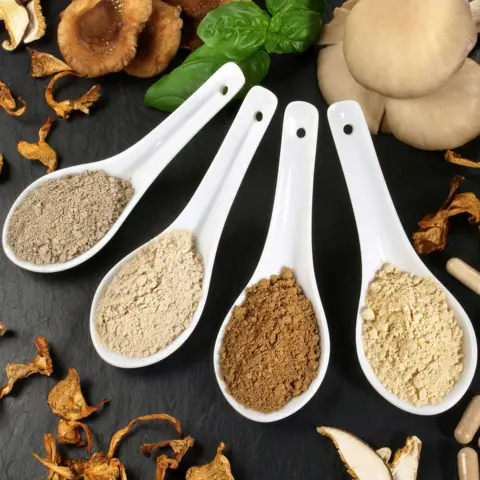
Nootropics, supplements claimed to improve cognition and sometimes called “smart drugs,” have been around for decades, but it’s only in recent years that their appeal has really gained momentum.
These should not be confused with regulated pharmaceutical medications which may help treat conditions such as ADHD, narcolepsy and Alzheimer’s disease, and should only be taken if there is a diagnosed medical problem.
By 2030, products like lion’s mane, ashwagandha and L-theanine could account for an $11 billion (£8 billion) share of the wellness market.
There may only be a number of small studies suggesting these supplements can enhance cognition, improve memory and reduce stress, but Ms Chatterton says the market, particularly among Generation Z, is booming.
 Getty Images
“They’re much more interested in health than any other generation and I think that’s driving a pretty big movement in terms of preventative health.
“They’re really thinking about how they can take care of their brain at every stage of their lives.”
And many of us might start “piling on supplements throughout the day,” she suggests. “Not necessarily by swapping inputs or outputs, but by mixing magnesium with lion’s mane, for example.”
But boosting our brains doesn’t stop there: millions of us download brain training apps to improve our processing speed, our memory and to try to protect the 86 billion neurons we have stored in our heads – and as a way, we are told, to remain mentally resilient in the age of artificial intelligence.
Lifestyle GP Dr Alex Maxwell is not convinced by the purported power of nootropics and brain training.
“You’ll get a lot more bang for your buck by increasing your sleep duration, it’s a great brain protector, managing your cardiovascular and metabolic health through exercise – these are the kinds of things that will help you and are proven to help.”
Nootropics have little evidence of their effectiveness in the general healthy population, he says, and taking a bit of lion’s mane, for example, won’t pinpoint the root cause of a person’s lack of sleep or help them feel less stressed in the long term.
 Getty Images
Nervous systems
So how can we cope with the stress this year will inevitably impose on us? If there’s one nerve you want to hit in 2026, it’s the vagus nerve.
As we begin to understand the vital role our nervous system plays in our ability to manage stress, more and more evidence suggests that the vagus nerve may hold the key.
TV GP Zoe Williams believes that by hacking the nerve – known as the body’s super highway – we can calm down more quickly in stressful situations and develop a level of resilience to stress.
“Whether it’s a work deadline, comparing yourself to someone on social media, an argument with your partner, or missing the bus, these are all small doses of stress that our bodies are not designed for,” she explains.
 Getty Images
She recommends several simple techniques that can help us activate it, jump-start our parasympathetic nervous system, and curb the “fight or flight” situation many of us might find ourselves in on a daily basis.
Techniques that can help activate the vagus nerve:
- Aware of our breathing, Dr. Williams recommends the “physiological sigh” which consists of two sharp inhalations followed by a long exhalation.
- Cold water therapy: Splashing cold water on your face can help lower your heart rate and stimulate the vagus nerve.
- If you want to spend a few hundred dollars, you can invest in a vagus nerve stimulator, small devices worn around the neck or attached to the ear that gently vibrate.
Back to basics?
Dr. Maxwell says “getting back to basics” is his key theme when it comes to wellness: eating well, sleeping and moving; these three things are essential for good health.
He warns that simple can sometimes be better, as some people take the surveillance of their daily lives to the extreme with recording their lives. You can now record your entire day using a new wearable AI device that continuously records audio. It lets you know who you met, what you discussed, summarizes the exchange, and essentially gives you a glimpse into the rich tapestry of your day.
What’s not to like?
Dr. Maxwell shakes his head when I give him this example.
“It seems really petrifying,” he says. “Technology should be your servant, not your master.
“Do some research and see what the evidence is behind these new trends,” he recommends.
“Wellness should be a personal choice, and what works for one person won’t necessarily work for you.”


