A NASA spacecraft orbiting Mars may be dead

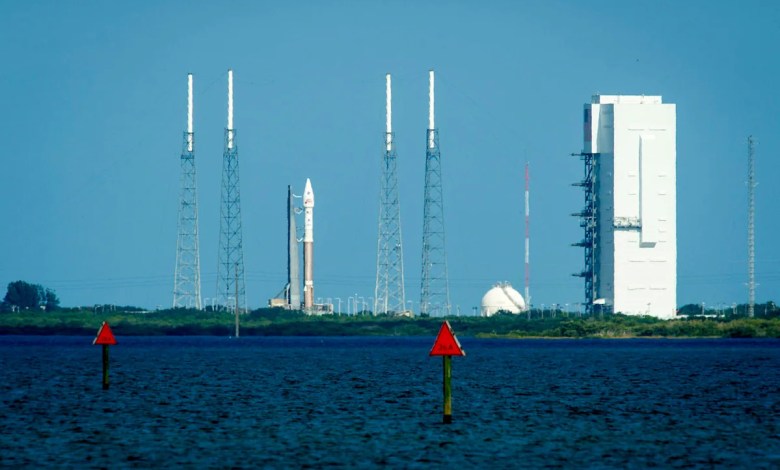
For nearly a month, NASA has been trying to make contact with a spacecraft orbiting Mars that suddenly went silent.
The space agency lost communication with the MAVEN probe (short for Mars Atmosphere and Volatile EvolutioN) on December 6, and efforts to reestablish a connection were unsuccessful. Based on the data elements received that day, mission controllers believe the probe was rotating unexpectedly.
NASA must now wait until January 16 before it can attempt to restart MAVEN again, because Mars and Earth have been on opposite sides of the Sun since Monday, leading to a prolonged communications outage.
Overall, this doesn’t look promising for one of NASA’s flagship missions.
Since the MAVEN spacecraft entered orbit around Mars in 2014, it has been studying the Red Planet’s upper atmosphere, including a layer of plasma known as the ionosphere, and studying how and why Mars lost its atmosphere over billions of years. The spacecraft was also instrumental in relaying communications between two rovers on the surface of Mars, Curiosity and Perseverance, and Earth.
NASA has been unable to reach MAVEN since it experienced what the agency called a “loss of signal” with ground stations on Earth on December 6. At the time, the spacecraft was in orbit behind Mars, so signal loss was common and expected, as Mars still blocks MAVEN from calling home during the maneuver. This time, however, when the probe reappeared behind the Red Planet, NASA was unable to pick up any signals from it.
NASA said it was “investigating the anomaly” in a Dec. 9 statement, but provided few details. Mission controllers reported that all of MAVEN’s subsystems were functioning normally before its pass behind Mars.
In an update about a week later, NASA said no transmissions had been received from MAVEN since December 4, but that engineers had recovered a brief fragment of tracking data from December 6.
What they discovered was troubling: “Analysis of this signal suggests that the MAVEN spacecraft was spinning unexpectedly when it emerged from behind Mars,” NASA officials said in a statement.
The space agency uses a global network of giant radio antennas, known as the Deep Space Network, to send commands to MAVEN and monitor any incoming signals. On December 16 and 20, NASA attempted to take photos of MAVEN in orbit from the surface of Mars, using an instrument aboard the agency’s Curiosity rover.
At the same time, mission controllers carefully analyze the latest recovered fragments of location data. NASA said Dec. 23 that it was trying to piece together a timeline of events to figure out what went wrong. NASA did not provide additional details in a request for comment and referred NBC News to the agency’s Dec. 23 update.
The MAVEN mission was initially designed to last only two years, but has been operating continuously for more than a decade. In 2024, NASA celebrated the 10th anniversary of the probe orbiting Mars.
By studying the process of atmospheric loss on Mars, MAVEN was helping scientists get a clearer picture of the planet’s past and present climate and how it transformed from a potentially habitable world with liquid water on its surface to the cold, barren planet it is today.
The spacecraft is one of three spacecraft currently orbiting Mars by NASA. The space agency also operates Mars Reconnaissance Orbiter, launched in 2005, and Mars Odyssey, which took off in 2001.
This article was originally published on NBCNews.com


