North American pterosaur could sit on your shoulder


The winged reptiles which once traveled the sky above North America 209 million years ago could easily arrive in Europe – and not because of their wings. All the continents of the earth were always connected in the Supercontinent pangea. Now, a team led by researchers and volunteers from the National Museum of Natural History of the Smithsonian has discovered the oldest known Pterosaurian in North America. The new pterosaur of sea size Eotephradactylus mcintiae is detailed in a study published on July 7 in the journal Proceedings of the National Academy of Sciences,, And also includes one of the oldest turtle fossils in the world.
“Our discoveries of this study show how paleontologists have just started to scratch the surface of the fossil file,” explains the co-author and paleontologist Ben T. Kligman Popular science.
In the perspective of mass extinction
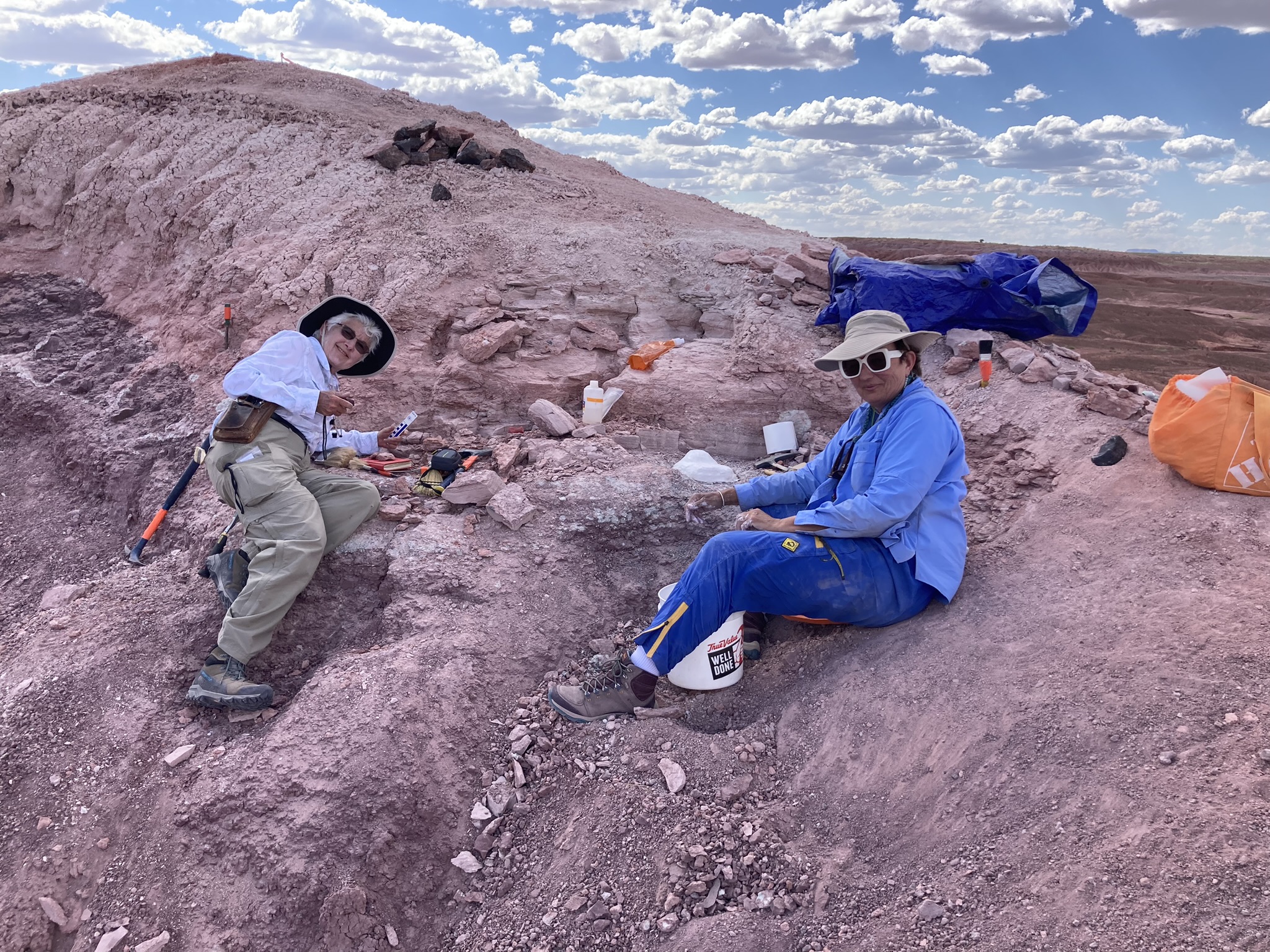
The fossils were discovered in a bos bos bos remotely in the current Arizona Forest National Park. They date back to the late period of the Triassic and offer paleontologists an instantaneous ecosystem full of older species such as giant amphibians and armored crocolians and new animals for turtles, frogs and pterosaurs.
“The climate was arid and monsoon, where most of the year was hot and dry, and for a short period, there were monsoon rains,” explains Kligman. “The framework in which Eotephradactyl And the other animals discovered in this study lived in and around the river canals. The shores of these rivers were allegedly vegetated by coniferous trees and plants in the office. »»
This important site within the Popular National Park captures a period in the history of the Earth when the most modern terrebrates which later prospered during the Mesozoic living alongside the older animals which have turned out at the time when the era of the Tria has arrived at its end.
About 201.5 million years ago, volcanic eruptions associated with the rupture of the
Pangea has radically changed world climates. About 75% of all species on earth have been destroyed, paving the way for new groups of dinosaurs. These new species have diversified and dominated ecosystems around the world. Direct fossil evidence of this transition period on Earth are difficult to find, largely due to a lack of terrestrial fossil outcrops just before the extinction of the Triasique. However, the petrified forest national park is famous for its fossil beds in the Triassic alongside its colored pétrified wood deposits.
In addition, one of the geological outcrops of the park – the Rock Owl member – is full of volcanic ash. The minerals within the ashes have allowed researchers to go out with the OWL Rock layer at around 209 million years old. They are among the youngest rocks in the park, but are also among the least studied by the park, according to the co-author of the William Parker study, paleontologist of the Petrified Forest National Park. The exhibitions of OWL Rock members are in very remote regions, which makes their study a little more difficult.
[ Related: ‘Remarkable’ fossils offer clues to perplexing pterosaur question. ]
Pterosaurs on the river
This part of the northeast of Arizona was positioned in the middle of the pangea 209 million years ago, seated just above the equator. The small river canals crisscross the area and were probably subject to seasonal floods. It is this flood that has been washed the sediments and volcanic ashes in the canals. A flood probably buried these animal carcasses, preserving them in the bone bed.
In total, the team discovered more than 1,200 individual fossils, including bones, teeth, fish
Scales, coprolites (aka coca fossilized) and the oldest known North American pterosaur. The size of a small seagull, “he could have perched on your shoulder,” according to Kligman.
“We think he was eating fish. Fish fossils are abundant in the bone bed that has given Eotephradactylus mcintiaeAnd these would have been primitive fish linked to the living garnish. These fish were covered with bone mineralized scales which would have acted as a touch [of] Armor, ”he says.
Eotephradactyl also shows an unusual degree of wear on the tips of his teeth. This indicates that he ate animals with hard mineralized pieces, probably the fish living in the criss -cross rivers of the region. This wear on its teeth is unique among the first pterosaurs, indicating that the specialized food for fish was an important aspect of the early evolution of pterosaurs.
It is also the oldest pterosaur in North America, and one of the oldest fossils of pterosaurs on earth.
“The oldest are only 5 million years old and in Europe,” said Kligman. “Unlike subsequent pterosaurs after the Triassic, it has many types of dental shapes in its jaw, including large crust-shaped teeth (probably to grasp prey) at the front of its jaw, and blade-shaped teeth with up to 7 pointed cuspids on the back of the jaw (probably to cut it from the teeth.
In total, this assembly of rock has 16 different groups of vertebrate animals: armored herbivores and predators of the same that looked like giant crocodiles, species of early frogs and an old turtle with a point -shaped armor and a small shell that could adapt inside a shoe box. This animal similar to a turtle lived almost at the same time as the oldest known turtle –Solnhofia Parsonsi– Fossils were discovered in Germany. This suggests that dissected reptiles quickly dispersed through the pangea.
“Our study has contributed to partially filling a difference of 13 million years in the fossil file preceding the extinction of the final trias, but there is still a gap of 7 million years which obscures when many groups of animals really disappear,” explains Kligman. “The only way to understand what happened during transformative events in the history of the earth as the extinction of the final Triassic is to go out and find new fossil sites that fill the critical gaps in the fossil file.
[ Related: Dinosaur Cove reveals a petite pterosaur species. ]
Volunteer power
The remarkable Pterosaurian fossil was found by the preparer Suzanne Mcintire, who volunteered in the Fossib of the National Museum of Natural History for 18 years.
“What was exciting to discover this specimen is that the teeth were always in the bone, so
I knew that the animal would be much easier to identify, “said Mcintire in a statement.
The new species is named Eotephradactylus mcintiae. Eotephradactyl means “goddess of the wing dawn of ash” and refers to the volcanic ashes of the site and to the position of the animals towards the base of the evolutionary tree of the pterosaur. The name of the species also refers to Mcintire, who retired last year.
“Due to the careful and long nature of the preparation of these fossils, the whole study would not have been possible without the thousands of times that the volunteers of Fossillab put in this study,” adds Kligman.

More offers, reviews and purchasing guides