Could Leonardo da Vinci’s Art Contain Traces of the Artist’s DNA?


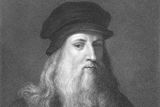
A talented artist, scientist, architect and inventor, Leonardo da Vinci has represented the ideal of the “Renaissance man” for centuries. Advancing an assortment of fields, from anatomy and botany to astronomy and aerodynamics, the Italian mathematician left behind a legacy of iconic paintings, such as the Mona Lisaand thousands of pages of scholarship, both completed and unfinished.
Today, 500 years after his death, researchers at the Leonardo DNA Project are trying to study the biological factors behind the artist’s achievements.
Reporting their findings in a preprint article published this month on bioRxiv, researchers claim to have successfully sequenced human DNA from a handful of historical artifacts, including the Holy Child drawing that some scholars attribute to da Vinci. Although the origin of this DNA is difficult to determine, the team says that some sequences could come from Leonardo himself, which would represent a major step for biology and the nascent field of arteomics.
“Even a tiny fingerprint on a page could contain cells to sequence,” said preprint co-author and chair of the Leonardo DNA Project Jesse Ausubel of Rockefeller University in New York, according to a September press release. “Twenty-first century biology is moving the line between the unknowable and the unknown. Soon we may be able to gain information about Leonardo and other historical figures thought to be lost forever.”
Learn more: 12 Fascinating Facts About Galileo Galilei You May Not Know
Da Vinci’s DNA?
Since 2015, the Leonardo DNA Project team has developed various techniques to collect DNA from fragile objects, including artistic and academic works, without causing significant damage to the drawings and documents themselves.
Providing fuel for biological discovery and a basis for arteomics, a developing discipline that authenticates and analyzes art with the tools of genetics, these techniques show that historical articles can contain biological traces over centuries.
For the preprint, which still awaits peer review, the researchers turned to light surface swabbing and an assortment of genetic analyzes to recover the Y chromosome sequences of several artifacts associated with Da Vinci.
Some sequences were linked, and some could have belonged to the artist, although the team cautions that this identification is tentative, as additional testing (possibly involving samples from Leonardo’s notebooks, the burial site and the family tomb) is needed to definitively prove that the DNA belonged to him.
“Even though confirmed DNA matches to Leonardo are still forthcoming, success is now inevitable in the sense that a threshold has been crossed,” Ausubel said, according to a January press release. “The project has established a strong ‘scaffold’, reference framework for detecting ‘signatures’ on ancient works of art or documents using DNA or microbiomes. The knowledge and reference techniques developed by the project can and will surely be applied to better understand other major historical figures.”
Learn more: Galileo Galilei’s legacy goes beyond science
DNA signatures on the surface
In addition to human DNA, researchers found bacterial, fungal, floral and faunal DNA on the artifacts studied, which also included letters from a member of Leonardo da Vinci’s family and artwork by other artists from centuries ago, which were included in the study for comparison. Researchers also found traces of viruses and parasites.
Statistical analysis determined that these traces differed for all artifacts based on their creation and preservation history. In fact, their materials, environment, and storage conditions shaped all of their surface biomes, their distinctive biological signatures serving as records of their travels and processing over time.
According to the team, future work could leverage these types of traces to learn more about Leonardo da Vinci and his life, offering important insights into his heritage, health, and physical attributes, including traits that could have shed light on his artistic talent and academic achievements. For example, the team hopes to discover whether Leonardo da Vinci’s genes could have contributed to his exceptional vision, precise enough to track water flows on different surfaces and even the beats of dragonflies’ wings.
“It’s not just about the author of the most famous painting in the world,” Ausubel said in the September press release. “It is a challenge to redefine the boundaries of historical knowledge and cultural heritage.”
Learn more: The location and careful writing tipped experts to this Galileo forgery
Article sources
Our Discovermagazine.com editors use peer-reviewed research and high-quality sources for our articles, and our editors review the articles for scientific accuracy and editorial standards. See the sources used below for this article:


