Ornate medieval ring discovered in Norway’s oldest town


Last summer, Linda Åsheim found a ring so beautiful it looks like it could have been made yesterday. But Åsheim is an archaeologist, and she found this rare artifact during excavations in a Norwegian city believed to be the oldest in the country. The magnificent gold ring is decorated with precious stones and filigree decor and is over 800 years old.
“When I first saw the ring while digging, I couldn’t believe it was gold, but it immediately had the shine of gold, even though it had been in the ground for hundreds of years,” says Åsheim, who works at the Norwegian Institute of Cultural Heritage. Popular science.
She discovered it during an excavation in Tønsberg, a town in southeastern Norway dating to around 871 CE.
“I was the only archaeologist present during the excavation that day, so there was no one to chat with,” she explains. “I was a little unsure if it was a real medieval ring, but the more I looked at it, the more sure I became.”
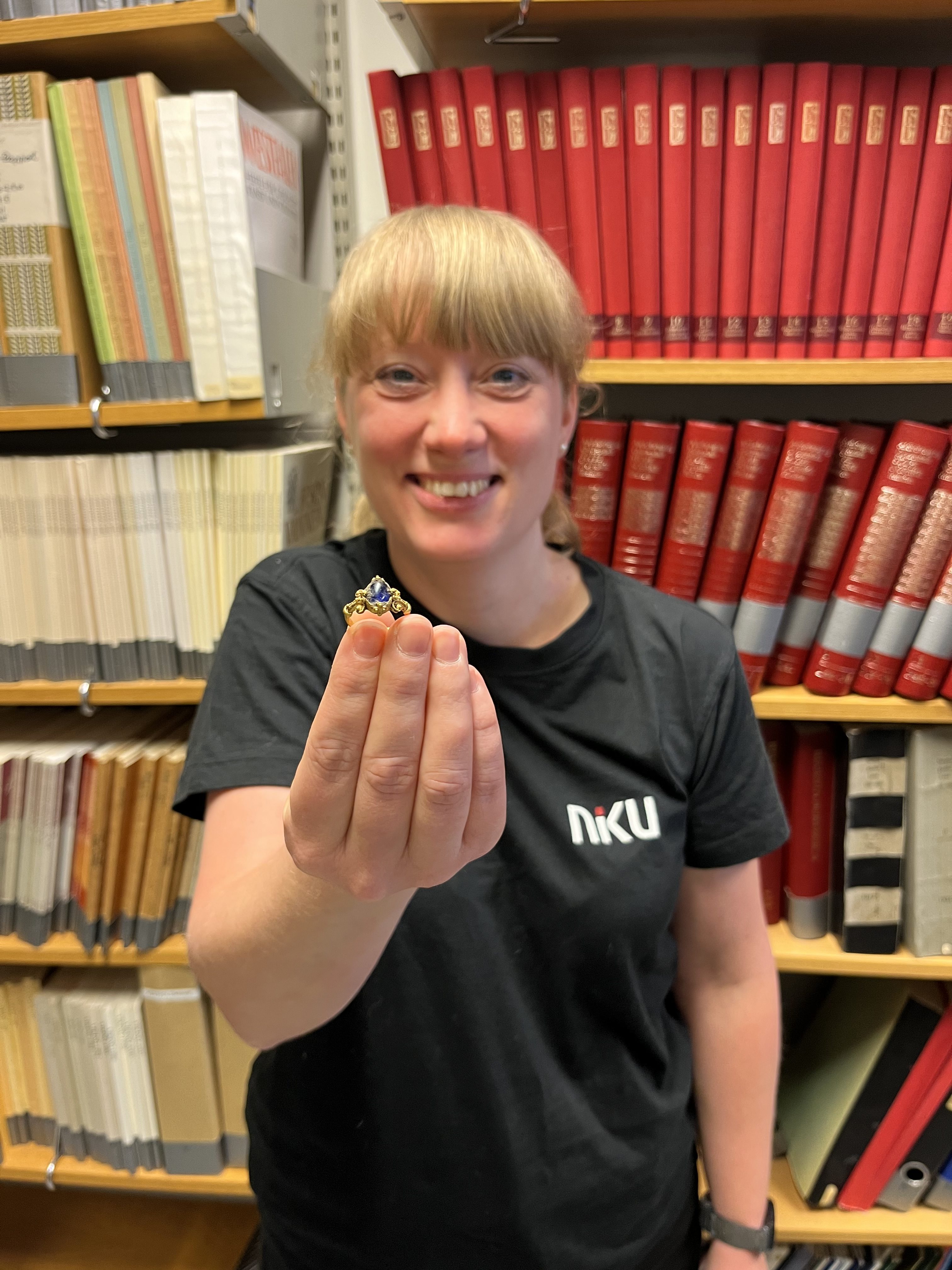
Although it is difficult to understand the age of the ring from its decoration, the layer in which Åsheim found the artifact lies directly below that which dates back to 1167-1269 CE, according to radiocarbon dating. As such, the ring must be older than this date range. If the layer above that of the ring had suffered “disturbances”, the question of the age of the ring might have been uncertain, explains Åsheim.
“The ring is quite small in size and it is a ring worn by a woman of high social status,” she continues. “Rings of this type [are] This is not at all common, so it is natural to assume that it must have been a person of some wealth who owned it.
The discovery of the ring is important because it sheds major light on the social structure of early Tønsberg, adds Åsheim. While researchers assume the wealthy class stayed elsewhere, the ring indicates they also frequented the region of the excavation. Archaeologists believe that this area was where commoners such as traders lived. Åsheim says it’s also possible that someone from the upper class is “just passing through.”
Because the ring may have been imported, it could also provide insight into connections to Europe. Researchers aren’t sure if the jewelry’s stone is colored glass or a sapphire, so Åsheim and his team will continue to investigate the ring’s ocean-colored centerpiece.

PopSci Outdoor Gift Guide 2025