Más refugios atienden necesidades médicas de personas mayores sin techo


SANDY, Utah — Just outside Salt Lake City, you’ll find an old two-person hotel. Today, you have a new function: shelter for homeless adults. The shelter for medically vulnerable people — known as MVP, according to its acronym in English — is intended for people aged 62 and older, or younger adults with chronic conditions.
Residents share housing designed for people with mobility issues. There are also private baths, something which is very important for anyone who may struggle with incontinence.
Unlike MVP, most homeless shelters are not prepared to help adult mayors, especially those who are 65 or older. It’s the fastest growing group among the homeless population in the United States, said University of Pennsylvania investigator Dennis Culhane.
It is not possible to envisage anyone for years in a disarmament situation, as many people are able to keep their lives for the first time in their lives.
Subir and bajar de literas, take the medicines correctly and place them on time in a bath shared with some of the main incomes that violate these people in the shelters. In some traditional cases, staff know they can’t prepare for them.
MVP is an unusual shelter because it offers medical attention in one place to help its residents live better.
The first step, Jamie Mangum, just 50 years ago and suffering from lung cancer, was in Saint-Tropez and fell in his apartment. To see a medical emergency technique, simply lower the ladder. You quickly sell the flaming doll and can reinstate it into your body. I’m saying this can’t be possible in other shelters where they are.
“In other places I tend to hope for hours. Here solo and I expect it,” Mangum said.
I added that other shelters probably should have searched for an emergency clinic on your behalf or sent an ambulance. And MVP, too, specialized social workers who help you receive cancer treatment.
“We have clients who need memory. They’ve lived independently before, but they can’t and won’t be released due to addiction or other reasons,” said Baleigh Dellos, who administered the MVP shelter for The Road Home, a local nonprofit.
Specialized medical care providers work in the shelter. There are also primary care and therapeutic doctors who visit weekly. Residents can also receive physical therapy in private spaces inside the shelter.
A path to stability
MVP partners with Fourth Street Clinic to provide medical assistance.
The first time most new people need help with their medications, said Matt Haroldsen of the Fourth Street Clinic, which brings health services to the shelter.
For you to be able to live on the street, just keeping your medication is a big challenge. “When you are in the camps, they are in charge of the medicines,” he said.
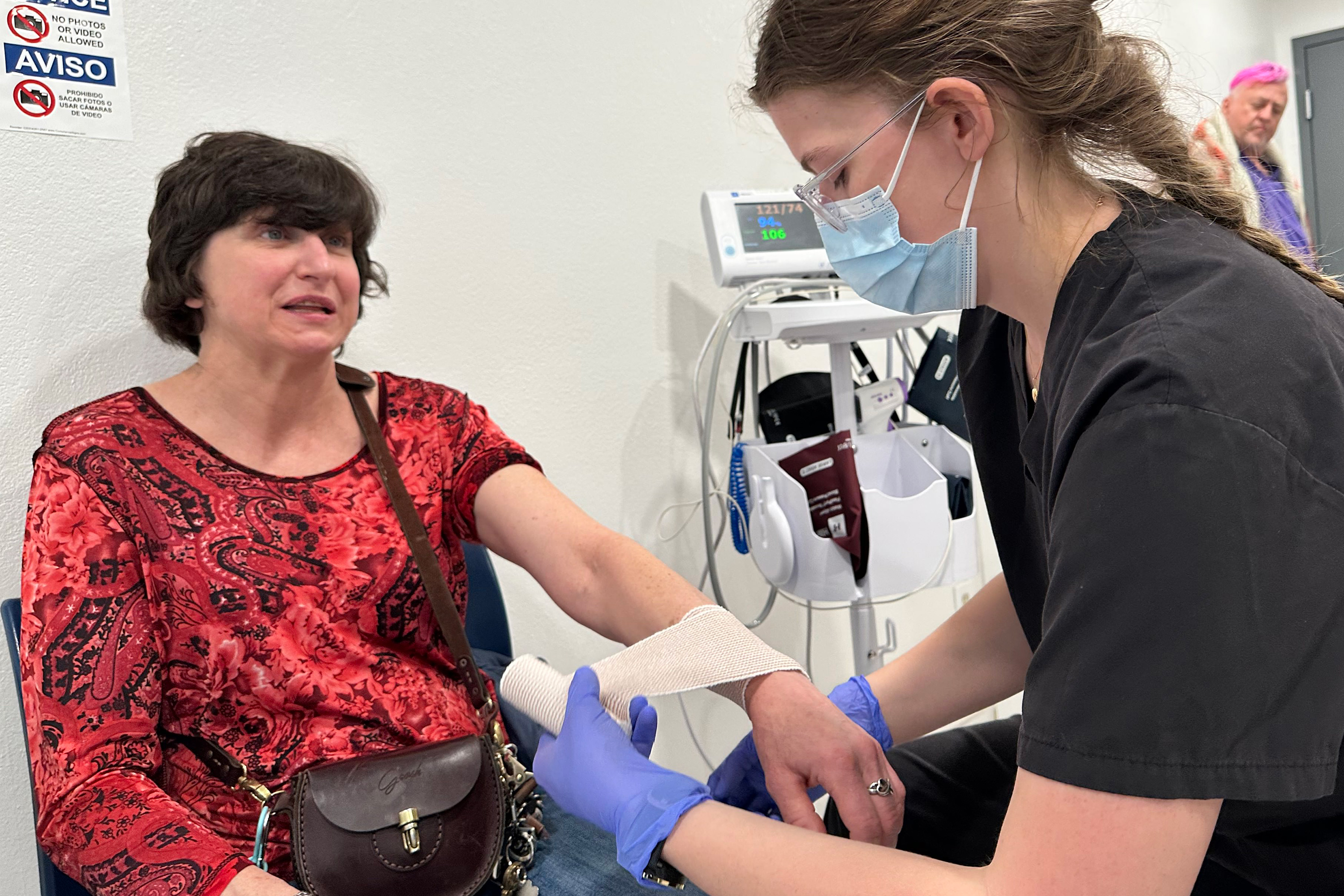
Diabetic people who have no life have a lot to do with their insulin to eat fruit. According to Haroldsen, it may remove the bulb’s entrance or the bulbs may become white hot and burn out to waste.
Helping people in the shelter get their medications back allows them to stabilize their health care, allowing them to focus on other priorities, to obtain identification of other documents needed to apply for disability, Social Security, and various programs that can help you live.
Local governments and organizations without income fines have opened similar shelters in Florida, California and Arizona to meet the needs of adult mayors without homes.
Having access to specialized shelters can mean the difference between life and death, said Caitlin Synovec, deputy director of the National Health Care for the Homeless Council.
In cold weather conditions, elderly people due to mobility issues and other medical conditions can be particularly serious. In 2022, a male mayor was killed in a freezing house in Bozeman, Montana, after losing a shelter to incontinence.
Comprehensive medical necessities can also pose a risk to other people in shelters, who at the same time are not prepared to handle these situations.
“A typical shelter doesn’t allow someone in with oxygen because it poses a fire hazard,” explained.
Synovec said access to medical care inside shelters is the best form of helping adults stay established once they can get a life. One explanation is that health problems are a common cause of many people not being able to afford or maintain a life.
Expansion model
The MVP model is a promising result, both in Utah and other places.
“More than 80 percent of the people who went through our program spent the year transforming into stable or permanent lives,” said Jacob Torner, vice president of programs for the Task Force to End Homelessness in Fort Lauderdale, Florida. This no-profit organization runs a shelter called Elder Haven.
The MVP shelter, located near Salt Lake City, has also been successful. Until the end of last year, he was registered as permanent mayor by 36 people.
Without an embargo, there are more people who need shelter than those who can accommodate the place. Dellos, the venue manager, said the MVP hopeful list was holding at a total of 200 people. I added that the priority is those who need medical care the most, but not at the time they hope for.
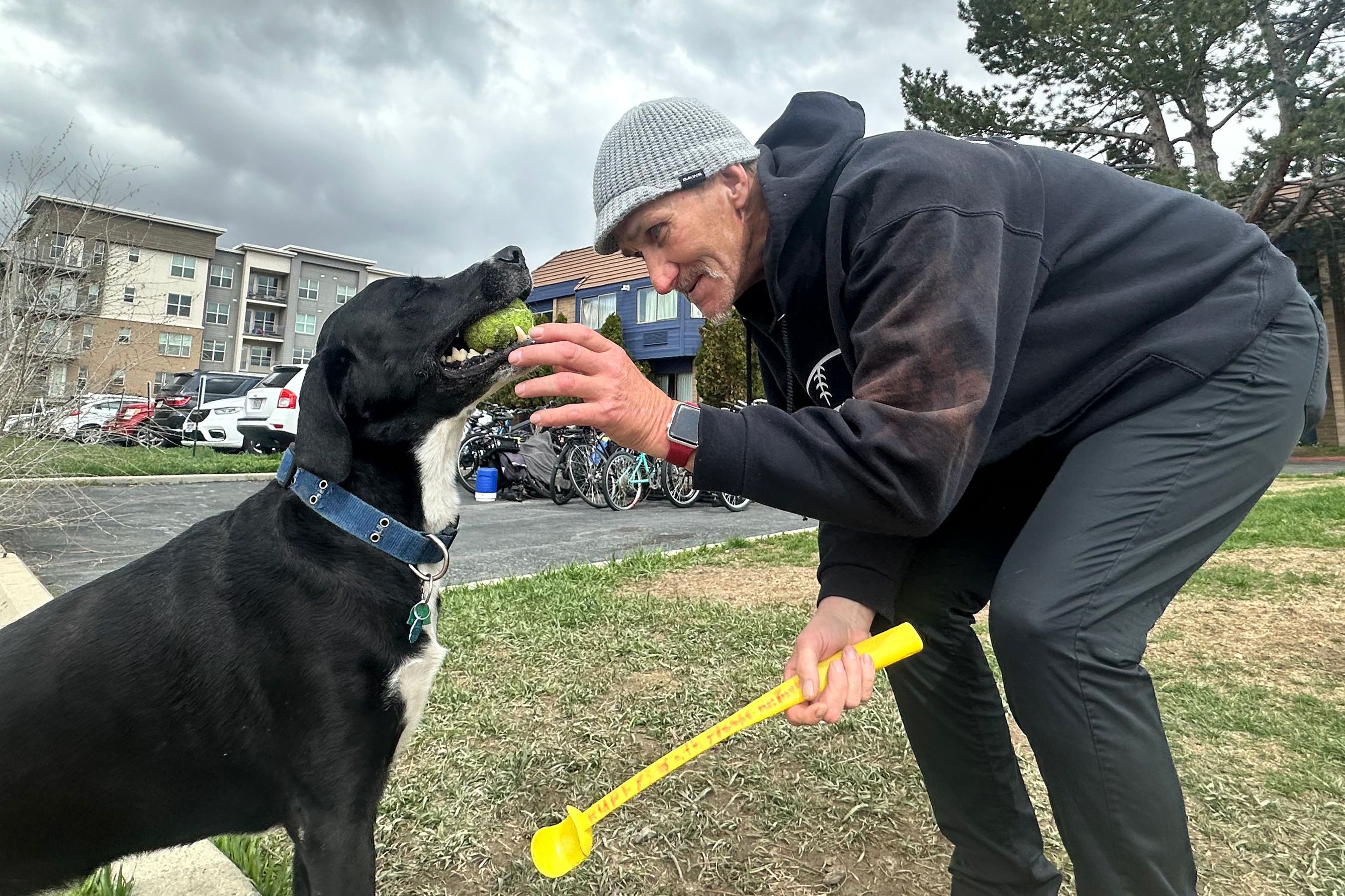
For you to get a home, the experience can be life-changing.
The first pasada, Jeff Gregg, 62, played with his dog Ruffy, just outside the garden in front of the MVP shelter.
An old lesion on the espalda forces him to encorvarse al lanzar the ball. It also led me to an opioid addiction that lasted for decades. I say that breaking this cycle is very difficult.
“Luchando con ce, teniendo un trabajo, seguro medico, luego perdiendo el trabajo, sin seguro, termando en la calle y otra vez dans ce fire. Et volía al mismo lugar”, he added.
Gregg said sobriety took second place to the more pressing necessities of finding food or a place to sleep. I confirmed that the MVP was the first place he could relax and focus on his recovery.
“Pude dejar las drogas. Me tomó un par de meses, pero fugiti avanzando poco a poco,” he added.
I tell you that it is your experience to open the way to use the espalda. I hope that, with less pain, I will eventually be able to put in a job and afford an apartment.
This article is part of a collaboration with NPR and Montana Public Radio.