444-Million-Year-Old Microscopic Fossils Reveal Early Seafloor Recovery After Mass Extinction


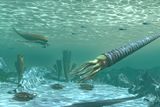
Following a mass extinction 444 million years ago, the oceans became simpler. Many familiar forms of marine life have disappeared and seabed conditions have become unstable. New fossil evidence reported in Ecology and evolution of nature shows that microscopic seafloor ecosystems were already active during this recovery period, even as the end-Ordovician extinction – driven by climate cooling and oxygen-poor waters – wiped out about 85% of marine species.
Preserved in ancient mudrocks in South Africa’s Cederberg Mountains are microscopic burrows and droppings left behind by meiofauna, including nematodes and foraminifera, organisms small enough to live between grains of sediment. Their tracks indicate that these tiny animals were feeding on and recycling nutrients from the seafloor shortly after their extinction, suggesting that basic ecological processes resumed before more marine life returned.
“Although some amazing fossils have been discovered in Cedarberg rocks in the past, they come from creatures that swam in surface waters. We didn’t expect to find fossils of creatures living on the seafloor, especially in the period immediately following a mass extinction, during which 85% of marine species disappeared. Remarkably, these tiny creatures were able to withstand these conditions and even thrive,” said lead author Claire Browning, in a press release.
Microscopic fossils reveal seabed recovery
Unlike shells or skeletons, fossils preserved in Cederberg rocks record activity rather than anatomy. Narrow burrows, winding paths and piles of microscopic dung are preserved in three dimensions inside the rock, capturing how organisms moved through the sediment, fed and interacted with their environment.
The micro-CT scanner made it possible to examine these traces without breaking the rock, revealing patterns not visible on the surface. Burrows breed in specific sediment layers that also preserve fossilized marine snow, organic material produced when phytoplankton bloom in surface waters, collapse and sink to the seafloor.
This close association suggests that a simple but functional food web was already operating on the sediment surface. Organic matter produced in the upper layer of the ocean is deposited on the seafloor, where meiofauna living in the sediment feed directly on it, breaking it down and recycling the nutrients in the sediment. Similar responses are observed in modern oxygen-limited environments, where meiofauna intensifies its feeding and movement when fresh material reaches the seafloor and reduces its activity as conditions deteriorate.
Learn more: Youngest mammoth fossils identified as whale bones in surprise discovery
Life on an oxygen-poor seabed
Geochemical evidence suggests that oxygen levels were low and, at times, conditions could be toxic to many life forms. This makes the presence of an active sedimentary community particularly striking.
Rather than reflecting a fully restored ecosystem, the fossils suggest a simplified but functional ecosystem. A small number of stress-tolerant organisms dominated, capable of breaking down organic matter and recycling nutrients under harsh conditions.
This simplified system may have helped stabilize marine environments after extinction. By processing carbon on the sea floor, meiofauna could have influenced the availability of oxygen and nutrients, paving the way for the gradual return of more complex marine communities.
Ancient seabed ecosystems around the world
South Africa’s fossils may represent only part of a larger picture. In the Ordovician, continents were arranged differently and regions now separated by oceans were once connected.
“Geology does not respect modern boundaries. For example, rocks of the same age in South America were once related to those in the Cederberg Mountains and may also contain hidden traces of marine snow, dust and meiofauna. Mapping the extent of these ecosystems will help us understand their broader role in regulating ancient ocean carbon and nutrient cycles,” Browning said.
If similar traces were found elsewhere, they could reveal that microscopic ecosystems played an important role in regulating ancient oceans and supporting recovery from one of the planet’s most severe marine crises.
Learn more: 115 million-year-old giant shark fossil discovered in Australia rewrites evolutionary timeline
Article sources
Our Discovermagazine.com editors use peer-reviewed research and high-quality sources for our articles, and our editors review the articles for scientific accuracy and editorial standards. See the sources used below for this article:


:max_bytes(150000):strip_icc()/Health-super-greens-recall-57be62c936b14cbfb489ca7653de995c.png?w=390&resize=390,220&ssl=1 "Greens Powder Recalled Nationwide After Salmonella Outbreak Sickens Dozens of People in 21 States")
