How to install macOS on an unsupported Mac: Updated for 2026


Summary created by Smart Answers AI
In summary:
- Macworld says older, unsupported Macs can run newer versions of macOS like Sequoia and Tahoe using the OpenCore Legacy Patcher tool.
- This process carries significant risks, including stability issues, security vulnerabilities, missing features, and potential violation of Apple’s terms.
- Essential steps include checking Mac compatibility, creating bootable USB installers, and backing up data before installation. Detailed instructions are provided below.
Apple updates its macOS operating system for desktops and laptops once a year like clockwork, bringing new features and improvements. That’s great, but Apple’s most recent version – macOS Tahoe – only works on M-series Macs and a few Macs with an Intel processor (the 2019 16-inch MacBook Pro, the 2020 13-inch MacBook Pro with four Thunderbolt ports, the 2020 27-inch iMac, and the 2019 Mac Pro). What if you want to run macOS Tahoe, or any version of macOS, on an unsupported Mac?
If Apple deems your Mac too old to run a version of macOS, updating isn’t easy, but it’s often possible with an OpenCore Legacy Patcher.
The fix works by injecting necessary drivers and data into the macOS boot process, allowing the operating system to recognize and run on older Intel hardware.
This unofficial workaround is not for the faint of heart, however, as it means hardware checks are bypassed, some features are missing due to unsupported hardware, and drivers are missing – so expect problems. Updating your system will also be much more complicated, leaving you vulnerable to security threats and your Mac less stable.
Can you run macOS Tahoe on an unsupported Mac?
- At the time of writing, OpenCore Legacy Patcher is not available for Tahoe, but it is expected in February 2026.
There may also be a delay while the patches are developed, so don’t expect them to be available until some time after macOS launches.
In the case of macOS Tahoe, it is not yet possible to run it on unsupported Macs because OpenCore Legacy Patcher has not been released (as of January 2026). The patcher should be available in February 2026.
Can you run macOS Sequoia on an unsupported Mac?
Yes, it is possible to run macOS Sequoia on many unsupported Mac models using third-party patching tools. Although Apple officially limits Sequoia to specific hardware (check our macOS Compatibility Checker for more information on which Macs are supported by which macOS update), the developer community has created workarounds to circumvent these restrictions.
The primary method of installing macOS Sequoia on hardware that Apple no longer supports is to use OpenCore Legacy Patcher (OCLP).
When the OpenCore Legacy Patcher for Tahoe is released, it will likely work the same way the OpenCore Legacy Patcher allows you to install macOS Sequioa on an unsupported Mac.
Patches are also available for macOS Sonoma, Ventura, Monterey, and Big Sur.
What are the risks of using a patch to run an unsupported version of macOS?
Before we go ahead and follow our tutorial, a word of warning: there is a reason why Apple chooses not to support the new Mac operating system on older Macs. Older Macs simply don’t have the components or power to meet the demands of most modern systems. So if you install Tahoe, Sequoia, Sonoma, Ventura, Monterey or earlier on an unsupported Mac, don’t expect it to work properly.
Be aware that there may be issues if you choose to run an unsupported version of macOS.
Here are some of the risks and limitations of running Sequoia through a patch:
- Performance issues: Older Intel processors may struggle to meet Sequoia’s graphics requirements. For example, while some games like Civilization VII list Sequoia as the minimum system requirements, they are optimized for Apple Silicon and may not run well on older Intel chips even if the operating system is patched.
- Feature Gaps: The most important limitation is the lack of Apple Intelligence. These AI-based features are strictly limited to Macs with M1, M2, or M3 series chips. Even if you successfully install Sequoia on an Intel Mac, you will not have access to these tools.
- Stability and security: Beta versions of software are particularly unstable and compatibility of third-party applications is never guaranteed on patched systems. For example, there was an issue with the T2 security chip on some MacBook Air models when booting via OpenCorePkg, as noted here. Additionally, although Apple provides security updates for both current and previous versions of macOS, running a patched version can make it more difficult to deliver these updates.
- Installation bugs: Even supported Macs had problems; for example, some M3 Ultra Mac Studio users were initially unable to install Sequoia 15.7 due to driver conflicts, although this was later resolved in macOS 26.0.
If you decide to continue, it is strongly recommended that you back up your data and, if possible, install the operating system on a separate volume rather than your primary partition to minimize the risk of data loss. Be prepared for the fact that your Mac will not perform optimally and you may lose data. Running macOS on an unsupported Mac may also be considered against Apple’s terms and conditions.
If your Mac supports the version of macOS you want to install, read: How to Update macOS for an easy way to update your Mac to the latest compatible operating system.
If you really want to use a newer version of macOS, it might be time to upgrade your Mac and sell your old one. Read How to Sell an Old Mac and take a look at our frequently updated best Mac deals to get the best prices:
How to install Sequoia on an unsupported Mac
If your Mac is more than a few years old and you’re trying to install macOS Sequoia (or Sonoma, Ventura, or Monterey) on it, you’ll run into a few obstacles – the first being the fact that the software update won’t let you install the newer version of macOS.
However, that doesn’t mean it’s impossible to install Sequoia on an older Mac. That’s right – you just need a patch. Fortunately, there is a patch for installing macOS Sequoia on older Macs: the OpenCore Legacy Patcher. Download and instructions can be found here.
Note that macOS patches can’t do magic and not all Macs will be compatible. Before installing Sequoia on an older Mac, make sure your Mac is compatible with the patcher. You can find a list of all supported Macs here.
The steps to update to a new version of macOS on incompatible Macs are as follows. We recommend following the instructions on the GitHub page.
- Before you do anything, back up your Mac.
- You’ll first need to obtain the installation files for the version of macOS you’re looking for – in this case Sequoia. You’ll need to get them using a compatible Mac. If they don’t appear in the software update, you can obtain the installation files from the Mac App Store. They’re over 12GB, so expect it to take a while to download.
- Once downloaded, you need to load these installation files onto a USB drive and prepare the USB drive to install macOS Sequoia. We explain how to create a bootable macOS installer in a separate article. You can find the installation files in Finder > Applications. (Open Finder and press Shift+Command+A). The patch also guides you through creating the macOS installer.
- Next, you need to get the patch software that will essentially make the installation files for the version of macOS you want to install believe that the Mac is compatible. You can download the latest version of the patcher we mentioned above here. Click OpenCore-Patcher-GUI.app.zip and it should download.
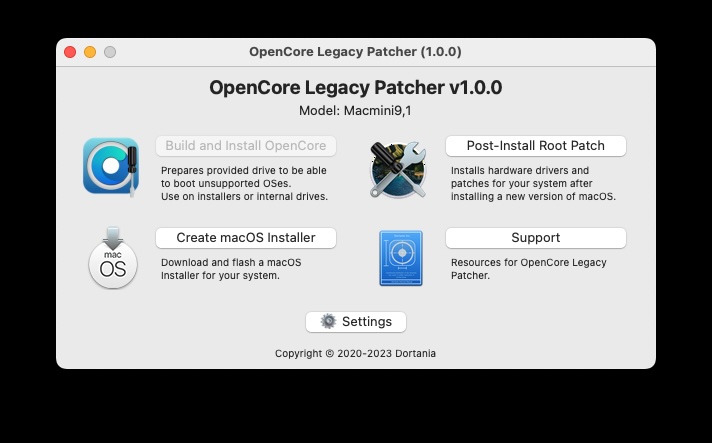
- After extracting the archive from your download, you will find the OpenCore-Patcher application.
- Run the OpenCore-Patcher application.
- Choose Create and install OpenCore. If you plan to install on another Mac, you need to select the correct Mac – click Settings.
- Once in Build OpenCore, the process should quickly build and you will then return to the main menu.
- The next step is to choose Install OpenCore to USB/Internal Drive from the options. (Recommendation is to install on a FAT32 drive.
- Once it is created, you must restart your Mac while holding down the Option (Alt) key.
- When the Mac boots up, a black screen appears with a few drive options. Select EFI Boot.
- This will load OpenCore. Then you need to select Install macOS, you should see Install macOS Sequoia option in OpenCore Picker.
- Now install macOS Sequoia.
Foundry
We recommend following the steps outlined here if you encounter any issues. Expect the update to take several hours.
How to install macOS updates on an unsupported Mac
Once you’ve installed macOS Sequoia (or whatever version of macOS you want), updates will appear in Software Updates as soon as they become available. However, you should not install them.
Instead, you need to create a USB drive with the new installation files and install the update that way.
See How to Create a Bootable macOS USB Installer.
How to install older versions of macOS on an unsupported Mac
The process is the same if you want to install Sonoma or another version of macOS on your Mac. As above, the download and instructions can be found here.
You can check if your Mac is compatible with the patcher here. The same patcher is used regardless of the version of macOS you want to install.
The procedure for updating to a new version of macOS on incompatible Macs is the same as above, although you will need to use the Sonoma (or other) installation files (which you can get from the Mac App Store).
Once OpenCore is up and running you will be able to select Install macOS, you should see the Install macOS Sonoma option in the OpenCore selector.
The update may take several hours. In our case, it sometimes seemed like the installer crashed during the update. In this case, you have to wait, because the installation is usually still in progress. Over time, better ways to update a machine can be found. Currently, the safest approach is to update using a bootable USB drive.
If you’re trying to install an older version of macOS on a newer Mac, see How to install an old macOS on a new one and How to download older versions of macOS.


