What the first medical evacuation from the International Space Station tells us about healthcare in space

When you purchase through links on our articles, Future and its syndication partners may earn a commission.

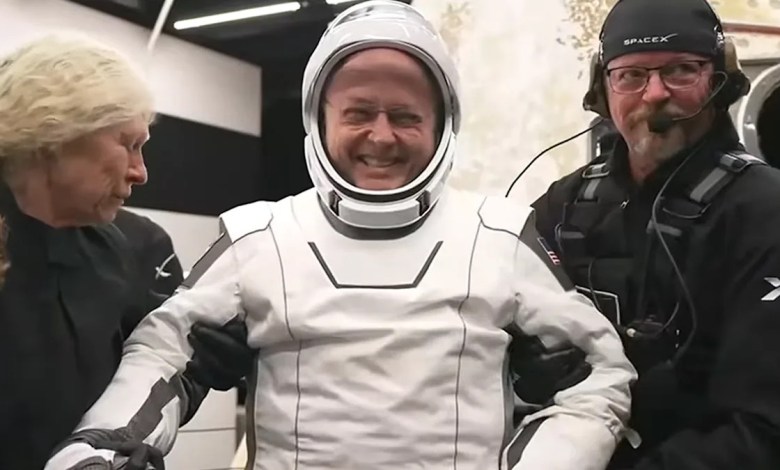
Astronaut Edward Michael “Mike” Fincke is helped to his feet after a successful landing from the International Space Station. . | Credit: NASA/SpaceX
This article was originally published on The conversation. The publication contributed the article to Space.com Expert voices: opinion pieces and perspectives.
For the first time in 25 years of continuous crew operations, an astronaut was medically evacuated from International Space Station (ISS). The Crew-11 mission ended when a SpaceX Dragon capsule brought the four astronauts from Crew 11 at home following a medical incident in early January 2026.
To protect the privacy of crew members, NASA has not yet released the details of what happened – and this article will not speculate. But the evacuation raises a question worth exploring: How do astronauts stay healthy in space, and why is this early evacuation so unusual?
Astronauts undergo rigorous medical examination before selection. They are evaluated for conditions that could worsen in microgravity, assessed for their psychological resilience and monitored throughout their career.
Although modeling suggests that a medical emergency could occur approximately every three years on the ISS, serious problems remain. remarkably rare in practice.
Each ISS mission includes medical support in space and on the ground. Each crew has a designated crew doctor – sometimes a qualified doctor, sometimes someone with extensive training in space medicine procedures. They can perform basic exams, administer medications and perform telemedicine consultations with specialists on Earth.
What health problems arise in space?
A 2015 study found that medication consumption on the ISS was relatively low, with approximately ten doses of over-the-counter medications taken per astronaut per week, most of which are for common and manageable ailments, such as:
-
Skin irritation is the most commonly reported medical problem during spaceflight. A recent systematic review found that space-related dermatoses, including dry skin, rashes, hypersensitivity reactions, and impaired wound healing, occur at rates approximately 25 times higher than on Earth. The cold, dry, low-humidity environment of spacecraft exacerbates these problems, and hygiene is limited to wet wipes and leave-on products for months.
-
Congestion And headaches affect most astronauts, particularly at the start of a mission. Without gravity, pulling fluids downward, blood moves toward the head, causing a swollen face and stuffy nose – what astronauts call “space sniffles.” This can trigger headaches, reduced appetiteAnd poor sleep.
-
Sleep disturbance is widespread. The ISS orbits the Earth every 90 minutes, creating 16 sunrises and sunsets over 24 hours, which disrupts circadian rhythms. Combined with equipment noise, reduced personal space, and the stress of spaceflight, astronauts typically have one to two hours less sleep per night relative to the Earth.
-
Musculoskeletal system injuries are surprisingly common. A NASA study documented 219 in-flight injuries across the U.S. space program, with an incidence of approximately 0.02 per flight day.
-
Hand injuries were the most frequent, mainly small outages due to movement between modules or handling equipment. But exercise, ironically the primary countermeasure designed to protect astronauts’ bones and muscles, is now the primary measure to protect astronauts’ bones and muscles. main source of injuries on the ISS.
Astronauts exercise for about two hours every day to combat bone and muscle loss and cardiovascular deconditioning in microgravity. Without the constant load of gravity, bones can lose approximately 1% of their density per monthespecially in the legs, hips and spine.
Yet this essential countermeasure carries its own risks. Spacewalks pose additional dangers: The study found 0.26 extravehicular activity injuries, often caused by spacesuit components.
Research continues to make these countermeasures safer and more effective. At Northumbria University, the Aerospace Medicine and Rehabilitation Laboratory works with European Space Agency, NASA, Canadian Space Agency and private spaceflight companies, including EspaceX develop exercise-based interventions to protect astronaut health. The research team is proposing pioneering approaches to maintain physical function during longer missions and accelerate recovery upon return to Earth.

Astronaut Sandra Magnus, Expedition 18 flight engineer, exercises on the Advanced Resistive Exercise Device (aRED) in the Unity node of the International Space Station. | Credit: NASA
Space-specific conditions
Some health issues are unique to spaceflight. Spaceflight-associated neuro-ocular syndrome (SANS) affects up to 70% of astronauts on long-term missions. The movement of fluid toward the head changes the pressure in the eye, leading to flattening of the optic nerve and changes in vision that can persist for years after returning to Earth.
Perhaps the most striking was a reported incident in 2020, when a blood clot was discovered in an astronaut’s jugular vein during a routine research ultrasound. The astronaut showed no symptoms; the clot was found by chance. In what became the ultimate case of telemedicine, doctors on Earth guided the treatment for more than 90 days.
Blood thinners were administered, additional medications were sent to a supply ship, and the astronaut performed his own ultrasound scans under the guidance of radiologists hundreds of miles below. They accomplished their mission and returned safely at the end of their mission, without any health consequences.
The evacuation of Crew-11 demonstrates that space agencies prioritize the safety of the crew above all else. As missions move beyond low Earth orbit into deep space, new approaches to medical care will be needed – called Earth-independent medical operationspotentially using AI to assist crew doctors while learning lessons from ongoing missions.
The fact that this is the first accelerated medical evacuation in 25 years highlights the effectiveness of the development of space medicine. But it also reminds us that space remains an intrinsic challenge to human biology and that, sometimes, there really is no place like home.


