How Nissan improved the wireless charging pad for faster phone juice-ups


In-car wireless chargers are notoriously finicky. Your phone may slip from the slippery charger during a sudden shutdown, or overheat and stop charging; the case may also prevent your phone from connecting. It’s often a pain in the neck, not to mention an added distraction when you’re behind the wheel. Different manufacturers have tried various solutions, like Ram’s grippy vertical charger, which has a non-slip mat and an LED indicator that clearly shows when the phone is charging. However, online Ram forums and Reddit show that users still find their phone overheats, fails to charge, or requires removing protective cases to work. No car manufacturer has yet really solved this most modern problem.
Automaker Nissan is touting wireless charging with its 2026 Pathfinder and Murano vehicles, both of which feature newly designed built-in wireless chargers that keep your gadgets cool and in place while you’re on the move. Additionally, Nissan says it is the first automaker to offer Qi2 wireless charging in the United States since the Wireless Power Consortium released the latest version of the Qi2 standard in July 2025. This updated standard supports a constant 15W charging rate, up from the erratic maximum rate of 5 to 15W set in October 2015, when the Qi extended power profile was first introduced. That means one of these Nissans can and will charge your phone at the same rate as if you plugged it into a wall in your office.
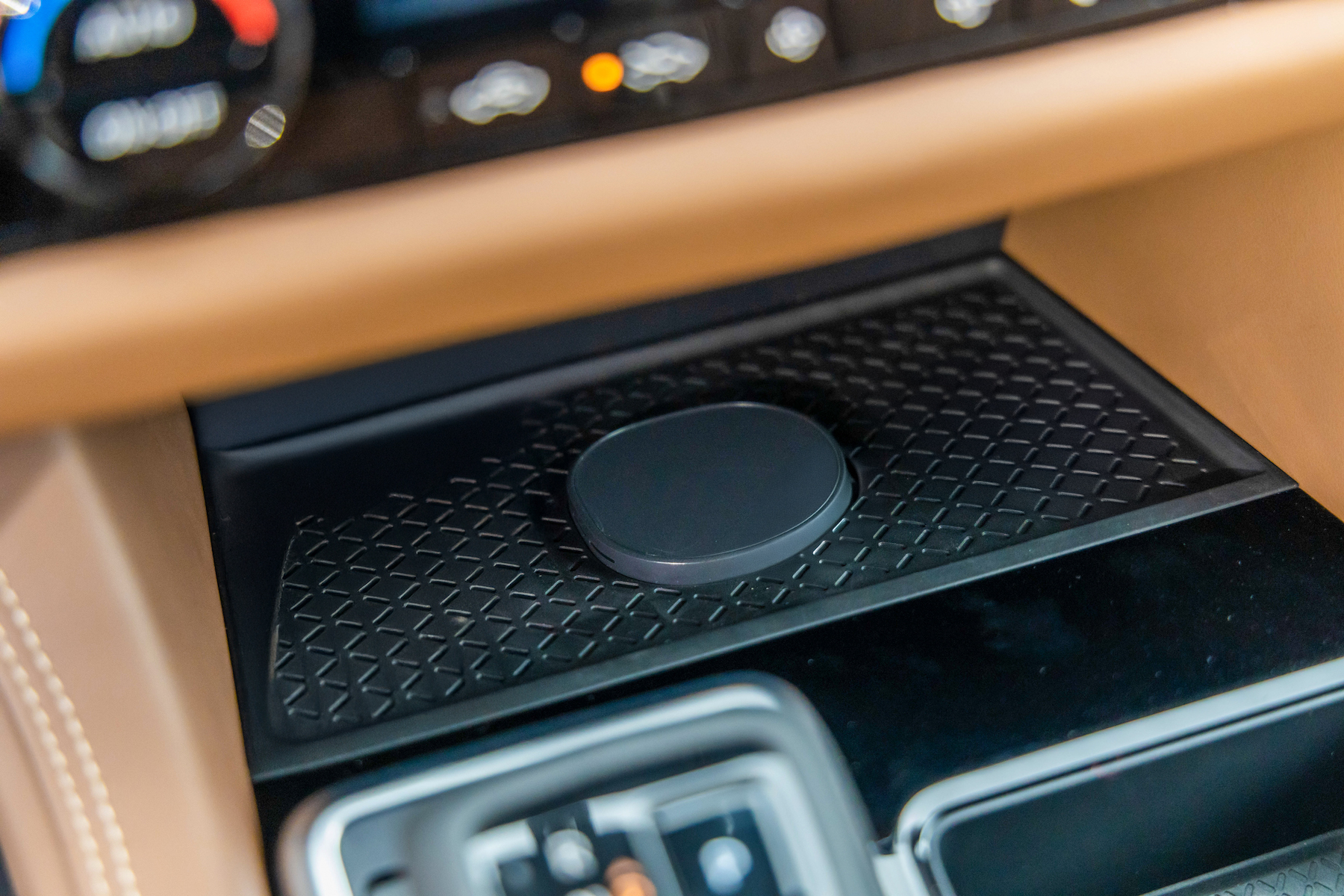
Nissan’s Qi2 wireless charging solution includes a magnet and a fan, elements that help hold the phone in place and keep it cool. For users, this means less charging anxiety and more confidence that phones will charge as intended. Even though America lives and dies by its smartphones, it’s an essential element.
Thermal management and more power
Qi, as defined by tech giant Lenovo, is a universal wireless charging standard that uses electromagnetic induction to transfer energy from a Qi-enabled charger to a device. The key to smooth energy transfer is a coil located inside the charger and device; the pad generates an electromagnetic field that the smartphone’s coil converts into energy that charges the battery.
These coils must remain aligned for optimal charging. Smartphones aren’t one size fits all, and there are different sizes and shapes that don’t all fit the charger perfectly. Nissan solved the problem by integrating a raised magnetized circle above the pad that aligns the coils and moves the electrons.
“If you misplace your phone or it moves while driving, you won’t get full speed charging, because that off position means you lose a lot of charging efficiency due to heat,” says Nissan engineer Matt Zimmerman. “By positioning the phone correctly, you will be able to take greater advantage of the maximum efficiency of the charger at that time.” Plus, if you’re the type of driver who likes to corner like a race car driver, your phone risks becoming a projectile if it’s not securely mounted.
Zimmerman helped build the new Charger from the Nissan North America Technical Center in Farmington Hills, Michigan. Power and thermal management are key to this technology, he says, for maximum efficiency. It is essential that the power of the charger exceeds the power consumption of the device; otherwise, users will find that the phone heats up and stops charging.
“Keep in mind that if you’re using Spotify, Apple Maps, Waze, or something like that, you can use almost five watts just to keep your phone performing those tasks, even with the screen off,” says Zimmerman. “With previous generation chargers limited to five watts, you’re barely keeping up.”
Thermal management has been a common challenge in previous generations of wireless charging systems. The addition of a fan in Nissan’s design reduces the amount of heat generated by both the pad and the phone, reducing the risk of overheating. Like anything else (and most people), smartphones don’t work well if they overheat. Additionally, they charge faster when they are colder, so cooling is not only preventative but effective.
Stick it and go
Using a magnet is a simple concept, but it works. Some devices, like newer iPhone models, for example, have camera lenses that protrude from the body of the device. Placing a phone with these kinds of protrusions on a charger means it doesn’t sit flat and therefore isn’t connected as securely or evenly.
When you place a phone on a charging pad, the phone and the pad are in constant negotiation with each other, Zimmerman says.
“When a phone overheats, it communicates with our charger and our car and communicates that it needs to negotiate a lower charge amount,” he explains. “So keeping phones and charging devices properly aligned helps keep them cool. All of this is very important to maximize charging speed.”
Nissan also includes an LED light to indicate charging; a solid orange light means charging is in progress and a green light indicates the phone is fully charged. A flashing orange light indicates that a foreign object is detected, such as keys or wallet, that could interfere with your digital energy.
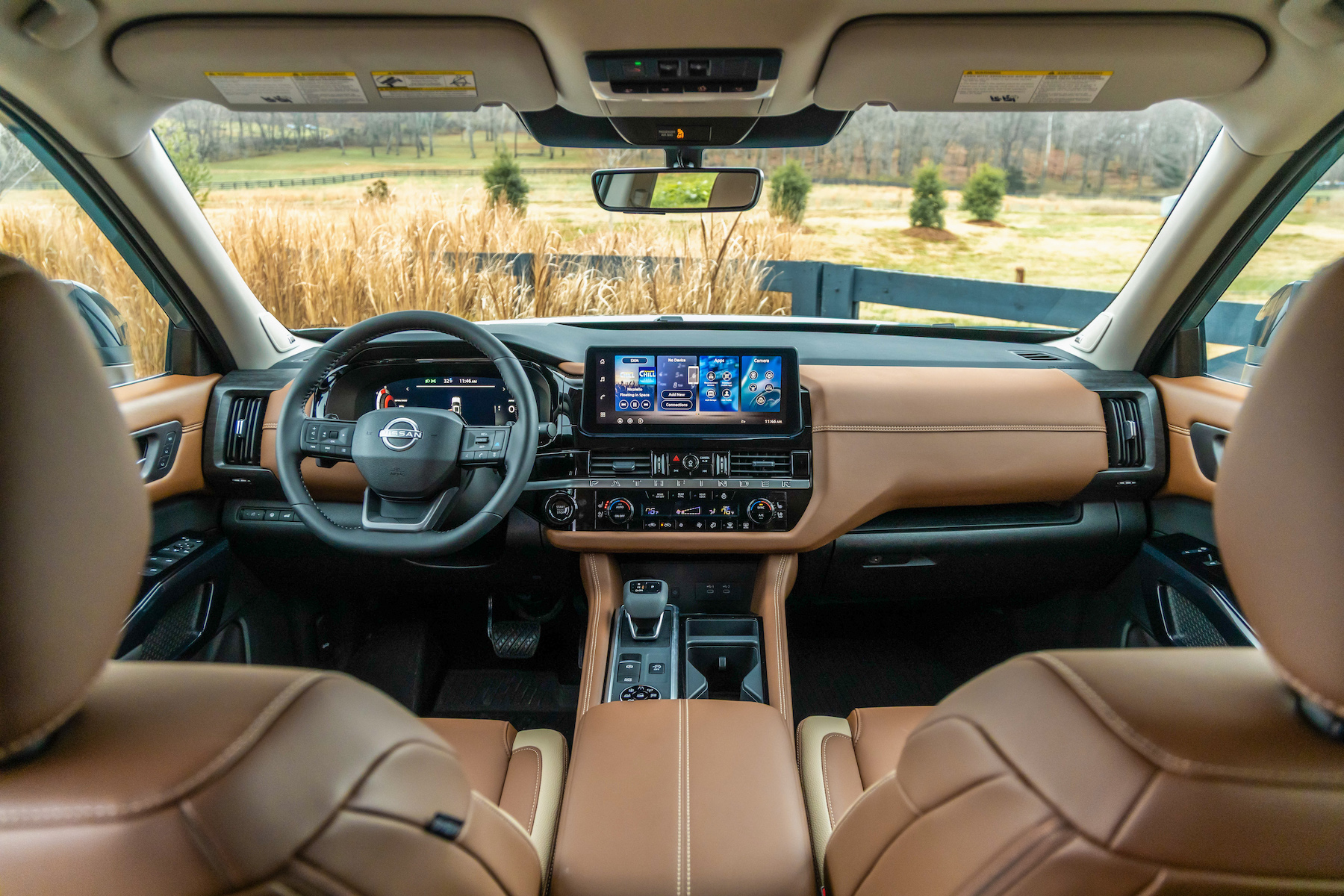
The new wireless charger is a standard feature on the 2026 Murano, already available in dealerships, and on some 2026 Pathfinder models, which are expected to begin appearing in dealerships early this year.

The best new PopSci 2025 releases


