Glioblastoma Is the Most Aggressive Brain Cancer and May One Day Be Treated With a Common HIV Drug


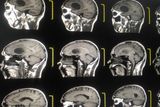
Glioblastoma is the diagnosis no one wants to receive. Due to its rapid and invasive growth, combined with its resistance to common forms of treatment, this most aggressive form of brain cancer often leaves patients with only months to live.
Current research is trying to change that. A team of scientists from McMaster University and the Hospital for Sick Children (SickKids) in Canada has now identified a discrete type of brain cell that reprograms its communication to support the growth of glioblastoma. When it was removed in experiments, the growth of the cancer slowed.
Not only did they discover the critical role of a type of brain cell previously thought to be harmless in the development of cancer, they also compared it to a drug already on the market. According to the study published in NeuronThe approved HIV drug Maraviroc extended the lifespan of mice with glioblastoma, demonstrating that researchers have discovered a potential target for treating a devastating disease.
Learn more: Why the Internet Always Says Your Headache is Cancer
A brain cell that changes sides
According to the Brain Tumor Foundation, glioblastoma can affect people at any age, with men developing the disease more frequently than women. Unfortunately, due to the nature of this cancer, treatment is often very difficult.
The tumor ecosystem is very complex and difficult to target. Many drugs cannot enter the brain across the blood-brain barrier, and even if treatment – such as chemotherapy or radiotherapy – is possible, the brain environment is extremely sensitive and has only limited capacity for recovery.
By taking a closer look at which cells are involved in glioblastoma development or, more specifically, how they communicate, researchers hoped to find ways to disrupt the connections that support the tumor. A type of cell that usually protects nerve fibers, called oligodendrocytes, has been found in glioblastoma samples to switch allegiances, sending biochemical messengers (pro-tumorigenic cytokines) that promote tumor growth.
“By decoding how these cells communicate with each other, we discovered a vulnerability that could be targeted with a drug already on the market,” Sheila Singh, study co-author and professor of surgery at McMaster, said in a news release.
HIV drug extends lifespan
Precise findings like this may be the key to matching the right treatment to the right target. The scientists already knew which receptor on the tumor corresponded to the cytokines they found released by oligodendrocytes.
When they targeted the CC chemokine receptor type 5 (CCR5) in mouse models, either by genetic knockout (removing the genetic information needed to make the receptor) or by giving Maraviroc, survival was prolonged.
Maraviroc is a drug already approved to target the same receptor and is primarily used in the treatment of HIV. This offers hope: a drug already on the market can be approved more quickly for new therapies, in this case to treat glioblastoma.
Targeting the complex communication network of glioblastoma
“This discovery opens a promising avenue to explore whether blocking this pathway can accelerate progress toward new treatment options for patients,” co-author Jason Moffat, senior scientist and head of the Genetics and Genome Biology Program at SickKids, said in the release.
This isn’t the first time the team has discovered a potential treatment strategy. They described a new pathway involved in building normal brain architecture that is hijacked by glioblastoma cells, as described in one study. Nature study from 2024. By creating a new cell therapy targeting the GPS system of cancer, mice showed a better chance of survival and recurrent cancer cells were destroyed at least 50% of the time.
Results from a single team show that the weakening of glioblastoma’s complex communication system is a key area for finding new treatment options for patients who desperately need them.
This article does not offer medical advice and should be used for informational purposes only.
Learn more: Old Blood Pressure Drug May Be Key to Stopping Aggressive Growth of Brain Cancer
Article sources
Our Discovermagazine.com editors use peer-reviewed research and high-quality sources for our articles, and our editors review the articles for scientific accuracy and editorial standards. See the sources used below for this article:


