Slavery displays removed from Philadelphia historical site after Trump directive


A series of informational signs about slavery were removed Thursday from the President’s House in Old City Philadelphia, a historic site managed by the National Park Service.
When the site of the President’s House at 6th and Market streets, once the home of Presidents George Washington and John Adams, was built in 2010, local activists urged the creators to include information about the slaves who lived in the house. These stories became part of the final exhibition.
CBS News Philadelphia has contacted the National Park Service and the mayor’s office for comment and is awaiting a response.
But the city filed a lawsuit in federal court Thursday asking that the signs be put back in place.
Paul Steinke, executive director of the Preservation Alliance for Greater Philadelphia, told CBS Philadelphia that park service workers removed the signage.
“The decision to do this appears to have been made because the President’s House site honors the nine slaves who were held there against their will by President Washington and his wife Martha, and it is the only federal historic site that commemorates the history of slavery in America,” Steinke said.
In September, President Trump signed an executive order aimed at ending “ideological indoctrination and divisive rhetoric.” The order, titled “Restoring Truth and Reason to American History,” specifically mentioned Philadelphia’s Independence National Historical Park, home to the Liberty Bell and the President’s House, as well as the Smithsonian Institution museums in Washington, D.C.
At the time, dozens of Philadelphia organizations signed a letter to Interior Secretary Doug Burgum opposing the changes.
CBS News Philadelphia 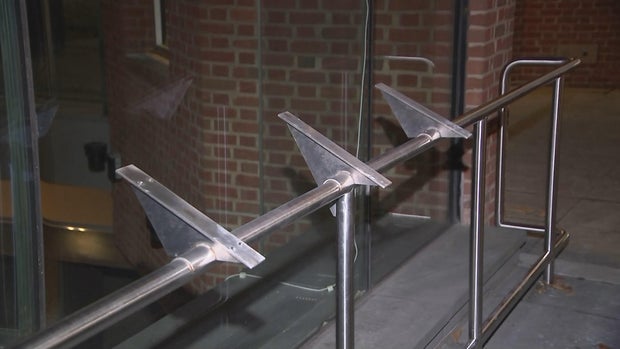
Burgum was given until July 4, 2026, to complete any changes to Independence National Historical Park — a day when the site will take center stage as the country celebrates its 250th anniversary.
The executive order directed Burgum to ensure that memorials “do not contain descriptions, depictions, or other content that inappropriately disparages past or living Americans (including those living in the colonial era), and instead focus on the greatness of the achievements and progress of the American people.” »
After the president signed the order, the Philadelphia City Council adopted two resolutions condemning him.
Steinke said the exhibit “was created after years of study and research to ensure the story was correct.”
“Today, in a matter of minutes, everything was torn down and probably put into storage for who knows how long. It’s a terrible day for American history, it’s a terrible day for Independence National Historical Park. It’s a terrible day for our city,” he said.
Steinke said he believes these stories will resurface in other places in Philadelphia in the days and weeks to come.
Pennsylvania Governor Josh Shapiro said on social media: “Donald Trump will take any opportunity to rewrite and whitewash our history. But he chose the wrong city – and he certainly chose the wrong Commonwealth. We learn from our history in Pennsylvania, even if it is painful.
Democratic Rep. Brendan Boyle, who represents Philadelphia, said in a statement that the removal of the signs was “absolutely unacceptable.”
“Philadelphia and the entire country deserve an honest accounting of our history, and this attempt to hide it is wrong,” the statement said.
Philadelphia City Council Speaker Kenyatta Johnson said in a statement that removing exhibits on slavery was an “effort to whitewash American history.”
“History cannot be erased just because it is uncomfortable,” Johnson said in a statement. “Removing items from the President’s House only changes the landscape, not the historical record.”
As of Thursday evening, the official website of the President’s House Park Service said: “The outdoor exhibits examine the paradox between slavery and freedom in the new nation.” ” He also notes that the exhibit includes the perspectives of “enslaved individuals.”
“Although the house was demolished in 1832, some of its stories are preserved through videos shared from the perspective of slaves who lived and worked here, and text panels highlight everything from visiting tribal delegations to the work of the executive branch,” the website states.


