Iran may have slaughtered 30,000 protesters in 48-hour intense crackdown

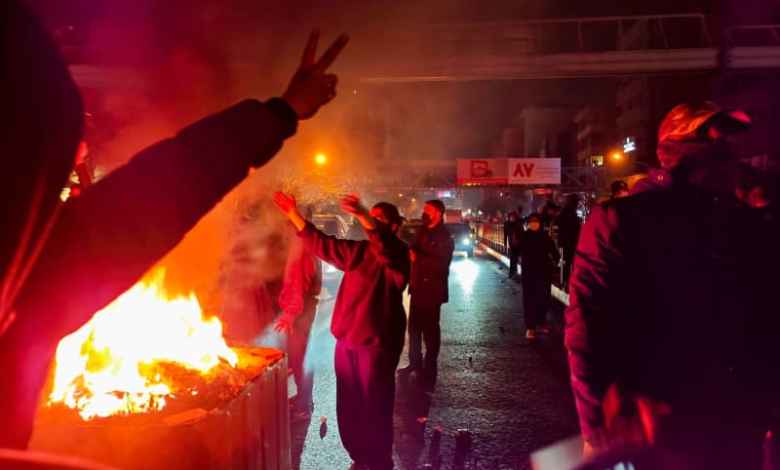
If the estimates are true, the only comparable massacre in historical databases would be the murder of 33,000 Jews in the Holocaust massacre at Babyn Yar, outside kyiv in 1941.
As many as 30,000 people may have been killed across Iran during the two days of crackdown on January 8 and 9, TIME reported Sunday, citing two senior Health Ministry officials and a separate compilation of hospital data shared with the publication. The figures have not been independently verified and far exceed figures publicly cited by authorities.
This figure, if true, would significantly increase the death toll compared to earlier estimates. A few days after the alleged massacre, Iran International estimated at around 12,000 deaths over this two-day period.
Officials said the scale of the killings exceeded the capacity to handle the dead, depleting supplies of body bags and prompting the use of eighteen-wheel trailers to move bodies. TIME reported that security forces used rooftop snipers and trucks equipped with heavy machine guns after authorities cut off communications. An Islamic Revolutionary Guard Corps official warned on state television that anyone entering the street should not complain if a bullet hits them, according to the report.
A hospital tally shared with TIME listed 30,304 deaths as of Friday, Jan. 9, said Dr. Amir Parasta, a German-Iranian ophthalmologist who compiled the data. “We are getting closer to reality,” he said, while adding that the count likely excludes cases from military hospitals and inaccessible areas. Public health specialists cited by TIME warned against excessive extrapolation from hospital records, but said internal figures suggest mass killings over a short period.
If the figures are correct, the massacre in Iran is comparable to that of Babyn Yar during the Holocaust
Experts have struggled to find historical parallels with so many people slaughtered in such a short time. TIME noted that the only comparable event in online massacre databases involved the shooting of some 33,000 Jews during the Holocaust at Babyn Yar, near kyiv, on September 29 and 30, 1941.

Members of the Iranian police attend a pro-government rally in Tehran, Iran, January 12, 2026. (credit: STRINGER/WANA (WEST ASIA NEWS AGENCY) VIA REUTERS ATTENTION EDITORS)
Iran’s Islamic Regime Death Toll Figures Diminish Truth and Impact of Massacres
The government’s internal two-day tally, as described to TIME, eclipses the figure of 3,117 announced on January 21 by hard-line officials who report directly to Supreme Leader Ayatollah Ali Khamenei.
Although the actual number of deaths during the protests is unknown, activists who named the dead had confirmed 5,459 deaths as of Saturday and were investigating more than 17,000 additional cases, the U.S.-based Iranian human rights organization HRANA reported Saturday.
On Sunday, Iran International estimated that at least 36,500 Iranians have been killed by the regime since the protests began, citing new documents and eyewitness accounts from medical staff, families of the deceased and others.
The Daily Mail, citing Iranian-German professor Amir-Mobarez Parasta, produced a similar estimate, saying the death toll could rise to more than 33,000, with 97,645 injured.
Iran International and Parasta noted that the regime had reportedly begun carrying out executions across the country.
Several of the dead were reportedly shot in the head after being admitted to hospital for medical treatment, according to images released by local morgues and seen by Iran International.
A group of medical personnel confirmed to Iran International that “fatal shots were fired at the injured.”
Stories collected by TIME described the role of the internet blackout in covering up the death toll, with images of bodies leaking via illicit satellite connections. From the start of the protests, the regime implemented an almost total Internet shutdown across Iran.
Soon after, Tehran’s hospitals were filled with the injured and dead, while conditions inside Iran’s digital Iron Curtain prevented families from checking on the fate of their loved ones.
The crackdown took place as opposition figures called for mass participation. Throughout the protests, Crown Prince Reza Pahlavi’s calls for united protests were widely publicized.
International bodies have since taken steps to respond to the alleged abuses, with the UN Human Rights Council launching an independent investigation into the violence.
“The 30,000 verified deaths are almost certainly an underestimate,” said Les Roberts, a researcher at Columbia University. TIMEnoting that crisis death counts often omit victims who never reach hospitals or are buried outside official channels.
Paul B. Spiegel of Johns Hopkins praised the rapid collection of hospital data under unsafe conditions, but warned that intimidation, disruption of record-keeping and parallel military medical systems can skew the counts. Both experts said that only transparent access to hospital records, civil status records and burial records would clarify the true toll.
“According to Israeli officials, the night of January 8 on the streets of Iran was the deadliest in the history of the Islamic Republic – and one of the deadliest in the world in a generation,” N12 News journalist Amit Segal said on X/Twitter on Sunday morning.
“The regime has murdered thousands, if not tens of thousands,” he wrote. “A massacre of an almost unimaginable scale.”

:max_bytes(150000):strip_icc()/Health-pilates-vs-strength-training-79fc6da2e23442ea8089bdc697f69df0.png?w=390&resize=390,220&ssl=1 "Which Is Better For Muscle Growth and Longevity?")