Beige fat, which keeps the body warm, may lower blood pressure, mouse study hints


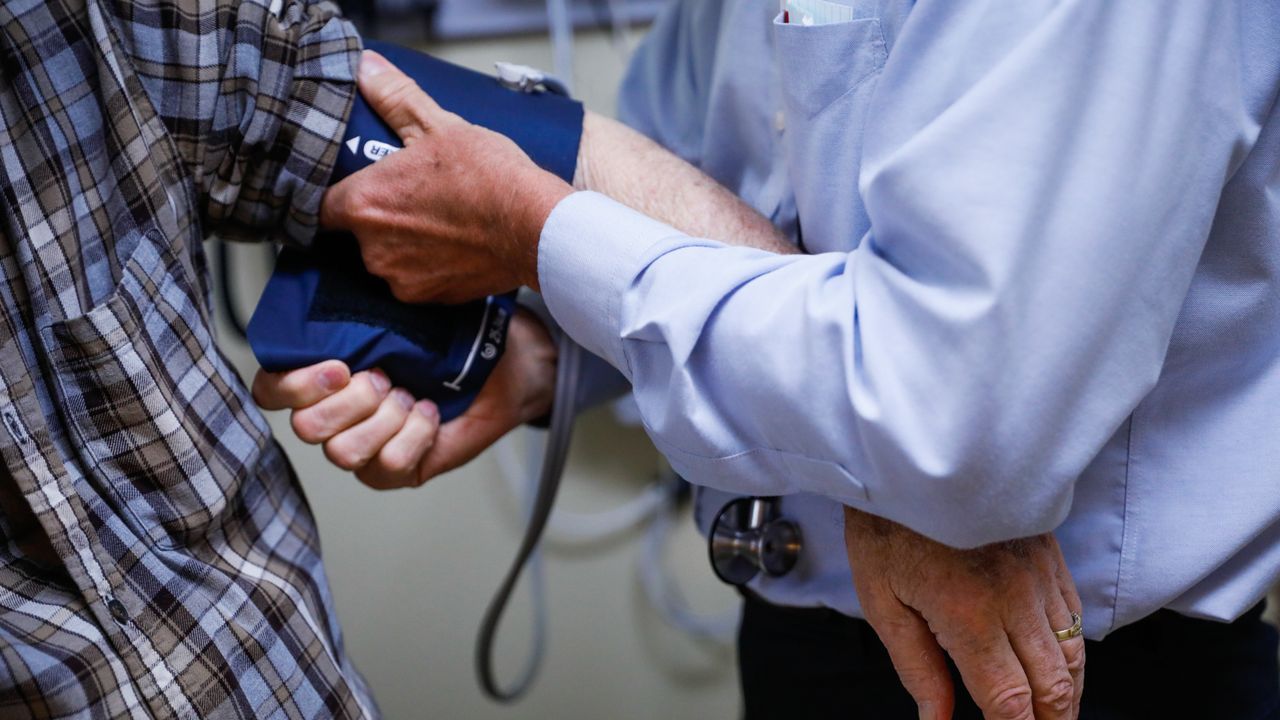
Not all fats are equal: While one type of fat in the body raises blood pressure, another helps control it, a study in mice suggests.
In humans, excess body fat has long been linked to high blood pressure, or hypertension, and a number of other cardiovascular problems. But the body carries two types of fat: “brown” fat, which burns energy and helps keep the body warm, and “white” fat, which stores excess calories.
“We wanted to better understand how brown fat could do this,” Cohen told Live Science.
Now, in a new study published January 15 in the journal ScienceCohen and his team showed that removing the gene that produces “beige” fat – the mouse equivalent of adult human brown fat – converted all beige fat around blood vessels to white fat. This, in turn, caused the mice to develop high blood pressure.
The team attributed the effect to an enzyme released by fat cells. Normally controlled by beige fat cells, levels of the enzyme increase when beige fat is transformed into white fat, according to the study. This triggered excessive constriction of blood vessels and an increase in blood pressure.
This is an important study that, for the first time, establishes how beige fat directly affects cardiovascular health, said Laurent Kazakassociate professor at McGill University who studies brown fat energy expenditure and was not involved in the work.
It’s well documented that obesity influences blood pressure and cardiometabolic health at a system level, Kazak told Live Science. But this work highlights a “niche role” for beige fat and the mechanism behind its “local effects” on blood vessels, he said.
How Fat Controls Blood Pressure
Cohen’s team began their study by deleting the Prdm16 gene from the fat cells of laboratory mice, turning the beige fat around their blood vessels white. This gene is known to be very active in beige fat, acting as a master regulator that helps it maintain an energy burning function rather than becoming white fat.
This change was visible just by looking at the tissue, said the study’s first author Mascha Koenenpostdoctoral researcher in Cohen’s lab. Tissues laden with beige grease, which normally appear dark and speckled with tiny droplets, turned pale, resembling ordinary white grease.
The researchers observed that animals that lacked beige fat also developed higher blood pressure and their blood vessels became stiffer and accumulated more fibrous tissue, making it more difficult to relax as blood flowed through them.
The team then treated the mice’s blood vessels with a hormone called angiotensin II, known to increase blood pressure by constricting the arteries, in the same way that pinching a pipe restricts the flow of water. Blood vessels from mice lacking beige fat contracted more strongly in response to the hormone than vessels from normal mice.
To identify the mechanism behind this phenomenon, the team looked at molecular signals released by fat cells located near blood vessels and identified an enzyme called QSOX1. This enzyme stiffens the connective tissue around blood vessels and makes it more difficult for them to relax.
Normally, the protein encoded by the Prdm16 gene controls the production of this enzyme. But without beige fat, QSOX1 levels increase, leading to stiff blood vessels and high blood pressure, the team concluded.
Importantly, the researchers found that deleting beige fat and QSOX1 in mice prevented this chain reaction and that these mice did not develop high blood pressure, suggesting that QSOX1 is essential for driving this mechanism, they concluded.
Beige fat in mice and brown fat in humans are known for their heat production; they contain large numbers of mitochondria, which are the energy factories of cells and give tissues their brown color. However, Koenen noted that this heat production function is not linked to the identified QSOX1 mechanism. Rather, their study highlights an additional role for beige fat as “secretory” cells, which release important proteins into the blood.
Even though beige fat cells are small, “they can have a huge impact on whole-body physiology,” Koenen told Live Science. And the study could point to new ways to treat high blood pressure.
“You can imagine that molecules capable of inhibiting QSOX1 could be potentially therapeutically beneficial,” Kazak suggested.
Cohen also believes that targeting QSOX1 could help scientists develop precision therapies for hypertension in the future. This would require them to first learn more about this mechanism in order to counter it, he noted. Nonetheless, the research points to a “way forward” for studying the effects of QSOX1 inhibitors in humans.
Koenen, M., Becher, T., Pagano, G., Del Gaudio, I., Barrero, JA, Montezano, AC, Ruiz Ortiz, J., Lin, Z., Gómez-Banoy, N., Amblard, R., Schriever, D., Kars, ME, Rubinelli, L., Halix, SJ, Huang Cao, ZF, Zeng, X., Butler, SD, Itan, Y., Touyz, RM,… Cohen, P. (2026). Removal of Prdm16 and beige fat identity causes vascular remodeling and elevated blood pressure. Science391(6782), 306-313. https://doi.org/10.1126/science.ady8644


