More than 200 killed in mine collapse in DR Congo

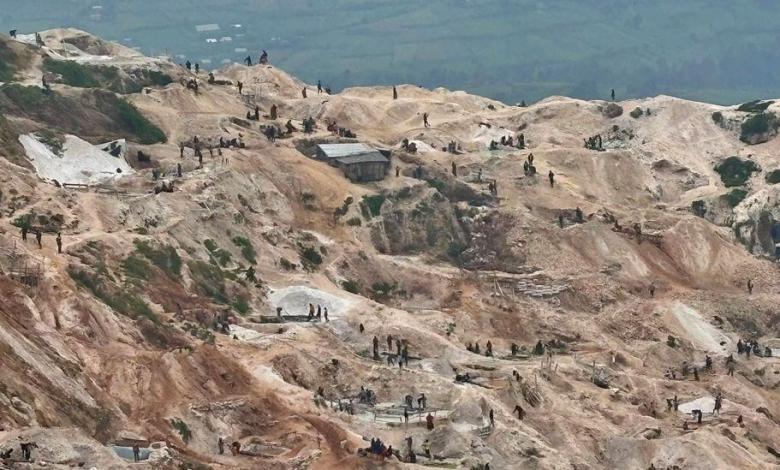
More than 200 people were killed in a mine collapse in eastern Democratic Republic of Congo, rebel authorities said.
The mine, located in the town of Rubaya, collapsed on Wednesday due to heavy rains, Lumumba Kambere Muyisa, spokesman for the rebel governor of the North Kivu region, told reporters. At the time, the death toll remained unclear.
At the time, women and children were among those mining coltan – a mineral used to make electronic devices such as smartphones and computers.
A former mine supervisor told the BBC the site was not properly maintained, making accidents more likely and hampering rescue efforts when they occurred.
He added that the fragility of the soil made the situation worse.
Women, children and artisanal miners – those not formally employed by a mining company – were among those killed in the collapse. Around twenty survivors are said to be hospitalized.
A source whose cousin died in the landslide expressed shock, saying it was a “big loss” for the family and community.
“I didn’t think he could die in such circumstances,” the source, who wished to remain anonymous, told the BBC, describing his cousin as a “brave” and “ambitious” man whose main goal was to provide for his wife and two children.
“I didn’t believe it [he was dead] because investigations were still ongoing. His body was not found after the accident, so I had hope that he might be found alive. Unfortunately, a few hours later, his body was discovered.”
Governor Erasto Bahati Musanga, appointed by the M23 rebels after seizing swathes of North Kivu territory, visited survivors of the incident on Friday.
Rubaya is one of several towns in North Kivu under the control of M23, which international observers say is supported by neighboring Rwanda.
Rubaya mines hold approximately 15% of the world’s coltan supply and half of DR Congo’s total deposits.
The metal ore contains tantalum, which is used to produce high-performance capacitors in a range of electronic devices, making it in high demand around the world.
When a BBC team visited the site in July 2025, they observed miners manually digging to extract the valuable mineral. Conditions at the site are very poor, with dangerous pits scattered across its vast expanse.
Since 2024, the M23 rebels have controlled the mines. The UN has accused the group of imposing taxes on the mining sector for its own benefit.
The BBC has contacted the Congolese government in Kinshasa for comment.

Map

:max_bytes(150000):strip_icc()/Health-GettyImages-905686752-56199d960618478ea7cb81a061d97cca.jpg?w=390&resize=390,220&ssl=1 "Does Adding a Banana to Your Smoothie Make It Less Nutritious?")


