
As much as it might seem that diseases like COVID-19 appear from nowhere, most illnesses that affect humans have been cooking for a very long time. They have infected and sometimes killed animal species for thousands, if not millions, of years as they evolved, eventually making the jump to human beings.
Zoonotic diseases — those transmitted from animals to humans — account for about 60 percent of known human infectious diseases, according to a study in Faculty Reviews. Most people are well aware of the dangerous diseases you can contract from creatures like rats. But while these species can certainly be culprits in diseases like the plague, other illnesses that affect humans have more surprising animal reservoirs.
Read More: A New Vaccine Platform Could Cut Development Timelines From Months to Weeks
Understanding Where Zoonotic Diseases Come From
Part of the problem with new and emerging diseases is that they often come from places we don’t expect — researchers still aren’t certain where the virus that causes COVID-19 in humans came from, for example. Horseshoe bats likely had a closely related ancestral coronavirus first, but it may have then jumped to an intermediate host such as civets or raccoon dogs before reaching humans, according to a study in Wiley.
“Every time there is a new pathogen, it comes from a host we didn’t expect,” says Barbara Han, a disease ecologist at the Cary Institute of Ecosystem Studies, a nonprofit research organization.
To stay on top of the emergence of such diseases, Han says that studying wildlife health is critical, since animals are the source of many diseases that affect humans. Otherwise, figuring out where an emerging disease came from is very difficult.
“Finding that smoking gun is really challenging,” Han says.
Here are a few examples of some of the more surprising animal reservoirs for nasty illnesses that continue to infect humans.
1. Chagas Disease — Kissing Bugs and Opossums
Diseases spread by insects, including blood-feeding insects, are often considered vector-borne, and this is partly true of Chagas disease, which mainly spreads to humans where contact with the feces of infected kissing bugs occurs after they bite in Latin America and parts of the southern U.S.
But some research has revealed that creatures like Virginia opossums may play a role in spreading the disease in places like Florida. One 2022 study in PLOS Neglected Tropical Diseases found that opossums can transmit Chagas disease, caused by the parasitic organism Trypanosoma cruzi, to their offspring.
Since opossums often live in urban areas and sometimes spray a gland secretion that has been shown to harbor the parasites, they could potentially contaminate nearby environments with T. Cruzi. This raises the possibility of non-vector transmission, even though most human infections are still thought to occur by kissing bugs rather than directly from opossums, according to the University of Florida Emerging Pathogens Institute.
2. West Nile Virus — Mosquitoes and More
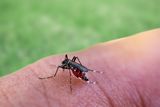
While most people associate West Nile virus with mosquitoes that transmit it to humans, perhaps less clear is that dozens of bird species and possibly other hosts, as varied as alligators, llamas, wolves, and others, can also act as hosts for this disease, according to a study in Springer Nature.
“Some of them will die, some of them won’t, but the virus load can be high,” Han says.
Only recently endemic to North America, West Nile’s direct transmission via some of the strangest of these hosts to humans hasn’t yet been reported, but these links would be difficult to track in individual cases. The good news is humans are likely dead-end hosts of West Nile, meaning it’s unlikely that we can give it to each other, or even pass it on to other mosquitoes that bite us, once infected, according to the Centers for Disease Control and Prevention (CDC).
3. Leprosy — Armadillos and Red Squirrels
Leprosy is caused by the bacterium Mycobacterium leprae and is usually transmitted from person to person. While it likely initially traveled to North and South America along with European settlers, the disease somehow spread to nine-banded armadillos along the way.
It never left, transmitting from armadillo to armadillo for centuries. Evidence indicates that leprosy can also be transmitted back from armadillos to humans, making them a reservoir for the bacterial infection.
According to the University of Florida Emerging Pathogens Institute, humans handling soil where armadillos have burrowed and defecated could also contract the disease that way.
Meanwhile, other research reveals that red squirrels were also a reservoir for leprosy in Europe going back at least to the Middle Ages, according to a report in Current Biology.
4. Tularemia — Rabbit Fever
Rabbits and bunnies may seem cute and cuddly, but they can pass potentially deadly bacteria to humans. Tularemia, also known as rabbit fever, is caused by the Francisella tularensis bacterium. These can be transmitted directly to humans from rabbits, rodents, or even bears, according to a study in Zoonoses and Public Health.
But ticks and deer flies can also act as intermediaries, transmitting the disease after consuming infected blood. The disease can range from mild to life-threatening, according to the CDC. It is highly infectious, though, so much so that it has long been studied for potential use as a biological weapon.
“Tularemia also has a history of being considered as a bioterrorism agent,” Han says.
5. Flesh-Eating Vibrio vulnificus
Eating raw or undercooked shellfish can cause several problems. In some cases, even just handling infected shellfish is enough for humans to contract Vibrio vulnificus, if the bacteria enter through a cut or a wound, leading to a potentially deadly flesh-eating disease.
Humans can also contract this bacterial pathogen by swimming in contaminated water or by consuming or coming into contact with contaminated shellfish such as oysters.
This article is not offering medical advice and should be used for informational purposes only.
Read More: Global Feta Cheese Supply Threatened as Virus Kills Almost 500,000 Goats and Sheep in Greece
Article Sources
Our writers at Discovermagazine.com use peer-reviewed studies and high-quality sources for our articles, and our editors review for scientific accuracy and editorial standards. Review the sources used below for this article:


