the brightest planets of February 2026

When you purchase through links on our articles, Future and its syndication partners may earn a commission.

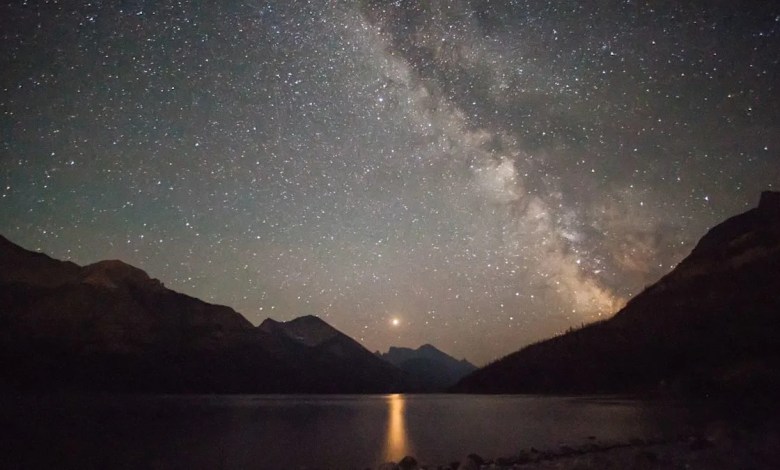
Jupiter rising above Waterton Lakes, Alberta, Canada. . | Credit: Nonac_Digi for the Green Man/Getty Images
The two planets in prime position for nighttime visibility this month are, ironically, the two planets on opposite ends of the spectrum in terms of size. THE solar systemthe largest planet, Jupiteris in an excellent position for viewing this February, high in the east-southeast sky at nightfall and hovering high in the sky in the mid to late evening. Meanwhile, the smallest planet – Mercury – will have its most beautiful nighttime appearance, easily accessible to those looking for it around three-quarters of an hour after sunset, low in the west-southwest sky, for a three-week interval starting February 6.
BEST TELESCOPE CHOICE:

Celestron NexStar 8SE Computerized Telescope Side View with Accessory Details
The Celestron NexStar 8SE is ideal for beginners wanting quality, reliable and fast views of celestial objects. For a more in-depth look, check out our Celestron NexStar 8SE review.
There are two more planets in the evening sky: Saturn is also in the west-southwest sky, but gradually diminishes with each passing day. The combination of low altitude and increasingly bright twilight will make visibility quite difficult during the last week of the month. If only Saturn were a little brighter, it would be easier to see. This is why the dazzling Venus, in the same general vicinity as Mercury and Saturn, will slowly gain prominence during the last half of February and into March.
The only planet completely out of view is Mars, which is far too close to the glare of the sun to see all month.
In our schedule, remember that when measuring the angular separation between two celestial objects, your closed fist held at arm’s length measures approximately 10 degrees. Here we present a schedule below that provides some of the best viewing times on the planet and tells you where to look to see them.
Mercury

Mercury is visible in February. | Credit: Starry Night/Chris Vaughan
Mercury, leaving superior conjunction, begins a beautiful appearance on the evening of February 6, at a low temperature in the west-southwest for skywatchers in mid-northern latitudes. During the first part of February, we see it higher every evening, at dusk. Currently, magnitude -1.1 (among stars, only Sirius is brighter), and at 12 degrees east of the sun, the planet will set an hour after sunset. On the evening of February 18, about 45 minutes after sunset, look low toward the west-southwest horizon for a thin waxing crescent moon, only 2% illuminated by the sun. Mercury will be less than a degree above. The pair is even closer together when viewed from the Midwest and even closer together when viewed from the western United States.
The view through binoculars should be breathtaking. As a bonus, for parts of Texas, Arkansas, Louisiana, Mississippi, Alabama, Georgia and Florida, the moon will appear to pass directly in front of Mercury. The next evening, Mercury reaches its greatest elongation, just 18.1 degrees from the sun. Such a small angle for an eastward elongation won’t be matched until 2039. And yet, at that time, Mercury will be in the sky throughout the evening twilight, the only such occasion in 2026. At that time, the fast little planet shines at a magnitude of -0.4, and telescopes show its small disk exactly half-lit — which is not always the case for most of Mercury’s largest elongations. Over the next week, Mercury fades by a factor of nearly five and soon disappears out of sight. The inferior conjunction takes place on March 7.
Venus

You may be able to see Venus with the naked eye in February. | Credit: Starry Night/Chris Vaughan
Venus was in superior conjunction with the sun on January 6; farthest from Earth January 8; and at aphelion – furthest from the sun in space – on January 22. In early February, Venus will be very difficult to see even with optical aid, because its height will be less than 4 degrees at sunset and will set less than half an hour after the sun.
By February 15, Venus could be visible to the naked eye without any optical aid. About 15 minutes after sunset, look very low near the west-southwest horizon. If you still can’t find it, scan with binoculars, then once found you should be able to see it with your unaided eyes, shining radiantly in the evening twilight. On the other hand, at the end of the month, this bright -3.9 magnitude planet will appear about 10 degrees high at sunset and should be reasonably easy to find before setting about an hour after sunset.
March

Unfortunately, Mars is not as visible in February. | Credit: Starry Night/Chris Vaughan
March in February it lies just 6 to 12 degrees west of the sun and, as such, is hopelessly lost in solar glare.
Jupiter

Jupiter can be seen at higher latitudes. | Credit: Starry Night/Chris Vaughan
Jupiter was in opposition on January 10. Thus, February already finds it high in the east while the sky darkens. It shines in Gemini, dimming a bit this month, dropping from a magnitude of -2.6 to -2.4 as it slowly retrogrades (moves west relative to the background stars). The large planet is high for most of the night, as seen from mid-northern latitudes; it reaches its maximum around 10:20 p.m. at the beginning of February and 8:30 p.m. at the end of the month. And although its apparent diameter shrinks slightly by about 6% during this month, Jupiter still appears large enough through a medium-sized telescope to see a lot of detail in its clouds if the air is stable enough. As night falls on February 26, look high in the eastern sky to spot the waxing gibbous moon and hovering about half a dozen degrees below it will be “Big Jupe.”
Saturn

Saturn will be visible at lower positions in the night sky. | Credit: Starry Night/Chris Vaughan
Saturn rapidly loses altitude with each passing night. Early in the month, it is visible low in the west-southwest sky as darkness descends. Now Saturn’s lower position will make locating it more tricky, so tonight use the moon as a reference. In telescopes, the still-narrow rings will slowly open like a late winter flower, but by the end of the month it will be difficult to obtain an image of them undisturbed by Earth’s bustling atmosphere. The crescent moon, which on February 19 will have expanded to 7% brightness after its close encounter with Mercury the previous evening, will lie about 4 degrees to the right of first magnitude Saturn.


