As Trump calls to nationalize elections, Utah thinks it has a model for state voting independence

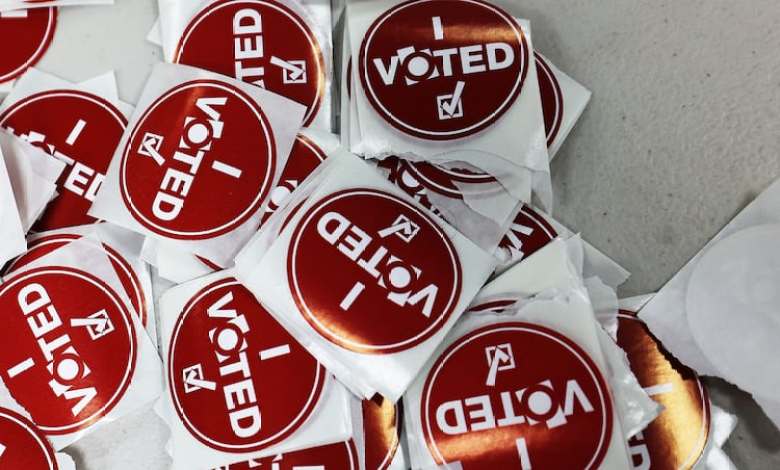
Utah Republican leaders on Wednesday revived a proposal to require personal voter identification for most ballots, as President Donald Trump led a campaign to end mail-in voting before the 2026 midterm elections.
The HB479 bill reflects an election overhaul proposed last year that was ultimately watered down to only phase in a requirement for mail-in ballots to include the last four digits of the state ID in addition to a signature.
Utah House Speaker Mike Schultz said this session that he intends to push his Senate counterparts to pass the original version of the bill. His comments come after Trump expressed aggressive opposition to mail-in voting in August.
Trump pledged to “lead a movement to get rid of mail-in ballots.” Trump claimed that mail-in voting is more vulnerable to fraud and that “states are merely ‘agents’ of the federal government in counting and tabulating votes.” »
In an interview released Monday with former FBI Deputy Director Dan Bongino, Trump said Republicans should “take control of the vote” in at least 15 places and that “Republicans should nationalize the vote.”
On Tuesday, White House press secretary Karoline Leavitt said the president was referring to Utah Sen. Mike Lee’s SAVE Act, which would require voter ID and documentary proof of citizenship to vote in federal elections.
The U.S. Constitution gives state legislatures the power to fix “the times, places, and manner of holding elections.” On Thursday, Schultz said HB479 is an example of how state innovation can improve elections around the world.
“I really think this proposal … could be a model for the nation going forward because it takes what people love most about mail-in voting … and adds election integrity to it,” Schultz, R-Hooper, said Thursday.
What the bill does
HB479 would require most voters, after receiving a ballot in the mail, to return their ballot in person at a polling place or drop box where they must present a valid voter ID to a poll worker.
A voter can submit a form in person to their county clerk to receive their absentee ballot designation. These voters can return their ballots by mail for elections in the next two years, provided the first election is at least 45 days away.
There are exceptions to ensure that those who rely on mail-in voting can still do so. People with disabilities can request an absentee ballot by mail or email. Military personnel are automatically allowed to vote by mail.
The bill requires two poll workers to be stationed at the polls from 8 a.m. to 8 p.m. for the five business days before Election Day, and from 8 a.m. until the last person in line can cast their ballot on election night.
Although it does not yet have a budget note, the bill would likely involve investments in Utah’s election infrastructure, requiring poll workers to be stationed in drop boxes across the state, with one drop box for every 10,000 active registered voters.
In addition to presenting a government ID, voters would have to tell poll workers their name and location. If a worker “is not satisfied,” they would provide the voter with a provisional ballot allowing them to re-register to vote.
This bill would allow Utahns to retain the convenience of receiving a ballot in the mail, giving them time to research candidates at home, while also adding identification requirements Schultz said would increase confidence.
Unlike last year, when Utah senators were determined to preserve Utah’s mail-in voting system, which has existed for more than a decade, Senate leaders on Thursday expressed interest in working on the bill.
Voter ID is popular
Senate President Stuart Adams, R-Layton, objected to claims that the bill would eliminate mail-in voting altogether. He called it a “hybrid” between mail-in voting and in-person voting.
Deputy Senate Majority Whip Mike McKell, who has co-sponsored major election bills in 2025 and this session, acknowledged that HB479 “essentially changes mail-in voting” but said “this is a policy change that we need to look at.”
Utah Senate Minority Whip Karen Kwan, D-Taylorsville, said Democrats continue to question why Republicans are seeking to reform a system that has proven reliable and valuable to rural, elderly and disabled Utahns.
“We are very much in favor of our citizens having mail-in ballots,” Kwan said Thursday. “We want to make sure we protect that. It’s something that our communities, all of our communities, have really appreciated.”
Schultz and Adams said public polling indicates broad support for voter ID requirements. A 2025 Sutherland Institute poll found that a majority of Utah voters said requiring a photo ID when submitting an absentee ballot would increase their confidence in elections.
An August Pew survey found that 83% of adults support requiring all voters to present a photo ID to vote. A Rasmussen Reports poll conducted in January found that 74% of likely U.S. voters believe requiring a photo ID to vote is a reasonable policy to ensure the integrity of elections.
This session, Utah lawmakers are also considering elections bills involving the lieutenant governor, another requiring proof of citizenship to vote in state elections, as well as a bill that would make most voter records public.