When will SpaceX’s Falcon 9 rocket return to flight after 4 upper-stage issues in 19 months?

When you purchase through links on our articles, Future and its syndication partners may earn a commission.

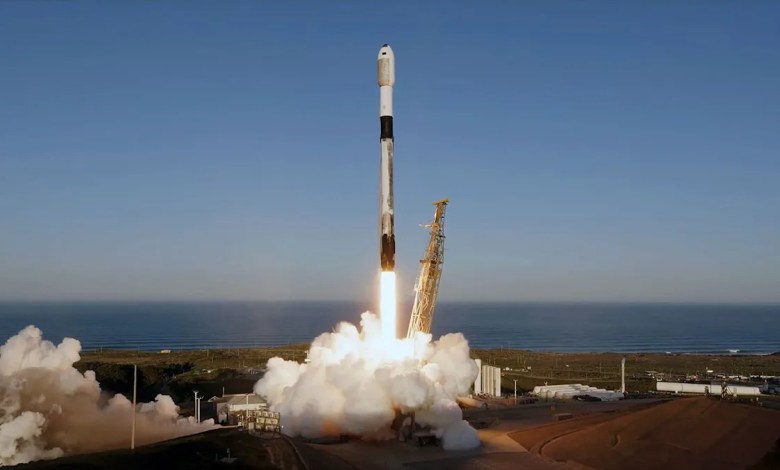
A SpaceX Falcon 9 rocket launches 25 Starlink satellites into orbit from Vandenberg Space Station in California, February 2, 2026. | Credit: SpaceX
The Falcon 9 rocket, SpaceX’s workhorse, encountered a small problem this week.
Monday (February 2), a Falcon 9 successfully launched 25 of SpaceX Star link satellites to low earth orbit (LEO) of California. But the upper stage failed to perform its deorbit burn as planned and ended up strong return to Earth in an uncontrolled manner. (The Falcon 9 first stage successfully landed on a drone in the Pacific Ocean.)
EspaceX has grounded the Falcon 9 while the company conducts an anomaly investigation, which has been required by the United States Federal Aviation Administration (FAA). The duration of this grounding is of considerable interest, as a Falcon 9 is expected to launch the Crew-12 astronaut mission to the International Space Station (ISS) for NASA on February 11. It is too early to make a confident return-to-flight prediction, but recent history provides some guidance.
Monday’s anomaly was the fourth incident on the Falcon 9 upper stage in the past 19 months.
An upper floor erupted from a liquid oxygen leak during a Starlink launch on July 11, 2024, causing the satellites to be deployed too low; they were soon dragged down Earth’s atmosphere by dragging. The FAA ordered an investigation into the incident, which lasted two weeks: the Falcon 9 was cleared to take off again on July 25, and it resumed flight with a successful Starlink mission two days later.
Another problem appeared on September 28, 2024, during the launch of the Crew-9 astronaut mission to the ISS. The Falcon 9 got the spaceplanes where they needed to go, but the upper stage performed a non-nominal deorbit and returned to Earth outside its target area.
The FAA again requested an investigation, which resulted in permission to resume normal flight operations. October 11. The agency granted SpaceX a special exemptionhowever, for the October 7 launch of the Hera spacecraft inspecting asteroidsbecause it sent the probe well beyond LEO and did not involve re-entry into the upper stage.
Then, on February 1, 2025, a Falcon 9 upper stage failed to complete its deorbit during an otherwise successful Starlink mission. The rocket body crashed back to Earth uncontrollably on February 19, generating a fiery sky show for people all over Western Europe. The FAA has not demanded an investigation into this incident, tell Ars Technica that “all flight events occurred within the scope of SpaceX’s authorized activities.”
So what do we do with this dataset? The two investigations cited above lasted approximately two weeks. So if this is a reliable precedent, then Falcon 9 should resume flight around February 16, five days later than Crew 12’s current target date.
Such a delay would return the Crew-12 takeoff to roughly its original schedule. NASA and SpaceX had scheduled Feb. 15 for the mission, but sped it up to minimize the amount of time the ISS is staffed. crew reduced to three peoplewhich has been the case since January 15. (The predecessors of Crew-12, the four astronauts of Crew-11, I came home a month early during the first ever medical evacuation from the ISS.)
But we don’t know how predictive the above precedents actually are. The sample size is very small and SpaceX may have learned enough from other recent incidents to significantly reduce Falcon 9 downtime. We’ll just have to wait and see.
It should also be noted that Falcon 9 incidents are very rare, given how frequently the rocket flies. For example, all four upper stage problems discussed in this story occurred during a period in which SpaceX launched more than 240 Falcon 9 missions, the vast majority of which were fully successful. (SpaceX lost first stage boosters during or shortly after landing twice during this period, but the payloads reached their destination twice.)


