When Sustainable Foods Come With Unexpected Environmental Costs


Animal products like beef and lamb are the biggest contributors to greenhouse gas emissions, while the feed needed to support these livestock also drains limited land and fresh water resources. Deforestation, as well as biodiversity and habitat loss, are also a direct result of agricultural practices, according to Sustainable Fisheries UW, part of the University of Washington.
Improved agricultural practices, the development of technologies or new diets based on seafood or plants all offer alternatives that could be more respectful of the planet. In doing so, researchers study the trade-offs involved in such a change and what would convince the average person to take the plunge in the first place.
Learn more: Climate change threatens global milk supply, even on refrigerated dairy farms
Environmental Costs of Eco-Friendly Foods
Aquaculture is the controlled reproduction and harvesting of organisms in aquatic environments, according to the National Ocean Service, and can be used to both restore habitats and help rebuild previously threatened populations. Additionally, seafood emits significantly less carbon than conventional land animals, with most emissions coming from fuel used in the transportation or fishing process.
At the same time, plant products such as nuts and legumes also have a smaller environmental footprint. Bacteria in the roots of legumes reduce the need for nitrogen fertilizer, while nuts can remove carbon from the air, according to a study published in Nutrients.
However, even sustainable alternatives come with their own trade-offs. Our World in Data researchers found that nuts require more than 4,000 liters of fresh water per kilogram of product, which exceeds even herds of cattle. A 2018 study published in Frontiers of ecology and environment found that the energy needed for livestock production was lower than that needed for aquaculture, with farmed catfish, shrimp, and tilapia being more energy-intensive than pork, for example.
Yet in most cases, meat and dairy still have a higher carbon and environmental footprint than these alternatives. However, when it comes to changing policy in favor of a healthier route, part of the impetus lies not with federal regulations, but also with the average grocery shopper.
“A lot of the work on sustainable agriculture focuses on what government can do to help farmers adopt something, and that’s good for the transition,” said Shadi Atallah, an associate professor in the College of Agricultural, Consumer and Environmental Sciences at the University of Illinois at Urbana-Champaign. Discover. “But we can’t count on government support in the long term, and that’s where the importance of consumer research comes in.” [play].”
Consumer behavior also impacts sustainability
Consumer choices may start with deciding to forgo beef in favor of seafood, or adopting more plant-based alternatives to dinner.
Atallah studies the influence of information on the way consumers choose their products. He previously participated in research conducted by the New Hampshire Agricultural Experiment Station, studying how alternative syrups could improve forest resilience in the maple syrup industry.
Atallah studied the extent to which talking to consumers about the environmental benefits of their alternative choices impacted their willingness to opt for maple-free syrup. In this case, researchers found that consumers were open to alternatives when informed about the ecological benefits of diversification.
Likewise, Atallah is currently conducting a similar preliminary study on the types of concessions consumers are willing to make on their groceries – namely lettuce – and at what prices. Lettuce grown hydroponically or aquaponically costs more in cents and energy consumption. So far, among reductions in nitrogen fertilizer, land use and water use, the latter has emerged as a key factor, prompting consumers to set aside higher energy costs and prices in favor of sustainable production.
Consumer studies like this, Atallah says, can tell producers what the average person is willing to pay more for.
“It provides information, both to the private sector who might voluntarily want to provide information, and to policymakers who are considering mandating this type of labeling, so that consumers know the impacts of their choices,” he said. Discover.
What types of agriculture are sustainable?
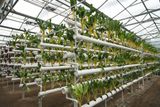
Various researchers are studying agricultural techniques that would require less land, fertilizer and water. Hydroponics, for example, requires no soil, only nutrient-rich solutions. Aquaponics takes these basic principles, but combines them with the simultaneous breeding of fish, using fish waste as a source of nutrients for plants.
“There’s an interesting side to this. People are now looking at investing in renewable energy systems to run these systems,” said Jawad Khan, co-author and environmental economist at UIUC. Discover. “If you install an aquaponic or hydroponic system, you will be using, say, solar arrays or energy from renewable sources. If you offer these systems, they will reduce any footprints caused by high energy consumption.”
Researchers have also touted regenerative agriculture as another agricultural technique capable of reducing ecological impacts, according to a study published in Borders. This is agriculture that minimizes synthetic agrochemicals while integrating elements such as livestock, ground covers and composts to maintain soil health.
Sustainability challenges
The big step towards sustainable agriculture requires many moving parts: financing, incentives and even technological skills.
Regarding hydroponic or aquaponic techniques, for example, Khan said Discover“It’s not like a typical person just starts these things. It takes skill first and foremost. And it’s a new technology that people are still studying, and they’re seeing if they can do it or not.”
But the biggest barrier to widespread adoption, Atallah said, is economic.
“Unless a farmer is environmentally motivated, they will not adopt sustainable practices because they are ecologically sustainable, until it has been proven that they are also economically sustainable,” he said. “The economics of sustainable practices are the bottleneck. »
There is no single solution for economically viable sustainability, Atallah said Discover. This could look like breeding more resilient crop varieties or developing resources such as semi-autonomous robots that can weed without herbicides.
The good news, however, is that consumers seem willing to foot the bill when they know where their food comes from.
“Consumers care about reducing negative environmental footprints. This shows that there is demand for all of these things,” Khan told Discover. “Now knowing the demand, it will be up to producers whether or not to adopt these technologies. Once this information is available, this information asymmetry will be reduced.”
Learn more: Manure processing: how cow dung could be the future of sustainable manufacturing
Article sources
Our Discovermagazine.com editors use peer-reviewed research and high-quality sources for our articles, and our editors review the articles for scientific accuracy and editorial standards. See the sources used below for this article:


