The AI data center boom could cause a Nintendo Switch 2 memory shortage


February 5, 2026
2 min reading
 Add us on GoogleAdd SciAm
The AI boom is coming for the Switch 2
Data centers are consuming computing resources and pushing chipmakers toward AI-grade memory, reducing supply for Nintendo and other hardware makers.
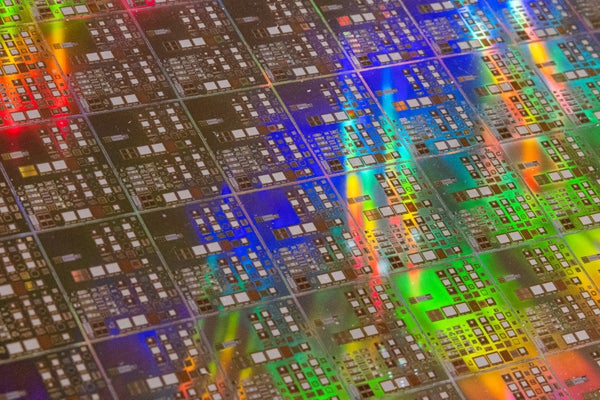
Silicon wafers like the one pictured here are the raw canvas of consumer memory and high-end AI processors. Supply is low.
Annabelle Chih/Stringer/Getty Images
The Nintendo Switch 2 and an artificial intelligence data center are nothing alike. Yet they depend on the same crucial component: dynamic random access memory, or DRAM. It is the fast-working memory of computers that allows them to run current applications. Cloud computing giants like Microsoft and Google are buying data center-scale memory hardware to create AI clusters, tightening supply for everyone else. This includes Nintendo.
In a conference call Tuesday, Nintendo President Shuntaro Furukawa said rising memory prices had not significantly affected the company’s results for the current fiscal year, but he warned that if prices remained high, costs could begin to eat into profitability. The company’s shares quickly fell nearly 11 percent in Tokyo.
DRAM stores data bits as tiny electrical charges. These charges escape and the system constantly updates them. Think of it as a whiteboard where the ink fades over time and the system continues to trace the same words so they remain readable. Video games rely on this ability to maintain smooth and responsive gameplay. A console like the Switch 2, for example, uses DRAM as the database for all the data the processor and graphics chip then needs, from lighting and character positions to animation timing and collision calculations.
On supporting science journalism
If you enjoy this article, please consider supporting our award-winning journalism by subscription. By purchasing a subscription, you are helping to ensure the future of impactful stories about the discoveries and ideas shaping our world today.
According to a specs breakdown released by Digital Foundry in May, the Switch 2 uses 12GB of LPDDR5X, a standard mobile-friendly DRAM that was designed to move lots of data quickly without quickly draining the handheld’s battery.
AI data centers also need DRAM, but in much larger quantities. Their servers contain standard DRAM for central processing units that perform tasks such as scheduling work and moving data around the system. Compute-intensive chips that run AI (often graphics processing units like those from Nvidia) require another form of DRAM-based memory called high-bandwidth memory, or HBM.
HBM is a DRAM designed for the data flow demanded by AI accelerator chips. To make HBM, manufacturers stack DRAM chips vertically and connect them to tiny channels etched into the silicon that carry signals between layers. HBM sits next to the accelerator and feeds it data quickly enough to keep the chip running.
So why not make more DRAM? The problem is that manufacturers cannot increase memory capacity overnight. HBM and consumer DRAMs start from the same silicon raw materials and share much of the same supply chain. But HBM also requires specialized packaging and charges higher prices. So manufacturers have prioritized these AI-driven memory products.
Industry executives have warned that supply chain constraints could persist into next year; these constraints will shape the performance that consumer hardware like the Switch 2 can comfortably deliver. Chipmakers such as Samsung and SK Hynix are trying to fill the DRAM gap, but these projects take years. In the meantime, Nintendo and other device makers can absorb costs, raise prices, cut bundles, or make quiet compromises on specifications.
It’s time to defend science
If you enjoyed this article, I would like to ask for your support. Scientific American has been defending science and industry for 180 years, and we are currently experiencing perhaps the most critical moment in these two centuries of history.
I was a Scientific American subscriber since the age of 12, and it helped shape the way I see the world. SciAm always educates and delights me, and inspires a sense of respect for our vast and magnificent universe. I hope this is the case for you too.
If you subscribe to Scientific Americanyou help ensure our coverage centers on meaningful research and discoveries; that we have the resources to account for decisions that threaten laboratories across the United States; and that we support budding and working scientists at a time when the value of science itself too often goes unrecognized.
In exchange, you receive essential information, captivating podcasts, brilliant infographics, newsletters not to be missed, unmissable videos, stimulating games and the best writings and reports from the scientific world. You can even offer a subscription to someone.
There has never been a more important time for us to stand up and show why science matters. I hope you will support us in this mission.


