The quiet reason why Americans could face high beef prices for years


NEWYou can now listen to Fox News articles!
Beef prices are soaring — and economists warn Americans shouldn’t expect relief anytime soon as the U.S. cattle herd shrinks to its smallest size in 75 years.
The massive decline in cattle numbers is due to years of drought, soaring costs and an aging workforce on livestock farms. Agricultural economists and ranchers say rebuilding herds will take years, meaning beef prices aren’t likely to drop anytime soon.
“The biggest problem has been the drought,” said Eric Belasco, chair of the agricultural economics department at Montana State University.
Years of dry weather destroyed the prairies of the West and the Plains, leaving ranchers without enough food or water to feed their herds. Many were forced to sell their livestock early, even the cows needed to produce the next generation of calves, making it difficult to rebuild America’s herds.
THE COST OF THIS STADAFOOD IS NEAR RECORD HIGH – AND AMERICANS CAN’T GET ENOUGH OF IT
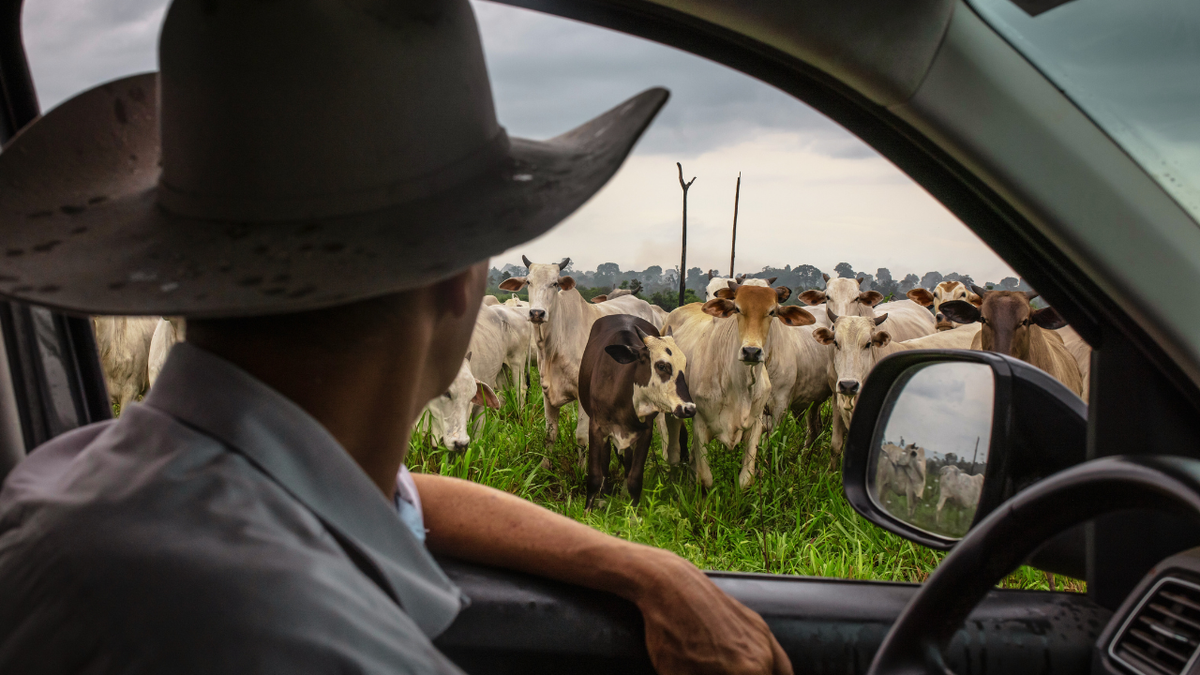
Cattle watch as a breeder inspects them on a farm from a truck. (Jonne Roriz/Bloomberg/Getty Images)
Data from the Kansas City Federal Reserve found that with each incremental increase in drought severity, livestock-producing regions experience an approximately 12% decline in hay production, a 5% increase in hay price, a 1% reduction in herd size and a 4% decline in farm income.
This slow recovery isn’t just economic, it’s biological, according to Derrell Peel, a professor of agricultural economics at Oklahoma State University.
“The fact is, there’s really nothing anyone can do to change this very quickly,” Peel said. “We are in a supply shortage situation that has taken several years to develop, and it will take several years to get out of it.”
Peel, who specializes in livestock marketing, said it takes about two years to get cattle to market and several years to rebuild herds, leaving little room for short-term help.
THE ONLY CRUSHING PROBLEM AMERICAN BREEDERS WANT TRUMP TO RESIDE THERE

Ranchers and agricultural economists say it will take years to rebuild the cattle herd. (Ricky Carioti/The Washington Post/Getty Images)
And once herds decline, the loss is difficult to reverse.
This reality unfolds deep in ranch country. Cole Bolton, owner of K&C Cattle Company, whose pastures stretch along the gentle edge of the Texas Hill Country, said the cattle industry is still in the early stages of recovery.
“I think it’s going to take some time to resolve this crisis that we’re in with the livestock shortage,” Bolton told Fox News Digital. “My message to consumers is simple: friends, be patient. We need to replenish our herds.”
About 1,000 miles away, Will Harris, a fourth-generation rancher in Bluffton, Ga., said the ripple effects of the dwindling cattle herd are now trickling down directly to consumers.
“The U.S. cattle herd is smaller than it has been since the 1950s and this contraction has pushed beef prices to historic highs. Demand is strong, but domestic supply simply isn’t enough and this gap is most felt by consumers,” said Harris, owner of White Oak Pastures.
According to data from the U.S. Department of Agriculture, the average price of beef in grocery stores increased from about $8.40 per pound in March to $10.10 per pound in December 2025, an increase of about 20%.
IN TEXAS CATTLE COUNTRY, RACKER WELCOMES TRUMP’S OPPORTUNITY ON DECADES OF THIN MARGINS
Despite the rise in prices, the Americans did not blink. In 2025, buyers spent more than $45 billion on beef, purchasing more than 6.2 billion pounds, according to data from Beef Research, a contractor for the National Cattlemen’s Beef Association.
Spending jumped about 12% from the previous year, while the amount of beef sold rose more than 4%, a sign that consumers aren’t just paying more, they’re buying more.
CLICK HERE TO GET THE FOX NEWS APP
The revelation comes as the president Donald Trump Temporarily increases beef imports from Argentina to ease high food prices, while establishing longer-term plans to support the U.S. beef industry.
Although imports could ease pressure on grocers in the short term, ranchers and economists say they cannot replace replenishing the domestic livestock supply.


