‘It’s telling us there’s something big going on’: Unprecedented spike in atmospheric methane during the COVID-19 pandemic has a troubling explanation


Methane is a greenhouse gas about 30 times more potent than carbon dioxide and its concentration in the atmosphere has increased since measurements began. However, in 2020, scientists were baffled by a sudden and unexplained increase in atmospheric levels. With so many possible sources and sinks for this gas, unraveling the origins of this anomaly has proven a complex task, but researchers believe they may now have solved the mystery.
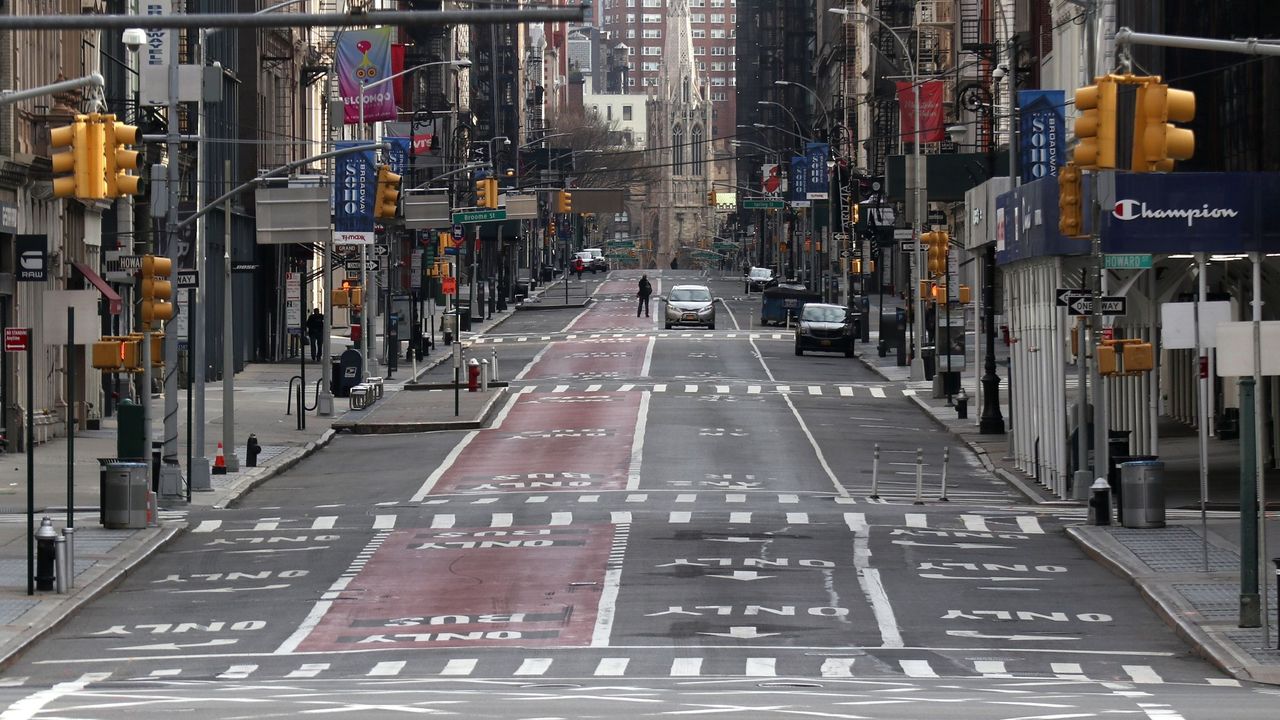
The unprecedented increase in atmospheric methane in 2020 was actually mainly caused by reduced human emissions during the pandemic, which temporarily stopped the atmosphere from breaking down the gas, according to a new study.
Lower levels of nitrogen oxides – which are released, among other things, by the combustion engines of cars – have weakened the natural cleaning capacity of the atmosphere. This, in turn, caused a dramatic increase in methane emissions when travel stopped in early 2020, and returned to pre-pandemic levels in 2023 as society returned to normal.
The study, reported in the journal Science On February 5, combined satellite data, ground station measurements and complex models were combined to unravel possible sources of additional gas. It also identified a substantial increase in natural emissions as a secondary driver of the methane spike.
Atmospheric methane has been steadily increasing since records began, but measurements taken in 2019-2020 revealed an alarming acceleration in this trend. The annual increase nearly doubled, reaching 16.2 parts per billion, compared with a more moderate increase of 8.6 parts per billion over the previous 10 years. In the years since, various hypotheses have been put forward to explain this unexpected rise – including increased fossil fuel consumption, emissions from wetlands and agriculture, wildfires, and changes in atmospheric chemistry – but determining which factors were actually responsible is an extremely complex task.
Taking a global approach, the researchers combined physical data from around the world with modeling studies and simulations to assess the potential contribution of each source.
Their analysis found that 83% of the 2020 methane spike likely resulted from a reduction in the atmosphere’s ability to remove methane – a phenomenon directly linked to the disruption to human activities caused by the pandemic.
Oxidizer “all the bad guys”
Specifically, the sudden drop in industrial emissions – notably toxic nitrogen oxides – has significantly reduced the production of hydroxy (OH) radicals in the atmosphere.
“OH is the molecule for cleaning the atmosphere” Euan Nisbetprofessor of earth sciences at Royal Holloway University of London, who was not involved in the research but wrote a accompanying perspective article about the results, told Live Science. “It oxidizes all harmful elements – it transforms carbon monoxide into CO2and by capturing the hydrogen, it transforms the methane into CO2“.
The team fed satellite data on OH precursor molecules into a model to map the concentration and distribution of these cleansing radicals between 2019 and 2023. This revealed a sharp decrease in 2020, which is consistent with the observed increase in methane levels. Then, they compared this result with a second model, generated from measured emissions and wind patterns, thus confirming the hypothesis that the reduction of human emissions was the main contributor to the methane increase.
However, Nisbet cautions, this does not mean that the use of fossil fuels is the answer to rising methane levels. Although a less potent greenhouse gas, CO2 persists much longer in the atmosphere, so switching to cleaner fuels remains an urgent priority.
The remaining 20% of the peak was therefore the result of direct methane emissions. Working backwards from satellite measurements, climate data and isotope ratios, the team created a series of additional “inversion” models to identify the precise source of these emissions.
The relative levels of carbon-12 and carbon-13 isotopes – two versions of carbon with different chemical masses – were particularly crucial to this process. “Sources affect isotopes, so you also have to adapt the isotopic data,” Nisbet said.
Biology prefers to use lighter carbon-12, which means biological sources of methane, like livestock or wetlands, have a different effect on the proportions of carbon-12 and carbon-13 in the atmosphere than geologic sources like fossil fuels, Nisbet explained.
“One of the conclusions that comes out of this is that methane emissions from fossil fuels are relatively static,” he said. “On the other hand, biological emissions have increased quite sharply, and this is most likely happening in humid Africa.”
The observed increase in methane emissions between 2020 and 2023 coincided with extremely humid conditions across tropical Africa, resulting from an unusually prolonged La Niña period and the Indian Ocean Dipolar Climate Oscillation.
“In recent years, this has caused huge amounts of rainfall in East Africa, particularly in the Nile Basin, which then floods the South, which is one of the most productive wetlands in the world,” Nisbet said. “Very humid and very hot means big swamps – cows and antelope and buffalo, and lots of papyrus growing, dying, rotting and turning into methane.”
By 2023, the end of the pandemic and wet La Niña conditions in the tropics saw methane increases stabilize at pre-2020 levels. But even though the world appears to have recovered from this temporary incident, the fact that it happened at all constitutes an urgent call for action, Nisbet said.
“It’s a first indicator of the state of the global climate,” Nisbet said. “Methane has a half-life of 10 years, so it’s rotating all the time and telling us something big is happening. This is a climate feedback and the big biological sources are activating, so we have to work twice as hard.”
Ciais, P., Zhu, Y., Cai, Y., Lan, X., Michel, SE, Zheng, B., Zhao, Y., Hauglustaine, DA, Lin, . . Peng, S. (2026). Why methane increased in the atmosphere in the early 2020s. Science, 391(6785), eadx8262. https://doi.org/10.1126/science.adx8262


