Astronomers are filling in the blanks of the Kuiper Belt


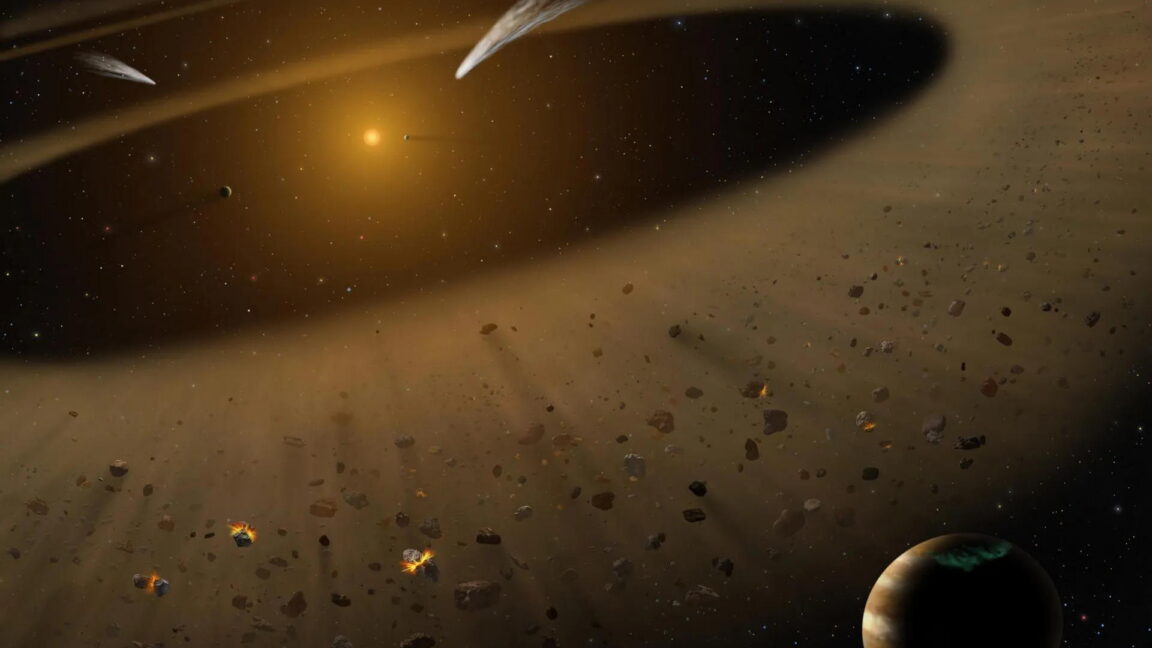
“Imagine a snowplow driving down a highway and lifting the plow. That leaves a clod of snow behind it,” he adds. “It’s the same kind of idea that left the cold classics group behind. It’s the core.”
In other words, Neptune dragged these objects with it during its outward migration, but then broke its gravitational hold on them when it “jumped,” leaving them to settle into the Kuiper Belt in the distinctive core pattern carved by Neptune that remains intact to this day.
Last year, Siraj and his advisers at Princeton set out to search for other hidden structures in the Kuiper Belt with a new algorithm that analyzed 1,650 KBOs, about 10 times more objects than the 2011 study, led by Jean-Robert Petit, that first identified the core.
The results consistently confirmed the presence of the original core, while also revealing a possible new “inner core” located approximately 43 AU away, although additional research is needed to confirm this finding, according to the team’s 2025 study.
“Basically, you have these two clusters, at 43 and 44 AU,” Siraj explains. “It is not known whether they are part of the same structure,” but “in any case, it is another clue to, perhaps, the migration of Neptune, or some other process that formed these clusters.”
As Rubin and other telescopes discover thousands more KBOs in the coming years, the nature and possible origin of these mysterious structures in the belt could become clearer, potentially opening new windows into the tumultuous origins of our solar system.
In addition to reconstructing the early lives of known planets, astronomers studying the Kuiper Belt are embarking on a race to discover unknown planets. The most famous example is the hypothetical giant world known as Planet Nine or Planet