Offshore wind showed up big during the East Coast’s brutal cold


Bitter cold and arctic winds have battered the northeastern United States in recent weeks, straining electrical systems and driving up electricity prices as people turn up their heat. Now, as the region finally begins to thaw, early data shows how America’s offshore wind farms helped keep electricity flowing during the period of extreme weather.
The findings demonstrate the bitter irony of the Trump administration’s ongoing – and potentially illegal – battle against offshore wind energy development in the United States. Federal officials are pushing for more fossil fuel energy to avoid future winter blackouts while trying to block the development of offshore wind power, one of the most valuable resources for cold-climate coastal states.
“Performance data shows in real time that offshore wind provides reliable power when the grid needs it most…at the scale this region and our country needs,” said Liz Burdock, president and CEO of Oceantic Network, which advocates for marine renewable energy sectors.
Burdock was speaking Tuesday in New York at the group’s annual International Partnership Forum, where hundreds of offshore wind developers, policy experts and labor leaders gathered to regroup after President Donald Trump’s yearlong attacks on five offshore wind farms under construction.
For years, independent energy experts have predicted that offshore wind power could provide substantial amounts of electricity to densely populated, land-constrained communities along the U.S. East Coast, particularly during winter cold spells, when demand for fossil gas exceeds supply. And the region’s grid operators are banking on offshore wind capacity to meet the growing electricity needs of data centers and electrified homes and vehicles.
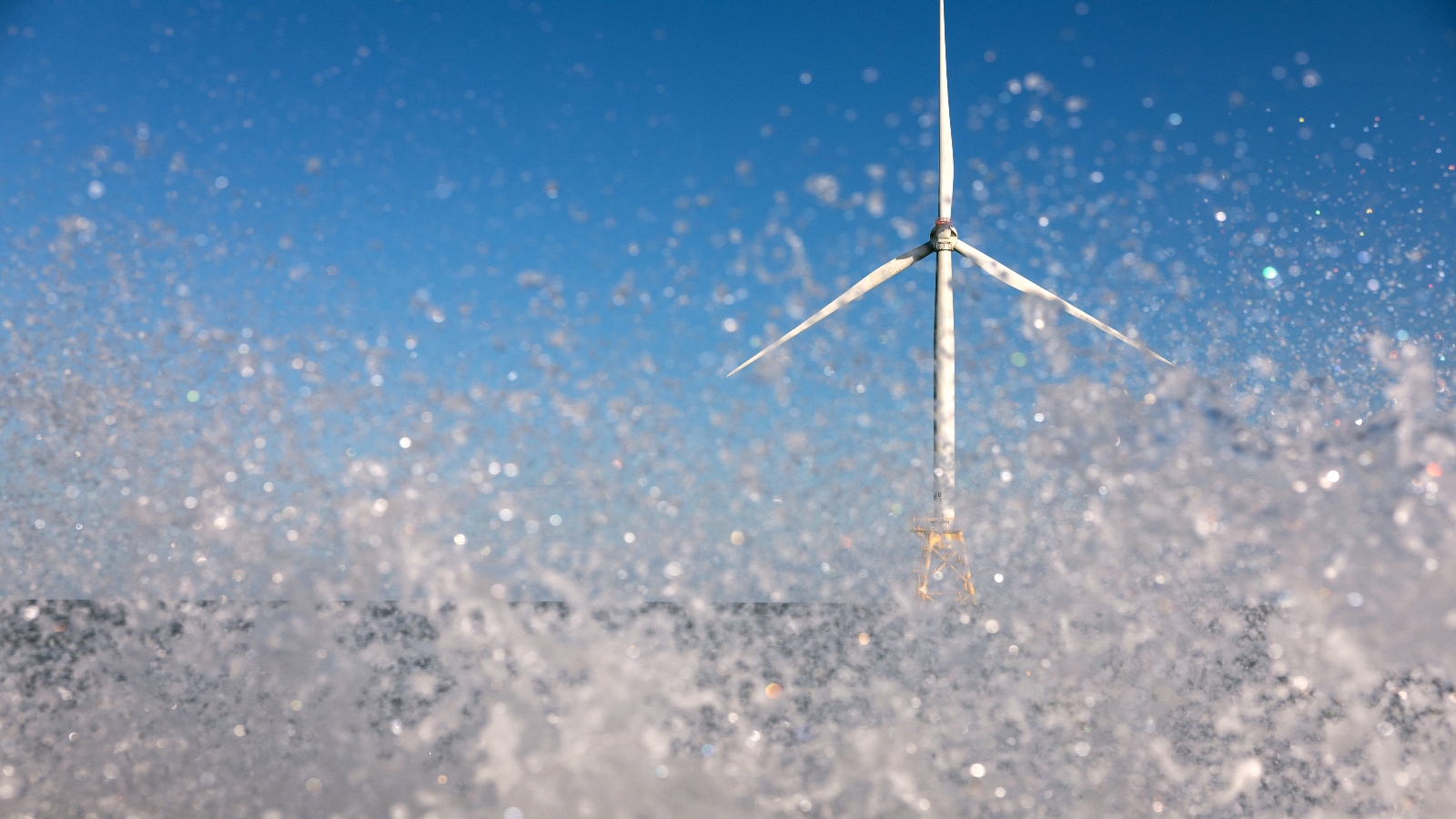
Trump destroyed offshore wind power. The North East cannot live without it.
Data from January shows the nation’s two large-scale offshore wind farms — South Fork Wind and Vineyard Wind — performed as well as gas-fired power plants and better than coal-fired facilities, including during last month’s Winter Storm Fern, experts said at the event.
The 132-megawatt South Fork Wind Farm, which provides electricity to Long Island, New York, had a “capacity factor” of 52 percent last month. The metric reflects how much electricity the project actually generates compared to the maximum amount it could produce over a given period. This puts South Fork Wind on par with the most efficient gas plants in New York State.
“The wind capacity in the Northeast is absolutely incredible, especially in winter,” said Mikkel Mæhlisen, vice president of Americas Generation at Ørsted, which jointly owns South Fork Wind with Skyborn Renewables.
The 12-turbine project became the United States’ first large-scale offshore wind farm in 2024, when it began powering some 70,000 homes. Last winter, it also proved to be a model of reliability, with a capacity factor of 54% between December 2024 and March 2025.
Vineyard Wind, meanwhile, can already produce up to 600 MW of clean electricity off the coast of Massachusetts. The project, which is 95% complete, is one of five offshore wind farms that were forced to halt construction late last year in response to Trump’s stop-work orders, which cited ambiguous “national security” concerns. Federal judges allowed all five projects to continue while the developers’ complaints worked their way through the court system.
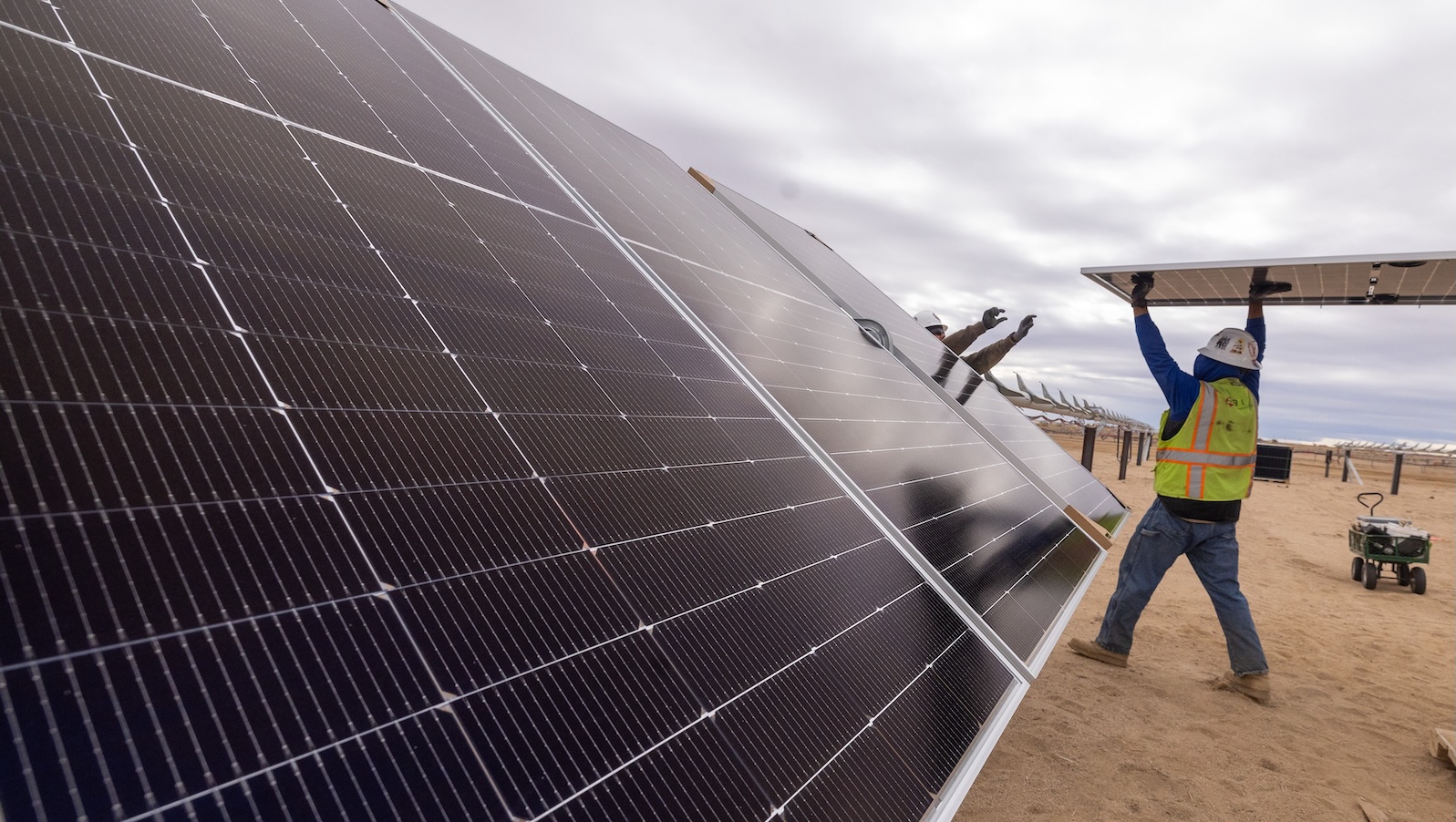
Trump is trying to kill clean energy. The market has other plans.
However, Interior Secretary Doug Burgum said the Trump administration plans to appeal those court rulings, Bloomberg reported Wednesday.
During Winter Storm Fern, Vineyard Wind had a capacity factor of 75 percent, Burdock said. Once fully operational, the project will provide electricity at a price of $84.23 per megawatt hour to the New England grid. This is significantly lower than wholesale spot prices during the storm, which reached more than $870 per MWh on January 25.
Soaring gas prices and limited supplies have pushed New England utilities to fire up oil-fired power plants to avoid rolling blackouts, assets that are typically too expensive to justify operating. The result will be even higher bills for area residents, who have historically faced some of the highest energy costs in the country — in part because New England lacks recoverable resources like oil and gas, said Katie Dykes, commissioner of the Connecticut Department of Energy and Environmental Protection.
Having a more diverse energy mix would help states reduce their dependence on stable, dispatchable, but also costly and polluting power plants during these difficult times.
“Variable resources like wind and solar, when operating during these periods of cold weather, actually help keep prices in check,” Dykes said during a panel. “That means we can reduce the run time of these more expensive oil units. It also means we can preserve the run time of these units. [fossil] resources that depend on stored fuel.
Supporters of the nascent offshore wind industry in the United States said they hope all five current projects will be completed as planned. In New York, Ørsted’s Sunrise Wind and Equinor’s Empire Wind would together provide 1.7 gigawatts of new capacity, enough to meet more than 10% of New York and Long Island’s electricity needs.
“The last few weeks have been extremely stressful,” Gary Stephenson, senior vice president of the Long Island Power Authority, said of the cold snap hitting the region. The municipal utility, which serves 1.2 million customers, purchases power from South Fork Wind and will connect its grid to Sunrise Wind, which is expected to begin operating in 2027.
“I really wish the Sunrise facilities were online. That would have relieved so much pressure on the natural gas system,” Stephenson said at the event. “We are looking forward to this [coming online] towards the end of next year.


