How the Truman Scholarship Became the Right’s Latest Battleground


Policy
/ /
Student
/ /
July 11, 2025
While republican pressure on education rises, the fight against the stock market reveals a broader effort to transform the public service into a political loyalty test.
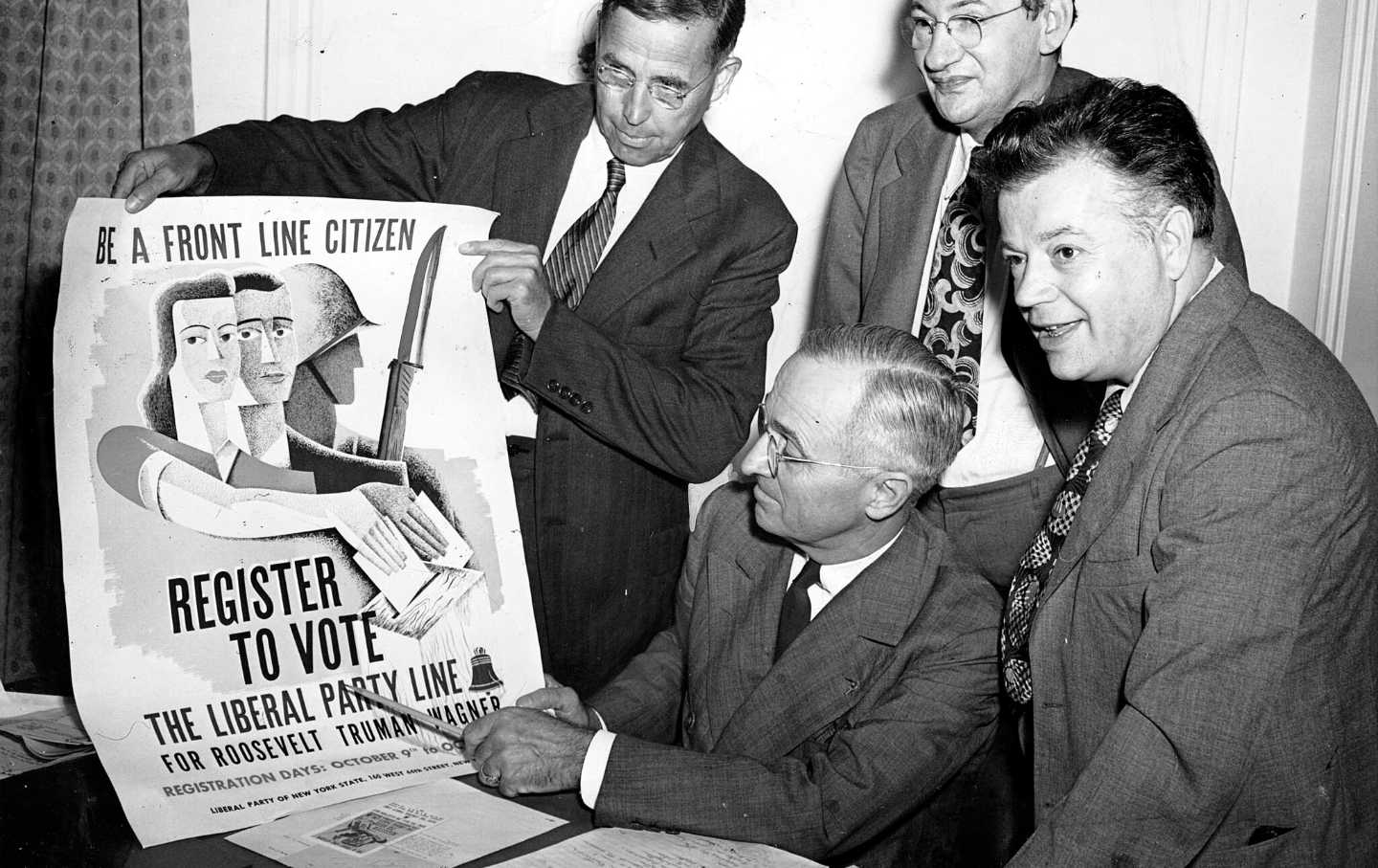
Harry S. Truman is examining a campaign poster urging people to register.
(Wikimedia Commons)
“Shouldn’t the administration intervene when Jewish students are not dangerous on campus?” Then came the follow -up: “And if they were black students who were lynched on the campus – would the administration intervene then?”
These are questions that were asked me during my interview for the Harry S. Truman scholarship, a national prize for the juniors of the college engaged in the careers of the public service. Created by the Congress in 1975, the grant funded by taxpayers was designed to honor President Truman that democracy requires leaders in principle and well prepared. Each year, approximately one student per state is selected to receive funding for higher education and support in the continuation of work within the government or the non -profit sector. The candidates must be appointed by their schools, submit a series of tests and, if they are selected as a finalist, sit for a 20 -minute interview in their country of origin – a quick session intended to test their ability to think.
But instead of diving into politics, my interview brutally turned politics. I was asked about the targeting of institutions by the Trump administration, including my university campus, Columbia University. I learned later that I was not alone. Other finalists, in particular elite schools with visible demonstrations of students, were also asked about their opinions about Israel and Palestine, a subject far from what they had written in their applications.
Of course, scholarships should ask difficult questions. But when the candidates are designated because of their affiliations on the campus or their moral convictions, the interviews are likely to turn into political tests rather than evaluations of character and vision – of the expansion of access to health care to defense of voting rights – which define their quest for public service. I do not believe that I refused the selection for my opinions, but when the service is overshadowed by an ideological examination, the process itself is armed for a partisan program.
In May 2024, representative Virginia Foxx, president of the education of the Chamber and the Workman’s Committee, joined other Republican Congress leaders in the accusation of the Truman Foundation of Political Participation. In a letter to the foundation, legislators demanded an explanation of what they cited as a “10: 1 ratio” disproportionate between the Progressive and Conservative Truman scholars. The message was clear: to bring the program in accordance with their definition of equity – or risks its future.
The “non-partisan public service” has long been considered the ideal that our officials should go beyond politics above the policy to serve the common good. But when the facts themselves are politicized, does he become a supporter of defending the voting rights while a party seeks to cancel a presidential election-or to defend environmental regulations when the very existence of climate change is refused?
Current number
The truth is that the public service has never been apolitical. Each political decision reflects a set of values. These are the values at the origin of our social contract; We grant power to government and in return, it serves us. But when a party abandons the fundamental principles of our democracy – the continuation of the truth, freedom of expression, the rule of law – the gap is no longer on the left versus on the right. It is if you believe in the ideals of the foundation that support our democracy.
The growing criticism of the Republican legislators have transformed the non -partisan scholarship into a political battlefield. This spring, the president of the Mike Johnson Chamber appointed representative Elise Stefanik – whose viral hearing on campus demonstrations last year led to the resignation of three presidents of the Ivy League – to the Board of Directors of the Truman Foundation. The Board of Directors is made up of 13 members, including eight presidential nominees and four members of the two parties.
For the first time in recent memory, when the Truman 2025 scholars were announced in April, their BIOS was absent from the Foundation website – as a concern for political counterou. But shortly after, the Stefanik representative publicly demanded an examination of the left bias “disturbing and well documented” at the Foundation, citing dozens of previous winners “explicitly engaged in the causes of the left”, in particular climate change, LGBTQ + problems and the rights of immigrants. In the letter to the board of directors of Truman, she also asked that the price of a scholarship holder will be canceled – drawing up the student “pro -hamas” based solely on their leadership in a campus organization pleading for Palestinian human rights.
Like universities and private law firms targeted by financing and decrees, the Truman Foundation faces a wave of existential threats from the outside and inside as figures such as Stefanik benefits from an influence on its board of directors. They claim to correct liberal prejudices, but the real objective is to redefine the public service itself, to build a state where work in government requires total alteration to the power – or immediate dismissal.
Through the federal government, President Trump already redefines the “merit” as loyalty to his administration and his policies. Federal candidates must now write about their favorite decree. The candidates of the Fulbright program are rejected for having mentioned the word “climate change”, and last month, the entire board of directors of 12 members resigned, citing interference from the White House.
It is not only a fight on students who receive prestigious opportunities. It is a battle on which our government serves – and how we define the service itself. When federal scholarships become political prices, we return to the 19th century goals system. A government where loyalty is rewarded and expertise is rejected. It is a path directly towards authoritarianism and a betrayal of values at the heart of these programs funded by taxpayers and our democracy.
Unlike private institutions like Harvard and law firms that have pushed back, the Truman Foundation operates under Congress surveillance. But knowing that this manual only raises the issues and makes institutional courage more urgent. For young people who hope to pursue a career in the public service, the question is clear: will we have the freedom to serve all the Americans, or will the loyalty to the ruling party become the entry price? When loyalty becomes the cost of the public service, we betray a basic American value: that our government must work for the people, not for one person or a party. If we do not summarize now, we will not just lose a generation of civil servants but the very ideals that they have been called to serve.
More than The nation
In his weekly newsletter, Elie Mystal Lambast the shameful priorities of the Republicans – and their deadly consequences.
Elie Mystal
Here we are, we learn once again that the constraints that the Americans could count in the past disappear quickly.
Karen J. Greenberg
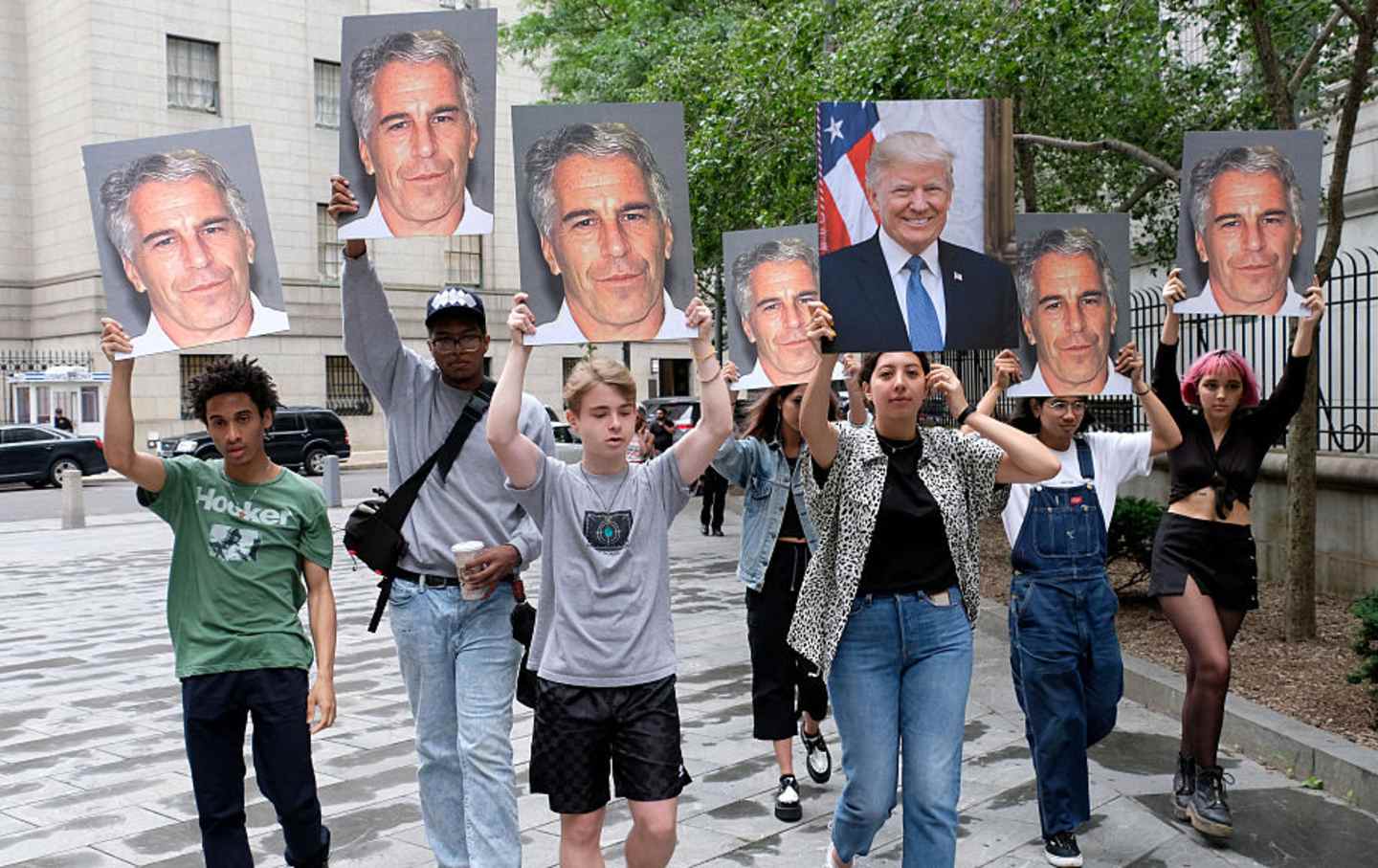
The Epstein scandal deserves a real investigation, not the hindrance of Trump.
Jeet Heer
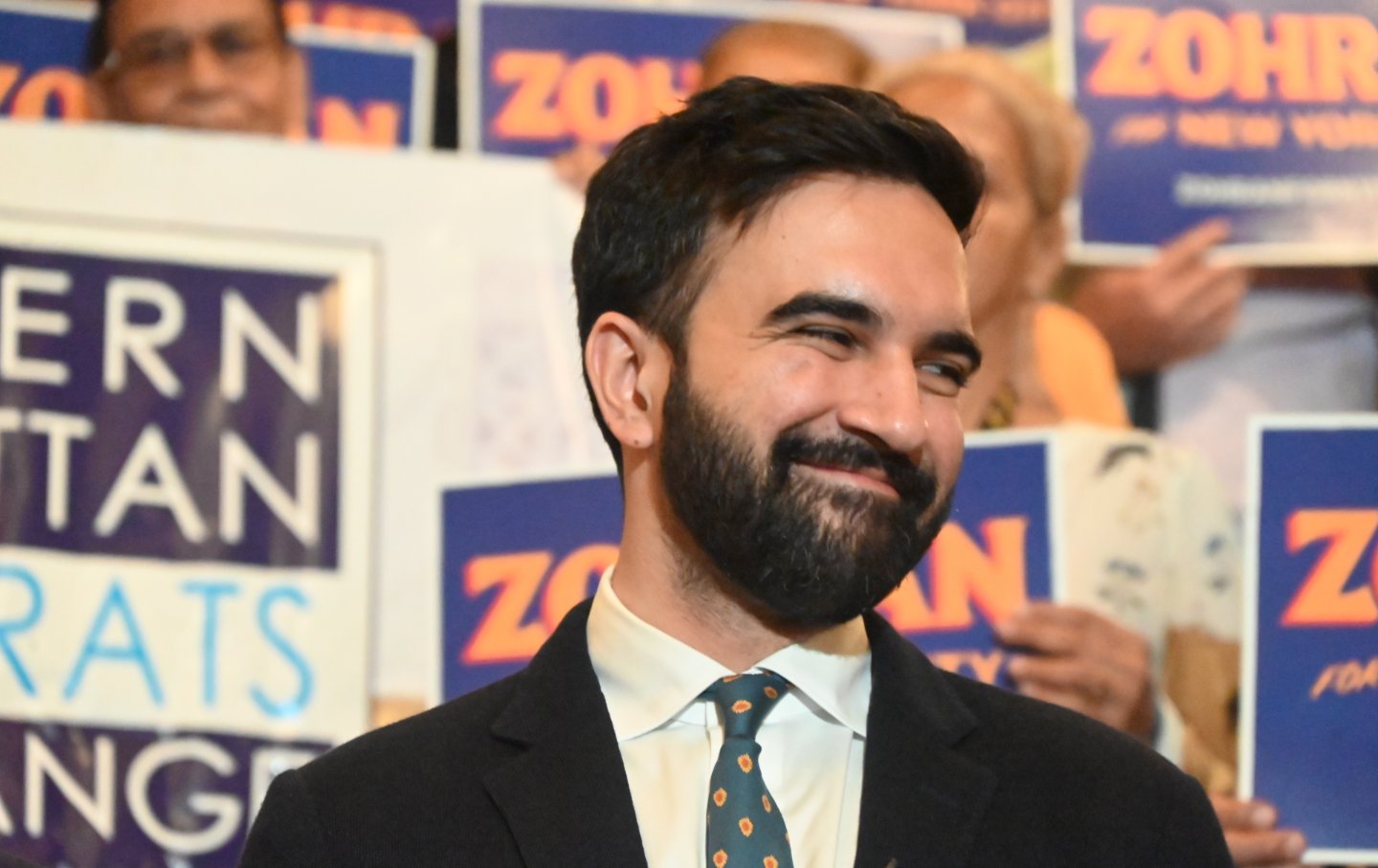
Mamdani won a main record victory, and unions, basic democratic groups and experienced elected officials rush to support him. Now is the turn of the establishment.
John Nichols
From wars to the climate crisis, an endangered world.
Opponent


