LUBBOCK, Texas — Read Republican State Rep. Carl Tepper’s re-election questionnaire for Texas House District 84 ahead of the March party primary election.
Note: The Lubbock Avalanche-Journal/ USA TODAY Network only edited the response to comply with journalistic standards and did not change any responses.
Current Occupation: Commercial Real Estate – Employee, Agent & Owner.
Age: “Old enough but young at heart.”

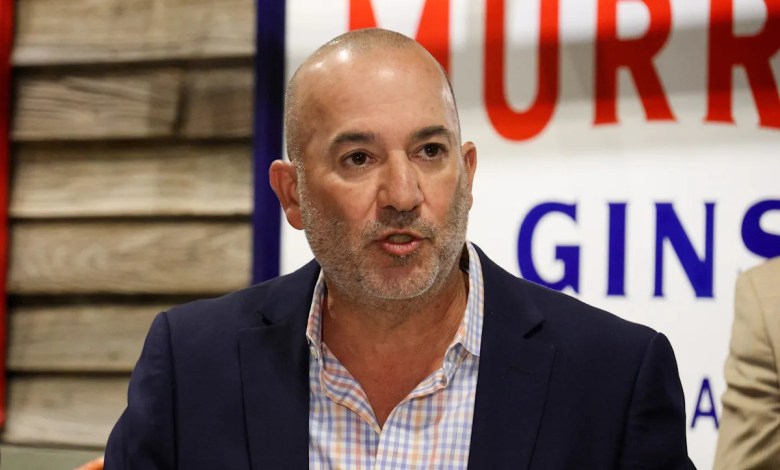
Texas State Rep. Carl Tepper, R-Lubbock, speaks about the importance and impact of the One Big Beautiful Bill on Texas and America at a news conference on July 10, 2025 in Lubbock, Texas.
Q: What do you see as the most pressing issues facing House District 84, and how have you worked to address them during your time in the Legislature?
A: Locally imposed property taxes continue to be a major issue, including how to control the growth of these taxes. Property tax rates are set by local governments. The state doesn’t charge property taxes but we control the rules and I anticipate that this will be a hotly debated subject in the 90th Legislature.
The Islamization of America and Texas is an emerging issue for our state. The introduction of Sharia Law, the creation of madrasas, and other Muslim centric practices in our urban areas are counter to American culture and a dangerous trend. These religious practices are protected by the Bill of Rights on the surface, but at the same time encourage discriminatory practices towards women and other groups. Self-segregation is also trending in the Islamic community by the creation of Muslim-only real estate developments. Immigration is a major cause of these conflicts and enforcement of our immigration laws is a major part of the solution.
Another issue is K-12 Education. It’s apparent that our children are not graduating with basic knowledge of history and mathematics and it’s causing a national crisis. Industry and research in America is relying on H1B Visas for foreign workers because our workforce is unable to tackle Science, Technology, Engineering and Mathematics “STEM”. Our students don’t know who we fought in the Revolutionary War or who the president was during the Civil War. This problem of an unprepared workforce must be addressed.
Q: You’ve been a vocal advocate for ending DEI policies and ending “Woke policies” at the state level and in higher education. Walk me through why this has been a priority for you, what you’ve accomplished, and what more you want to see done on this issue.
A: The DEI offices and policies in state agencies were weaponized and discriminatory, including “reverse discrimination.” These offices have been curtailed and mostly eliminated. Essentially it was institutionalized discrimination and institutional abuse of public funds.
Q: Agriculture and ranching are central to HD 84’s economy. What legislative actions have you taken or would you take to support farmers and ranchers dealing with economic pressures, land use issues, and changing market conditions?
A: Agriculture policy is overwhelmingly controlled by the federal government, but the Texas Legislature has enacted policies when able. We passed and voters approved the Right to Farm legislation during the 2023 Regular Session, and we’ve been protective of the agricultural exemptions related to production property.
I also filed legislation in 2023 to provide much-needed relief to our cotton producers who’ve experienced extraordinary hardship. We’ve also been proactive in dealing with the New World screwworm and other threats to our agricultural production and economy. Lubbock’s own State Sen. Charles Perry led the charge for our water resources throughout the state and has been immensely successful.
Further, I’ve filed bills to allow greater participation in state economic development funds in our rural areas. The legislation passed in the House but failed in the Senate. I will continue to sponsor this legislation and remind my fellow lawmakers in government that many of their elections are almost wholly won by the regions of Texas that are rural, and these regions are the most overlooked.
Q: Property taxes and the cost of living are major concerns for your constituents. What is your record on tax relief, and what specific solutions do you support to make Texas more affordable?
A: The legislature has been responsible with the budget surpluses the last legislative sessions and have substantially cut the school property tax rates, and at the same time have increased pay for school teachers and the school districts. The legislature has greatly increased the exemption on property taxes for residential homesteads (primary residence homes) and even higher exemptions for seniors.
Those cuts have typically cut property taxes but to pursue relief further I’ve been filing and pushing property appraisal caps. My legislation would lower the cap for residential homestead property from 10% per year to 2.5% per year and I would initiate caps for commercial and rental property to 8% per year cap in growth. These caps would follow the property in the event of sale or other change of ownership. I’ve been filing and negotiating this legislation at every opportunity and the state leadership is now considering these ideas.
I’ve continued to pursue legislation to limit the ability of local governments to issue non-voter-approved public debt, such as Certificates of Obligation. We’re also looking at further controls on local government spending and these initiatives are very controversial with the cities and counties and will be fiercely debated in the next legislative session.
Q: Looking back at your service in the House, what do you consider your most important accomplishments for HD 84, and what issues do you wish had gotten more attention or progress?
A: We have funded Texas Tech University at the highest levels ever for facilities and research and more, and Texas Tech is entering a golden age beyond athletics. Former Reese Air Force Base, where I was stationed during my Air Force career, has essentially been transferred to Texas Tech leadership and the land will enable more room for major research initiatives.
I was the first legislator in the country to file legislation to eliminate DEI policies in state institutions. It was my first bill and DEI was unknown to the public when we filed the legislation. It was an achievement to have curtailed the institutional racism of DEI in our public universities and we are continuing to end the practice at all state agencies.
I have been investigating and discovering ways for Lubbock to recapture funds that have typically been sent elsewhere. As a result I authored, and the Legislature passed, House Bill 2313 in 2025. This bill allows the City of Lubbock to designate a 30 Year Project Financing Zone (PFZ) that will help to finance the remodel of the Lubbock Memorial Civic Center. The bill will give the City of Lubbock an estimated $121.7 million in state tax rebates over 30 years. The City of Lubbock was the only municipality during that last session that was allowed to designate a PFZ during the 2025 Regular Session. Lubbock will probably be the last municipality to be awarded this 30 year designation.
I filed and the Legislature passed House Bill 126 in 2025, the NIL Bill, which has further allowed our state universities to remain a major contender in collegiate sports nationwide.
Q: As AI development and data centers grow in Texas, they’re creating new demands on water resources and the power grid — resources that West Texas agriculture and traditional energy depend on. How should the Legislature handle these competing priorities?
Lubbock is an economic development town and we traditionally welcome investment and job growth. The data centers are coming. Our most prominent natural resource is land and a healthy infrastructure and these things are very attractive to data developers. The concern over the overuse of our water resources is appropriate and we are vetting the coming developments for water use and electricity use and other development issues that may impede our future.
The data centers are “closed loop” water users and most water will be reused continually, but we are sensitive to evaporation and waste. We continue to monitor the advancement of these developments and are committed to ensuring reasonable and sustainable development.
7. Why are you running for reelection, and what would be your top legislative goals in your next term?
More to do. I continue to be focused on property taxes, property tax relief, the economic health of Lubbock and our region, and the health of the Texas Tech University System, agriculture, energy, and our myriad other industries. I’m also intent on ensuring that our West Texas values and standards are maintained and we refuse to be discounted by state leaders. Lubbock is a remote place, and a special place, and the people are kind and fiercely independent. Lubbock deserves the same economic consideration and attention that our state government gives to the major urban areas, but conversely, we want to be protected from any overbearing control by federal and state governments.
Our legislative team in Lubbock is unified and our entire region of legislators work closely together. We also have a very healthy working relationship with our federal and local partners; elected and administrative. I will miss our friend U.S. Rep. Jodey Arrington and expect he will remain a dear friend and wish him a great future.
Mateo Rosiles is a reporter for the Lubbock Avalanche-Journal and USA TODAY Network in Texas. Got a news tip for him? Email him: mrosiles@lubbockonline.com.
This article originally appeared on Lubbock Avalanche-Journal: Carl Tepper’s re-election questionnaire for Texas House District 84