5,000-year-old bacteria thawed in Romanian ice cave


Whether it’s the deepest hydrothermal vents in the ocean or the high peaks of mountains, bacteria likely survive and thrive. Ice caves can host a wide variety of microorganisms and offer biologists genetic diversity that remains to be studied. And it could help save lives.
A team of Romanian scientists tested antibiotic resistance profiles with a bacterial strain hidden in a 5,000-year-old layer of ice inside an underground ice cave. This bacterium could play a key role in the search for new strategies to prevent the continued increase in antibiotic resistance. The new bacterial strain called Psychrobacteria SC65A.3 is detailed in a study published today in the journal Frontiers of microbiology.
“The bacterial strain Psychrobacter SC65A.3 isolated from the Scărişoara Ice Cave, despite its ancient origin, exhibits resistance to several modern antibiotics and carries more than 100 resistance-related genes,” Dr. Cristina Purcarea, study co-author and microbiologist at the Bucharest Institute of Biology of the Romanian Academy, said in a statement. “But it can also inhibit the growth of several major antibiotic-resistant “superbugs” and has shown significant enzymatic activities with significant biotechnological potential.”
Drilling for bacterial gold
Antibiotic resistance occurs when bacteria evolve to resist the antibiotics that doctors use to treat infections. This can make some bacterial infections difficult to treat and is a growing problem. The World Health Organization estimates that it is responsible for 1.27 million deaths worldwide in 2019. Finding new sources of antibiotics is crucial for the future of public health.
The new strain found in the ice cave is a strain of the genus Psychrobacteria. These bacteria are adapted to cold environments and can infect humans or animals. While Psychrobacteria bacteria have biotechnological potential, scientists do not fully understand the antibiotic resistance profiles of these bacteria.
“Studying microbes such as Psychrobacteria SC65A.3 recovered from millennia-old cave ice deposits reveals how antibiotic resistance evolved naturally in the environment, long before modern antibiotics were used,” Purcarea said.
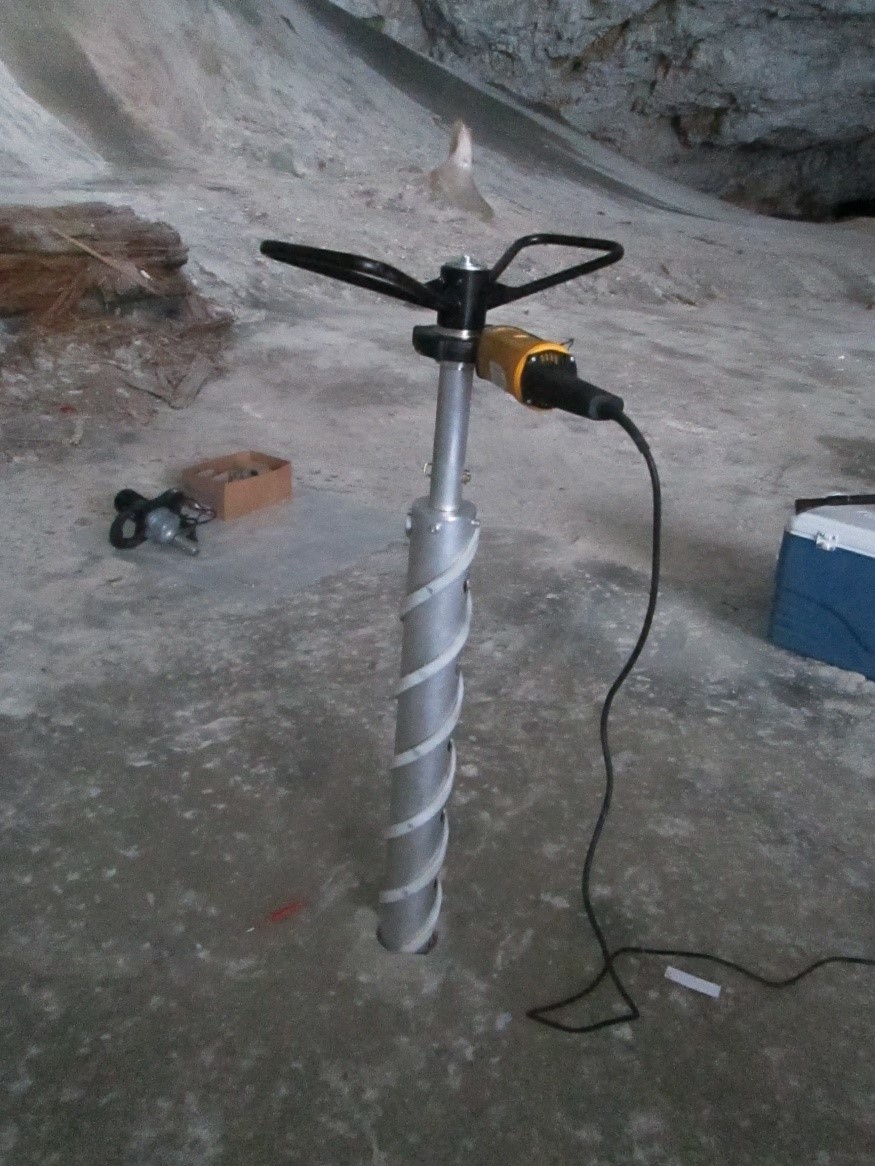
The team drilled an 82-foot ice core into an area of the cave known as the Great Hall. This enormous ice core represents a 13,000-year timeline, giving scientists an idea of what types of organisms were alive and when. The ice fragments extracted from the core were placed in sterile bags and kept frozen until returned to the laboratory to avoid contamination. Back in the lab, they isolated various bacterial strains and sequenced their genomes. Sequencing can indicate which genes allow the strain to survive at low temperatures and which indicate antimicrobial resistance and activity.
Next, they tested the SC65A strain for resistance to 28 antibiotics belonging to 10 classes. Many of these are commonly used to treat bacterial infections, including antibiotics with resistance genes or mutations that help them resist antibiotics. This way, they could see if the predicted mechanisms translated into measurable resistance.
“The 10 antibiotics to which we found resistance are widely used in oral and injectable therapies used to treat a range of serious bacterial infections in clinical practice,” Purcarea explained.
Diseases such as tuberculosis, colitis, and urinary tract infections (UTIs) can be treated with some of the antibiotics that SC65A.3 is resistant to, including rifampicin, vancomycin, and ciprofloxacin.
SC65A.3 is the first Psychrobacteria strain resistant to certain antibiotics, including trimethoprim, clindamycin and metronidazole. These antibiotics often treat urinary tract infections, infections of the lungs, skin or blood, and the reproductive system. The resistance profile of SC65A.3 suggests that bacterial strains capable of surviving in extremely cold environments could be reservoirs of resistance genes. These resistance genes contain specific DNA sequences that help them survive drug exposure.
A mixed bag
Although long-frozen viruses and bacteria sound like a science fiction nightmare, unknown and little-studied bacterial strains pose very real risks. But there is also good news.
“If melting ice releases these microbes, these genes could spread to modern bacteria, exacerbating the global challenge of antibiotic resistance,” Purcarea said. “On the other hand, they produce unique enzymes and antimicrobial compounds that could inspire new antibiotics, industrial enzymes and other biotechnological innovations. »
THE Psychrobacteria The SC65A.3 genome has nearly 600 genes with unknown functions, which may hold clues to treating other diseases. It also has 11 genes capable of killing or stopping the growth of other bacteria, fungi and viruses.
As antibiotic resistance increases, learning more about these ancient genomes and discovering their potential shows the major role that the natural environment has played in the spread and evolution of antibiotic resistance.
“These ancient bacteria are essential to science and medicine,” Purcarea concluded, “but careful handling and laboratory safety measures are essential to mitigate the risk of uncontrolled spread.”

The best new PopSci 2025 releases


