Notes from the Field


2 minutes of reading
Notes from the field
Observing chlorophyll from space
By Compton “Jim” Tucker
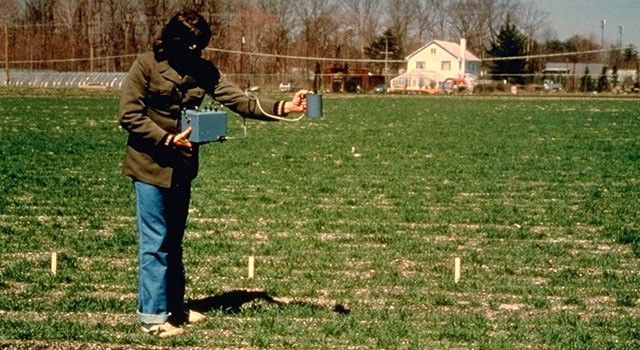
NASA scientists are able to study plants from space, but that hasn’t always been the case.
“I love using satellite data to study the Earth,” says Dr. Compton “Jim” Tucker. When Tucker was a graduate student, he and some friends discovered a new way to study photosynthesis.
“We realized that there was a very strong connection between plant pigment, chlorophyll, and certain wavelengths of light. We realized that if you wanted to study photosynthesis, you had to study chlorophyll.”
Tucker learned that plant health could be determined by measuring the amount of visible and near-infrared light reflected by a plant. “We call this comparison of light types the Normalized Differentiated Vegetation Index (NDVI). In reality, it is just a simple ratio between these two wavelengths or bands.”
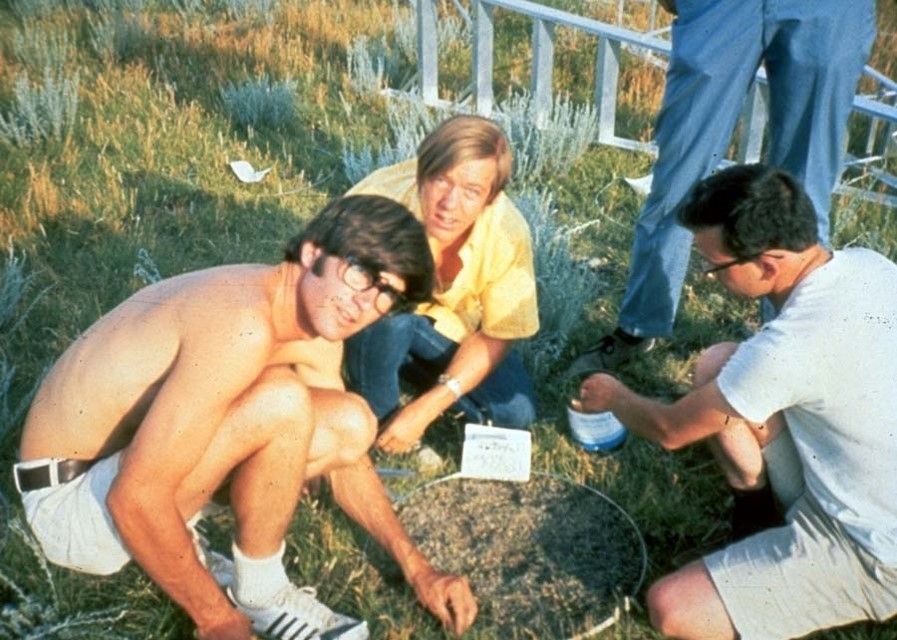
It was revolutionary science. Tucker also learned that this observation and comparison could be done from space. In 1981, the first NDVI instrument flew into space as part of the Advanced Very High Resolution Radiometer (AVHRR) mission. “It’s the same instrument from my years of field work, literally, just bigger.”
Later in 1983, Tucker met Piers Sellers. This meeting marked the beginning of a decades-long friendship and scientific collaboration. Sellers found a way to adapt Tucker’s photosynthesis measurements. This has made it possible to obtain detailed information on the health of plants around the world, from a single leaf to plants covering a field, a forest or a continent, and all from space.
“People always ask me when I plan to retire,” Tucker says. “And I always say I really love what I do. I’m going to do it as long as I can because it’s fun. Most people look at me and think ‘Are you crazy?’ I’m not. It’s true: I really love my job.
About the author
-
Compton “Jim” Tucker
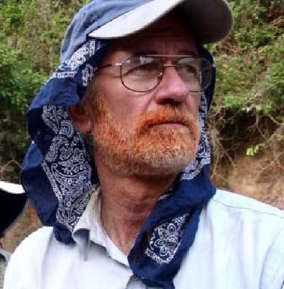
Compton “Jim” Tucker is a senior scientist in the Earth Sciences Division at NASA’s Goddard Spaceflight Center (GSFC). Tucker was able to go to some pretty exciting places to do research. This image was taken on the ground in the Amazon. Jim’s beard, usually white, appears red in this photo. He used a special Amazonian fruit to dye his hair red for fun.
Share
Details
Related terms
Discover more NASA topics