I just survived another winter storm on battery power—here’s how I did it


I love living in a rural area where losing power also means losing access to water, and being snowed in means being cut off from help. Combined with the need to stay warm, these challenges make winter storms especially frightening. But at my house we deal with it confidently using batteries as our only backup power source. Let me tell you how.
Keep small electrical appliances within reach
They are much easier to power than an electric cooktop
With batteries, even large batteries, it is vital to be economical with your electricity. Gas generators will run out of fuel after a set number of hours, whether you’re just charging a phone or powering a few lights. With batteries, your runtime varies a lot more depending on what you’re trying to power.
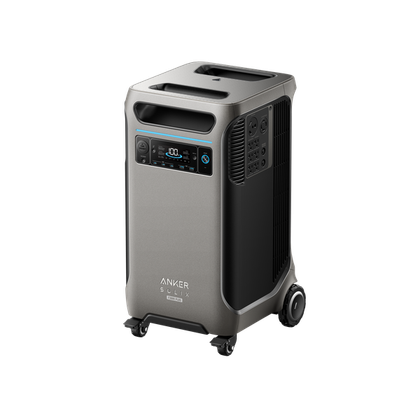
Even if you have a giant portable power station like the Anker SOLIX F3800 Plus that can plug into your breaker panel and power large appliances, it won’t run very long if you do that. My advice for sizing a battery to withstand a hurricane also applies here. And if you’re considering buying a battery, make sure the label says LiFePo4.
Regardless of the battery you choose, in the event of a power outage, small appliances become essential. The electric kettle we use for tea becomes what we use to heat water for bathing and washing dishes. A hotplate allows us to cook and can be powered by a mid-sized power station like the Anker SOLIX C1000.

An Instant Pot is a relatively energy-efficient way to cook a meal. All of these devices help us reduce the strain we put on a battery and allow us to use some batteries while others can be charging outside.
-

- Dimensions
-
15.12 × 8.19 × 9.61 inches
- Weight
-
24.9 pounds
- AC output ports
-
5
- AC input rating
-
1600W
- DC output ports
-
1
- Assessment of solar gain
-
600W
The Anker Solix C1000 Gen 2 is a small, compact and lightweight portable power station. With a fast charge time of 49 minutes and up to 2000W of power output, you’ll find this compact system has everything you need. With five 120V AC ports, three USB-C (two of which can do 140W), USB-A, and a DC car port, you can use this portable power station to charge all your gear off-grid or when the grid goes down.
-
- Brand
-
Anker
- Dimensions
-
27.6×10.3×15.6
- Weight
-
136.7 lbs/62 kg
- AC output ports
-
One NEMA TT-30R, one NEMA L14-30R, six NEMA 5-20R
- AC input rating
-
1800W
- DC output ports
-
120W, 12V/10A.
The Anker F3800 Plus is an updated version of the Anker F3800 solar generator, offering the same 3.84 kWh capacity and 6,000 W of power. This model comes with improved charging, with a new maximum solar input of 3,200 W and 165 V, as well as support for 240 V from a gas generator.


Portable solar panels can still come in handy
Your recharge window is shorter, but don’t waste it
If a storm only knocks out power for a few hours, we get away easily by removing our batteries and plugging everything in. If the power goes out for a few days, even a large Tesla Powerwall can quickly run out of power. It is essential to have a charging plan.
Our main source is portable solar panels. Even though there are fewer hours of sunlight in winter, this does not prevent these panels from remaining essential. Portable panels can be placed on snow when fixed solar panels, like the ones on my roof, can still be buried. We have enough portable solar panels to charge multiple batteries during a few hours of good sunlight in the middle of the day.

Have another heating source
Electric heating uses more energy than you think
One of the first questions people ask me about battery backups is what type of heating they can run, and my answer is usually the same: don’t bother. An electric heater will require more power than smaller batteries can provide and even a small heater running on high power can quickly drain a giant battery. Electric heating is simply too energy-intensive to be used solely on battery power.
That’s why we have a wood stove. Ours is freestanding, the kind that can be installed in a home whether or not you have a pre-existing brick chimney. There is a giant black pipe that runs from the wood stove to the ceiling of our living room.
A freestanding wood stove serves double duty for us in the event of a breakdown. Not only does it produce enough heat to keep our living space warm, but we can also place pots on it to cook food and boil water. This significantly reduces how quickly we drain our batteries and how often we need to expose them to sunlight to recharge them. We live on several acres of land and the woods provide us with plenty of potential firewood without having to cut down trees. I purchased a new lightweight chainsaw just before our last winter storm to ensure I had at least a week’s supply of wood on hand.

Have a backup for cloudy days
You might have a cloudy week ahead of you
As much as I love solar power, the skies aren’t always sunny, especially in the winter. To stay safe, we need to have a backup plan.
This is a time when it can be handy to have a portable gas generator on hand. A tank of gas can last much longer when a generator only needs a few hours of operation to recharge portable power stations instead of having to provide continuous power.
We do not have a gas generator, but we have two electric vehicles. Although none of our cars have the capacity to power our home or contain AC ports to power appliances, I purchased a Renology 1000W pure sine wave inverter that we can connect directly to our 12V car batteries under the hood. This allows us to transfer energy from the giant batteries in our cars to our portable power stations.

Electric vehicle batteries last so much longer that we could reasonably endure an entire week of cloudy days relying on our cars as giant reservoirs of backup power. After all, an Anker SOLIX F3800 Plus has a capacity of 3.84 kWh, while my Kia Niro EV has a 64.8 kWh battery. Even if half the energy is lost to inefficiencies and conversions, that will likely be enough to recharge my power plant once a day for more than seven days. The battery in our other car is even bigger.
Since we can charge at home, even if we were to empty a car until a tiny amount of charge remains, unlike gas cars, we don’t need to move it to refuel once power is restored. That said, it remains a viable option for gasoline cars as well. You just need to balance the electricity production against the amount of gas left in the tank.
Batteries are safe to use indoors and, unlike alternative energy sources, can be recharged in a variety of ways. This makes it a very convenient source of backup power, not only when the sun is shining in summer, but also when the house is dark from snow and sleet. Yet, as with any major storm, it is essential that you prepare in advance.


:max_bytes(150000):strip_icc()/Health-GettyImages-2246731267-59fdd86d80b44c95994571d4edcb3b6a.jpg?w=390&resize=390,220&ssl=1 "Eat Dates Before a Workout, Choose Sweet Potatoes for Better Blood Sugar—and 3 More Health Hacks to Try This Week")
