New Audi RS5 Shows Electrification Can Mean More Performance, Not Less

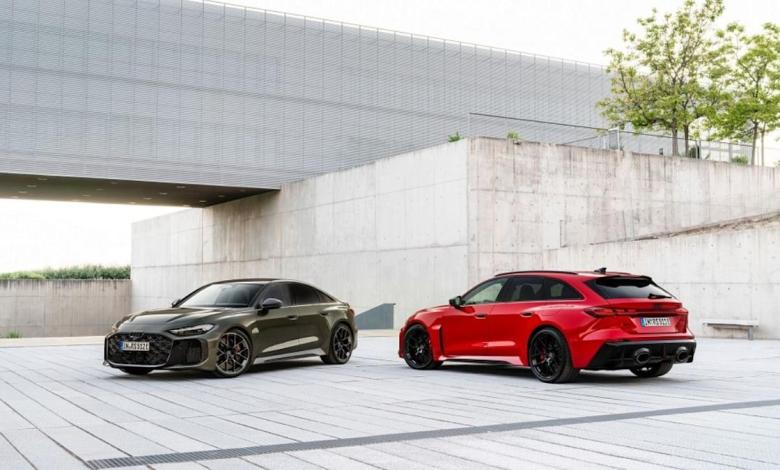
Audi has officially revealed the new RS5 and the message is clear. Electrification in the performance segment does not necessarily mean compromise. Instead, Audi uses hybrid technology to push performance even further. The new generation introduces a plug-in hybrid powertrain delivering a combined 630 horsepower, making it more powerful than any production BMW M3 to date and even more powerful than the previous RS6 Avant.
At the heart of the system is an upgraded 2.9-liter twin-turbo V6 engine that produces 503 horsepower on its own. It works with a 130 kW electric motor integrated into an eight-speed hybrid automatic transmission. Combined torque reaches 825 Nm and power is transmitted to all four wheels via a new rear drive unit with electromechanical torque distribution, a system that Audi describes as a first for series production.
Supercar-level acceleration

Photo courtesy: Autorepublika.
The performance figures place the new RS5 firmly in supercar territory. Audi claims the car can accelerate from a standstill to 100 km/h in just 3.6 seconds. With the optional Audi Sport package, the top speed reaches around 177 mph.
A dedicated control on the steering wheel activates a special boost function that unlocks maximum power for up to ten seconds, regardless of the selected driving mode. Drivers can choose between Comfort, Balanced, Dynamic or RS settings, and activating boost also opens the exhaust valves for a more aggressive sound. Once the burst ends, the vehicle automatically returns to its previous configuration.
Efficiency improves despite higher performance

Photo courtesy: Autorepublika.
Hybridization also improves efficiency. Audi claims its updated combustion process, based on a modified Miller cycle, reduces fuel consumption by up to 20% under heavy load compared to previous configurations.
With a fully charged battery, preliminary estimates suggest fuel economy equivalent to around 52 to 44 mpg in mixed driving. Once the battery is depleted and the system operates more like a traditional hybrid, mileage drops to around 25 to 23 mpg combined.
The RS5 can travel up to about 54 miles on electric power alone in urban conditions. Its battery has a capacity of 25.9 kWh and supports charging up to 11 kW, allowing a full recharge in around two and a half hours in ideal conditions.
Chassis and handling focused on driver engagement
Audi has carefully managed the extra weight associated with the battery, placing it under the load floor to optimize weight distribution. A mechanically limited-slip center differential remains partially locked and can vary the torque delivered between the axles, allowing strong rear bias when conditions require it.
According to Audi, this setup makes the new RS5 more willing to turn and slide in a controllable manner than outgoing performance versions. Advanced vehicle software analyzes longitudinal and lateral forces, rotation, slip angle and surface grip every few milliseconds, effectively predicting traction limits in real time.
Body rigidity has also increased by about 10 percent over the standard A5, while overall width increases by almost 3.5 inches. The track width is wider, negative camber settings are more aggressive and transmission friction losses have been reduced to improve shift response.
Serious braking equipment
Stopping power comes standard from large steel brake rotors, measuring approximately 16.5 inches in front and 15.7 inches in the rear. Buyers can opt for a carbon-ceramic package that includes even larger rotors measuring about 17.3 inches in front and 16.1 inches in the rear, reducing overall weight by about 66 pounds.
Aggressive exterior design and digital interior

Photo courtesy: Autorepublika.
Visually, the new RS5 makes a strong statement. A large honeycomb grille dominates the front, while wider fenders and a pronounced rear diffuser with a motorsport-inspired central reflector underline its performance intent. The Matrix LED headlights feature a unique RS light signature, while the taillights include animated lock and unlock sequences as well as warning functions of surrounding traffic.
Inside, the cabin is entirely digital. A 14.5-inch curved central touchscreen anchors the dashboard, while the driver benefits from an 11.9-inch digital instrument display with RS-specific graphics and quick-access controls for driving modes and boost activation. The front passenger also gets a dedicated 10.9-inch screen.
Sports seats with distinctive stitching are available in multiple material combinations, including performance fabrics and premium microfiber or leather with ventilation and massage functions.
Audi Sport package adds extra visual and performance advantage
The optional Audi Sport package further enhances the character of the car. It includes larger air intakes, a more aggressive diffuser, unique 21-inch wheels and contrasting exterior details. Carbon-ceramic brakes with bronze-colored calipers add both visual effect and weight reduction, while matching interior stitching completes the look.
Pricing and positioning

Photo courtesy: Autorepublika.
In Germany, pricing starts at around $115,000 for the sedan, while the Avant station wagon starts slightly higher, at around $117,000. Regardless of body style, the new RS5 demonstrates Audi’s belief that performance cars can remain exciting while embracing electrification.
The result is a sport sedan and wagon that combines traditional RS aggression with modern hybrid technology, proving that the future of high performance can be quieter, but it doesn’t have to be slower.
This article was originally published on Autorepublika.com and has been republished with permission from Guessing Heads. AI-assisted translation was used, followed by human editing and review.
Learn more
-
12 Vans That Are Really Worth It
-
SUVs that will last at least 15 years (no problem!)


