DOJ seeks to revoke U.S. citizenship of former North Miami mayor


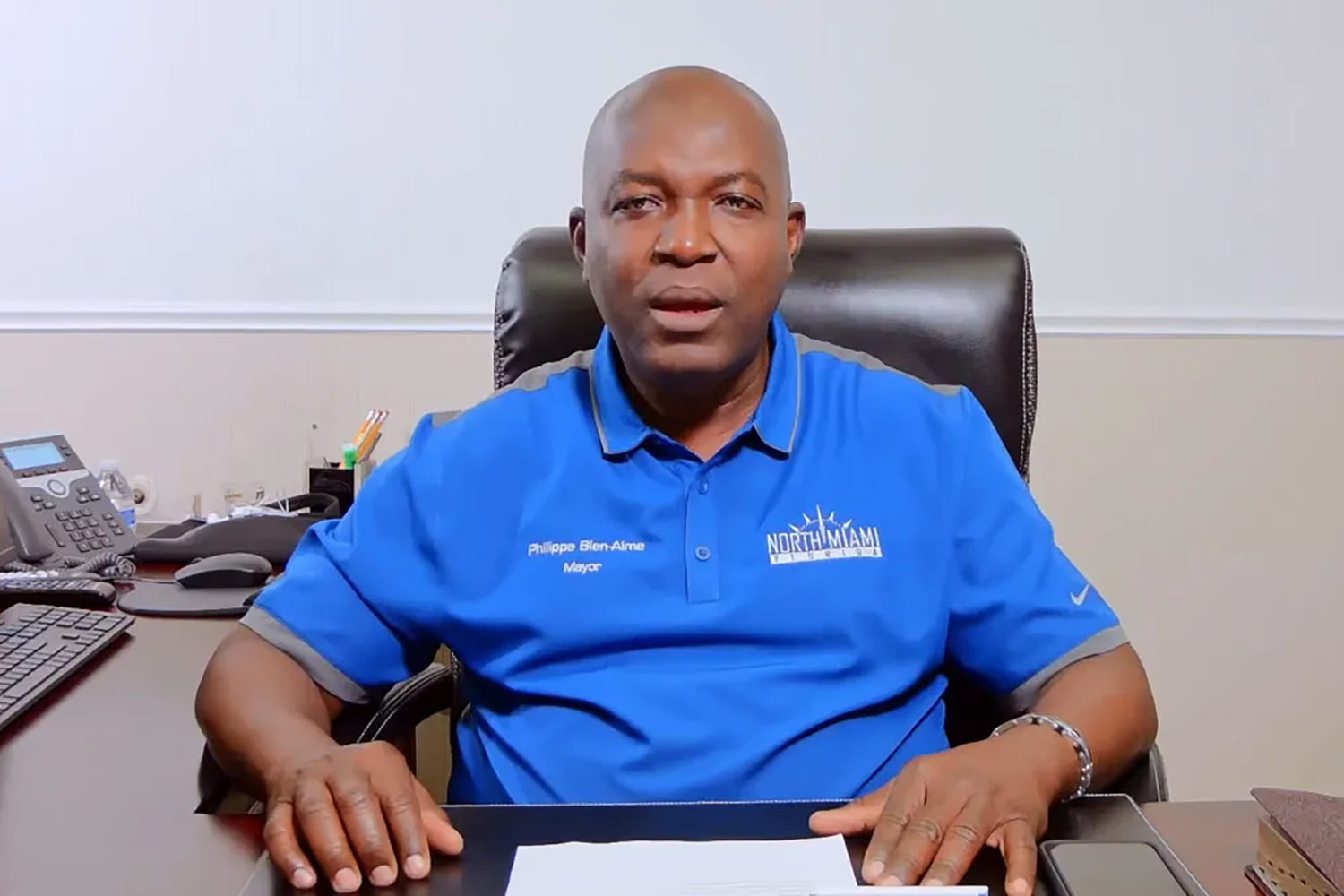
MIAMI — The Justice Department said it plans to strip a former North Miami mayor of his U.S. citizenship after he allegedly misrepresented his identity and immigration history during his naturalization process.
Federal lawyers filed a denaturalization complaint against Philippe Bien-Aimé in the U.S. District Court for the Southern District of Florida on Wednesday, according to court records.
Bien-Aime, a native of Haiti who naturalized in 2006, was elected mayor of North Miami in 2019. He resigned in 2022 to run for a seat on the Miami-Dade County Commission, but lost the election.
In a civil complaint reviewed by NBC News and NBC Miami, which first reported the story, the DOJ claims that Bien-Aime first entered the United States in 1997 using a fraudulent “photo” passport under the name Jean Philippe Janvier.
On July 31, 2000, an immigration judge determined that he had entered the country fraudulently and ordered him removed to Haiti, according to the complaint. He then appealed the expulsion order, but later withdrew his appeal, saying he had returned to live in Haiti. But federal authorities say he never returned to Haiti and remained in the United States under the name Philippe Bien-Aime.
Department of Homeland Security records — including fingerprint comparisons — show that the person naturalized under the name Philippe Bien-Aime is the same person who was previously ordered removed from the United States under the name Philippe Janvier, according to the complaint.
Peterson St. Philippe, Bien-Aime’s attorney, told NBC Miami in a statement that they are reviewing the complaint and will respond to the allegations “through the appropriate legal channels.”
“As this is ongoing litigation, we will not make further comments at this time,” Saint-Philippe said.
The Bien-Aime case comes as the Trump administration steps up efforts to revoke U.S. citizenship from foreign-born Americans as part of the president’s broader agenda to curb immigration.
Denaturalization is a long and tedious process and the legal bar is high. Even when federal authorities investigate a person with the goal of denaturalizing them, it can take years, and subsequent deportation would take even longer.
If the government ultimately succeeds in stripping Bien-Aimé of his U.S. citizenship, it could raise legal and political questions regarding his tenure.
North Miami city code states that candidates for office must be qualified voters, meaning they must be citizens eligible to vote and registered at that time. To register to vote, you must be an American citizen.
In addition to remaining in the United States under a different name, according to the complaint, Bien-Aimé married a U.S. citizen and obtained permanent resident status. But federal prosecutors say his marriage was invalid because he was already married to a Haitian citizen. According to the complaint, the divorce document Bien-Aimé presented to immigration authorities was fraudulent.
“United States citizenship is a privilege based on honesty and allegiance to this country,” U.S. Attorney Jason A. Reding Quiñones of the Southern District of Florida said in a press release Friday. “If proven, we will ask the Court to revoke a status that was never legally obtained. »
Hatzel Vela and Erika Angulo reported from Miami and Nicole Acevedo from New York.


