NASA’s moon rocket hit by new problem expected to bump flight to April

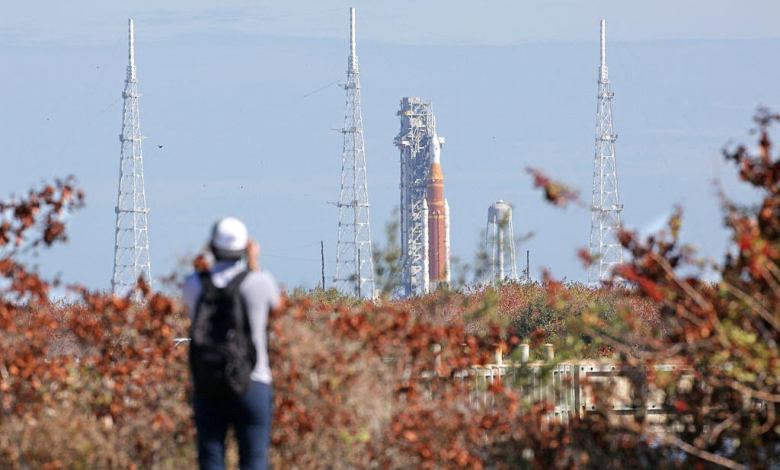
Engineers encountered problems repressurizing the Artemis II moon rocket upper stage helium tanks overnight Friday, a problem that will require rolling the massive rocket off the launch pad and back to its processing hangar for troubleshooting. The work will push the already delayed mission from March to early April, NASA officials announced Saturday.
Pressurized helium is used to push propellants toward rocket engines for ignition and to purge various fuel lines to clean them before the propellants sink. It is not yet clear what could prevent helium from returning to the upper stage of the SLS rocket after a successful rehearsal test that ended Thursday.
“Regardless of the potential issue, access and resolution of these issues can only be done in the VAB (Vehicle Assembly Building),” NASA Administrator Jared Isaacman said in a post on the social media platform X. “We will begin preparations for the rollback, and this will not take into account the March launch window.”
The Artemis II mission aims to send four astronauts — Reid Wiseman, Victor Glover, Christina Koch and Canadian astronaut Jeremy Hansen — on a round-trip flight around the far side of the Moon to thoroughly test the agency’s Orion space capsule to help pave the way for a Moon landing mission, Artemis III, in 2028.

NASA’s Artemis II Space Launch System (SLS) rocket and Orion spacecraft are seen in the distance on Launch Pad 39B at the Kennedy Space Center in Cape Canaveral, Florida. / Credit: Gregg Newton /AFP via Getty Images
(Gregg Newton/AFP via Getty Images)
Due to the constantly changing positions of the Earth and Moon, as well as changes in lighting and other associated factors, only a handful of launch opportunities are available each month to meet the requirements of the Artemis II mission. The current launch period ends on March 11. Available launch dates next month are April 1, 3, 4, 5 and 6.
Wiseman, Glover, Koch and Hansen initially hoped to take off early this month, but hydrogen leaks detected during an early rehearsal of the “wet suit countdown” ultimately pushed the flight back until March.
NASA carried out a second supply test and countdown on Thursday, loading the Space Launch System rocket with more than 750,000 gallons of liquid oxygen and hydrogen while following the steps that will be necessary to actually launch the massive rocket on the long-awaited mission.
The test went well; there were no fuel leaks like the ones that derailed launch plans earlier this month. Officials said Friday that the team will pursue a March 6 launch attempt to send Wiseman and his teammates to the moon.
Hoping that everything would go well, the astronauts went into pre-flight medical quarantine at Johnson Space Center Friday evening and planned to travel to Kennedy Space Center on March 1 to prepare for launch. They will now leave quarantine to wait for the situation to evolve.
“I understand that people are disappointed by this development,” Isaacman said. “This disappointment is felt especially by the NASA team, which has worked tirelessly to prepare this major project.”
During NASA’s Apollo program, 24 astronauts traveled to the Moon from 1968 to 1972. The new Artemis program has only made one flight so far, an uncrewed lunar orbit mission in 2022.
“I repeat, the president created Artemis as a program that will far surpass what America achieved during Apollo. We will return in the coming years, build a lunar base and undertake what are expected to be continued missions to and from the lunar environment,” Issacman said. “Where we start with this architecture and this rate of theft, it’s not going to end.”
Trump threatens to strike Iran as new warships enter Mediterranean
Steel company owner speaks out on Trump tariffs as world awaits Supreme Court decision
Ilia Malinin looks back on her Olympic journey and her future projects


